

Audio By Carbonatix
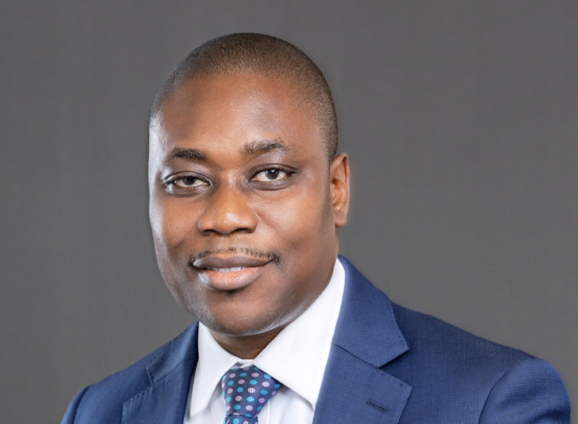
Kwabena Boamah, Managing Director of Stanbic Investment Management Services Limited, has called for a more structured and strategic approach to pension fund investments in private equity.
He stressed that gaps in policy, governance, and expertise continue to limit participation in the asset class.
Delivering a presentation at the 2026 Annual Conference of the Ghana Venture Capital & Private Equity Association (GVCA), he addressed industry stakeholders on the theme: “Pension Fund Co-Investment Success: Internal Processes, Reviewing VC/PE Transactions, Expectations of Trustees and Fund Managers.”
Mr Boamah's remarks highlighted both the progress made and the persistent barriers preventing trustees from fully embracing private equity as a viable investment avenue.
“While it is encouraging that more trustees are beginning to explore private equity and even making second commitments, the pace of adoption remains uneven. We must move beyond interest to intentional, policy-driven participation,” he said.
He identified the absence of dedicated expertise as a major constraint, explaining that many trustees lack specialised teams to properly evaluate private equity opportunities.
This, he said, often results in hesitation and overreliance on surface-level assessments.
“There is a clear capability gap. In many cases, trustees are presented with summarised outputs rather than the underlying financial models. That limits their ability to interrogate assumptions and build confidence in the investment,” he explained.
Mr. Boamah also pointed to weak or undefined investment policies as a critical issue.
According to him, many pension funds approach alternative investments on an ad hoc basis, rather than within a structured allocation framework.
“If you do not define a target allocation for alternatives, you end up reacting to opportunities instead of executing a strategy,” he said.
Another concern he raised was the role of investment committees, which he described as potential bottlenecks when decision-making is overly centralised.
“In some instances, a single dissenting voice can stall an otherwise viable transaction. Investment committees must foster balanced discussions and avoid gatekeeping tendencies that hinder progress.”
On the technical side, Mr Boamah emphasised the need for alignment between trustees and fund managers, particularly in assessing private equity investments.
He noted that while trustees often focus on individual deals, fund managers prioritise the quality and governance of the fund, also known as the General Partner (GP).
“In private equity, you are ultimately backing the manager, not just the deals. Deals can evolve or fall through, but the fund manager remains the constant. That is where the primary risk and opportunity lie.”
The GP is the machine that sources and processes deals; hence, getting the right machine is more important than showcasing one or two deals.
He further underscored the importance of governance, especially within the African context, where weak structures can undermine otherwise promising investments.
“Strong governance is non-negotiable. Investors must ensure they have the necessary rights and oversight mechanisms to protect their capital,” he stated.
Mr Boamah clarified that, under current regulations, pension funds can access private equity only through two channels: fund-of-funds structures or direct commitments to licensed private equity funds, noting that co-investment is not permitted.
He urged stronger collaboration and trust between trustees and fund managers, arguing that this relationship is essential for unlocking capital flows into the private equity space.
“When fund managers have undertaken rigorous due diligence and present opportunities, the review process should begin from a position of informed trust,” he said.
“Trust is the foundation upon which capital moves, and without it, even the most compelling opportunities will struggle to gain traction.”
The GVCA Annual Conference continues to serve as a key platform for shaping dialogue around investment strategies and mobilising capital to support Ghana’s economic growth.
Latest Stories
-
MamaCare CEO warns unresolved conflicts among health workers could undermine maternal and neonatal care
10 minutes -
Health professionals urged to translate medical knowledge into practice to save mothers
17 minutes -
Conflicts among care providers linked to maternal, neonatal deaths – Expert
2 hours -
GIS marks 10th TIME conference, champions improved teaching practices
2 hours -
BRICS Or Balance? What Ghana’s bid really means
2 hours -
GPRTU wants full TRAFFITECH-GH implementation to start in 2027
3 hours -
Mahama announces plans to import electric wheelchairs for PWDs
3 hours -
KGL U17 Colts 2026: Western beat Prempeh Elite Academy to set up final final with Greater Accra Region
3 hours -
Late Solanke strike salvages 10-man Spurs draw at Man United
3 hours -
Gender Ministry to monitor welfare of Nana Akua Addo’s children amid domestic violence case
3 hours -
Benedict Okyere Yeboah: Ghana’s football problem goes beyond sacking a coach
4 hours -
GPL 2026/27: Darkwah Wiafe’s winner sees All Blacks beat Kotoko
4 hours -
ITF World Tour : Patel Wins Boys’ Singles Final at J100 Accra
4 hours -
Ghana must pursue BRICS partnership if it brings economic benefits – Kpebu
4 hours -
Success and Wright Claims J100 Accra Girls’ Doubles Championship
4 hours