

Audio By Carbonatix
The government has officially ruled out the possibility of major, across-the-board renegotiations of conditions of service for public sector workers throughout the 2026 fiscal year.
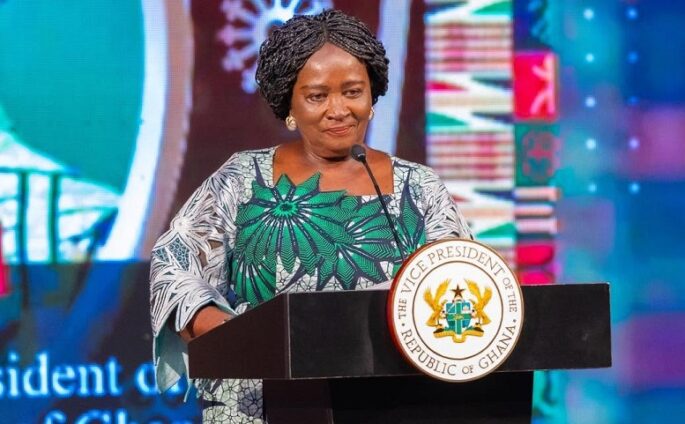
The Vice President, Professor Jane Naana Opoku-Agyemang, announced this firm policy stance during her keynote address at the 2026 Annual National Labour Conference held in Ho.
While acknowledging that the current public sector compensation structure is under significant strain, the Vice President explained that the government is prioritising long-term structural integrity over short-term inflationary wage hikes.
Addressing a gathering of key stakeholders, including representatives from organised labour and employer associations, Prof. Opoku-Agyemang revealed that the government is actively finalising a comprehensive reform of the national emoluments framework.
To bridge the gap until these foundational changes are ready for full implementation, the administration intends to introduce "targeted and modest adjustments" to a select few allowances.
According to the Vice President, this temporary approach is designed to provide the necessary fiscal "space" required to stabilise the national compensation system without triggering economic volatility.
“The establishment of the Independent Emolument Commission is a deliberate intervention to address the issue. It allows the government to stabilise the compensation system and build strong institutional conventions, while ensuring continuity and industrial harmony,” the Vice President stated.
She further clarified the government's timeline for the coming months:
“The government has also proposed that 2026 will not be a year for major renegotiation of conditions of service across the public sector. Instead, targeted and modest improvement to selected allowances will be implemented as an interim measure while the foundational reforms to our emolument system are completed”.
The Vice President’s remarks at the conference come amid heightened expectations from labour unions regarding salary adjustments in the face of evolving economic pressures.
During the same conference, she also highlighted the government’s commitment to the informal sector, noting that over 70 percent of Ghana's workforce requires better social protection and representation within national economic planning.
By opting for this controlled approach to public sector wages, the government hopes to foster a more predictable industrial environment while the newly established Independent Emolument Commission works to standardise pay structures across the public service.
Latest Stories
-
Parliament questions proliferation of unapproved containers in East Legon
1 hour -
Promotion arrears alone cannot end teachers’ strike — PRETAG
1 hour -
Ebi Bright alleges assault on driver in dispute with Tema Central MP
1 hour -
GH¢35m Darkuman 24-hour market to be completed in 16 months — MCE
2 hours -
NPP risks losing Karaga seat if Amin Adam doesn’t contest – John Boadu
2 hours -
Ghana Reference Rate falls to 10.04% in October as borrowing costs ease
2 hours -
53% of NPP delegates backed alternatives to John Boadu in chairmanship race – Mussa Dankwah
2 hours -
High taxes, water shortages push up hotel operating costs — Hotels Association
2 hours -
Catholic Bishops demand tougher action on tramadol, marijuana and other drugs
2 hours -
Government positioning Banda District to become major tourism destination hub – Housing Minister
2 hours -
Deputy Education Minister appeals to striking teachers to return to classrooms
2 hours -
Government to involve corporate Ghana in street maintenance – Ayariga
2 hours -
No contractor is untouchable because of political links — Agbodza
2 hours -
Contractors to resume work on Phase Two of Kejetia Market Project
2 hours -
Government committed to resolving teachers’ concerns - Vice President
2 hours