

Audio By Carbonatix
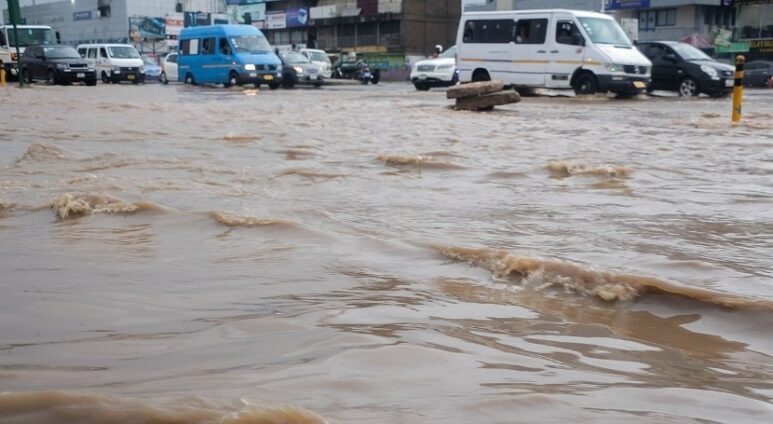
The Ministry of Works, Housing and Water Resources has expressed sympathy with Ghanaians affected by recent flooding across Accra and other parts of the country, while announcing a series of emergency interventions and committing to a long-term flood management strategy.
In a press release issued on Saturday, June 6, 2026, Minister Kenneth Gilbert Adjei said the Ministry had been closely monitoring the situation following successive heavy rains that damaged homes, businesses, and public infrastructure in low-lying and flood-prone communities.
Flooding remains one of Accra's most persistent urban challenges, with low-lying communities in areas such as Odaw, Aboabo, and Lapaz among those most frequently affected during the rainy season.
"On behalf of His Excellency the President and the Government of Ghana, I extend my deepest sympathy to all individuals, families, and communities affected by the recent flooding incidents in Accra and several parts of the country," the release stated.
The Ministry said it has, through the Ghana Hydrological Authority and in collaboration with the National Disaster Management Organisation (NADMO), Metropolitan, Municipal and District Assemblies, and the security services, activated emergency response measures in affected areas. These include deploying response teams to affected communities, providing relief items to displaced households, assessing damaged infrastructure, and intensifying desilting and drainage maintenance in critical flood zones.
The release attributed much of the flooding's severity to human conduct rather than rainfall alone. It cited the indiscriminate disposal of waste into drains and watercourses, unauthorised construction on waterways and wetlands, and the failure to comply with planning regulations as key factors worsening flooding across the country.
The Ministry echoed a position President John Dramani Mahama expressed at a recent town hall meeting in London, where he argued that Ghana's flooding challenge is largely driven by indiscipline in human settlement and environmental management.
"Our cities do not lack laws or engineering expertise; what it lacks is the collective discipline and will of all key stakeholders to enforce laws that already exist," the release stated.
Beyond the immediate response, the Ministry outlined a broader set of ongoing measures aimed at reducing flood risk. These include accelerated desilting and clearing of major drains, rehabilitation and expansion of stormwater infrastructure, enforcement of development controls, removal of structures obstructing waterways, and enhanced early warning and emergency preparedness systems.
Over the long term, the Ministry committed to a comprehensive flood management strategy covering major drainage infrastructure investment, integrated urban planning, protection and restoration of wetlands and natural water retention areas, and stricter enforcement of planning and environmental regulations.
The Ministry urged all citizens to keep drains free from waste, avoid construction on waterways, and comply with environmental and planning regulations, describing flood mitigation as a shared responsibility between government, local authorities, traditional leaders, and communities.
Latest Stories
-
Former ‘American Idol’ contestant sentenced to life without parole for wife’s murder
58 minutes -
Education Ministry commends Ghanaian teachers on World Teachers’ Day 2026
1 hour -
NPP can reconcile with aggrieved members who want to return – Nana Akomea
2 hours -
Tamale Child Deaths: Vehicle owner arrested as IGP deploys homicide team
2 hours -
From ShattaFest to MoMo Fest: Entertainment takes centre stage in youth engagement
2 hours -
Nigerian military aircraft crashes, killing 32
2 hours -
MTN encourages Ghanaians to use MoMo for saving, investing and financial planning
2 hours -
Absa Bank Ghana names Stephen Ato Frimpong as Board Chair
2 hours -
Pickford ‘almost caused crash’ with careless driving
2 hours -
Author and former politician Jeffrey Archer dies aged 86
2 hours -
No education reform can succeed without teachers – Education Ministry
2 hours -
Gauff condemns racist abuse after China Open win
3 hours -
Medvedev disqualified for hitting spectator with ball
3 hours -
Oliseh scores twice in late comeback win for France
3 hours -
Pentagon stops using Anthropic AI tools after blacklisting company, BBC told
3 hours