

Audio By Carbonatix
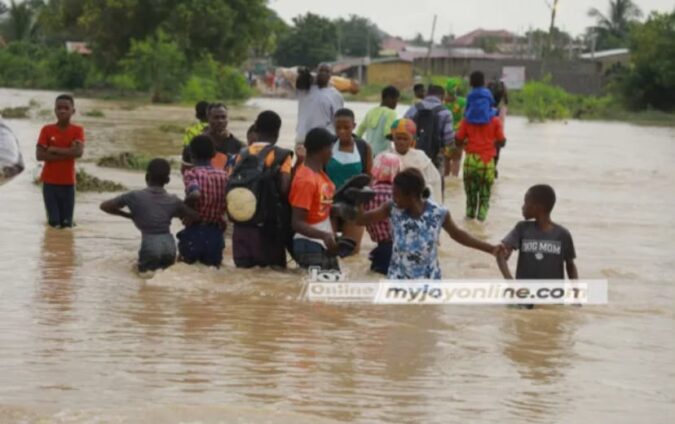
Floods are often viewed primarily as an environmental disaster, but public health experts say their impact extends far beyond damaged infrastructure and disease outbreaks, warning that mental health and chronic illnesses must become central to Ghana’s emergency response plans.
Speaking during the seventh edition of the Loud and Green XSpaces conversation hosted by JoyNews under the theme “Contaminated Food, Safe Water and Disease in the Wake of Floods,” experts called for a broader approach to flood management that prioritises prevention, mental health support and continuity of healthcare for vulnerable groups.
Medical Doctor Dr Floret Maame Owusu said Ghana’s disaster response remains largely reactive, with authorities often focusing on treating illnesses after floods occur instead of preventing them before communities are affected.
“I believe the success of any disaster management is in how many people we did not need to save compared to how many people we now have to save after the disaster,” she said.
According to her, public education remains one of the most important tools in reducing the health impact of flooding.
She explained that communities need practical information before disasters occur, including how to purify drinking water, handle food safely and identify early warning signs of common post-flood diseases.
“We don’t need to wait for floods before we are running around trying to deal with diarrhoeal diseases and malaria. A lot of these can be avoided if people knew what to do even before the floods occur,” she stressed.
Dr Owusu also called for increased investment in research to generate reliable data on the long-term health consequences of flooding.
She said understanding disease patterns after floods would help health authorities predict outbreaks, prepare hospitals and deploy resources more effectively.
Mental health impact of floods
Beyond physical illnesses, Dr Owusu warned that the psychological effects of flooding are often overlooked.
She said many survivors experience trauma after losing family members, homes, businesses and personal belongings, but mental health support is rarely prioritised during emergency responses.
“But most importantly, there is one thing we often leave out, mental health support. People lose family members, lose their businesses and lose everything they have worked for. We need to focus on them too,” she said.
She explained that the emotional distress caused by flooding can result in prolonged stress, anxiety and other psychological challenges if survivors do not receive appropriate support.
Dr Owusu also highlighted the difficulties faced by people living with chronic conditions such as hypertension and diabetes during flood emergencies.
She said many patients lose their medication or are unable to access healthcare facilities due to flooded roads and disrupted services.
“People with chronic illnesses like hypertension and diabetes lose their medications and, in the wake of all that, some develop serious complications. Hospitals must be ready to receive them,” she said.
Need to act on existing evidence
Judith William, a Public Health Researcher at Ensign Global University, said Ghana already has significant knowledge about flood-prone communities and the health challenges associated with flooding.
She argued that the major challenge is not a lack of information but the failure to implement available solutions.
“We know which neighbourhoods flood. We know which populations lose access to essential services every single time,” she said.
“We know what to do. What we need is the systems and the will to act.”
She said although researchers continue to provide recommendations on improving flood preparedness, many findings are not translated into practical interventions.
“We can research and research and provide all the solutions we need, but if there is no willingness to implement the recommendations, then the research becomes pointless,” she added.
Judith encouraged the public to rely on credible sources, including the Ghana Health Service, scientific publications and verified media reports, for information on flood-related health risks.
Food safety and hygiene
Registered Dietitian Eldelberta Ampong-Fosu also stressed the importance of food safety, clean water and personal hygiene after floods.
She warned that contaminated food and water are major causes of disease outbreaks during flood situations and urged households to take preventive measures seriously.
“We must make sure the food we eat is safe, the water we use is clean and personal hygiene is taken seriously,” she said.
She encouraged community members to educate one another on proper hygiene practices, saying disease prevention requires collective action.
“If you see someone practising poor hygiene, educate them. Protecting our communities starts with each of us,” she added.
The experts agreed that Ghana’s flood response must move beyond emergency evacuations and drainage interventions to include stronger public education, mental health services, continuous care for people with chronic conditions and evidence-based planning.
They stressed that while floodwaters may recede within days, the health consequences can continue for months or years without deliberate interventions.
For them, building flood resilience is not only about preventing water from entering communities but also about protecting the physical, mental and long-term wellbeing of affected populations.
Latest Stories
-
NC-PTAs welcomes end of teachers’ strike, urges parents to prepare children for Monday
7 minutes -
Government procures over 2,000 transformers as Ghana’s electricity access hits 89.13% – Energy Minister
33 minutes -
UTAG-UG threatens strike on October 19 over unpaid allowance
42 minutes -
Let The Constitution direct Chieftaincy to deliver “All Development Is Local”
2 hours -
John Jinapor outlines renewable energy, nuclear power priorities for 2027
2 hours -
Ghana explores centre of excellence for hearing, communication and cochlear implant care
3 hours -
Schizophrenia-related disorders lead mental health cases recorded in Ghana
4 hours -
Dutch authorities enlist Ghana in hunt for fugitive drug lord Bolle Jos
4 hours -
Ghana housing finance conference adopts communiqué to improve affordable housing access
8 hours -
Special Initiatives Minister urges Wa Technical Institute to enrol more girls as EU-backed solar training lab opens
9 hours -
In the matter of my first year at the Bar
9 hours -
ActionAid Ghana calls for an end to child marriage, greater investment in girls’ rights
9 hours -
Newsfile to tackle World Cup visa scandal, beach demolitions, education strikes, BRICS bid
10 hours -
UK-Ghana Trade & Investment Summit: Trade Resource Centre to help businesses maximise UK-Ghana trade opportunities
10 hours -
Embassy of Denmark celebrates World Maritime Day
10 hours