


Audio By Carbonatix
Who loves Guinness more than the Irish?
Well, there's the UK: That's the world's biggest market for Guinness.
And then there's Nigeria, which overtook Ireland as the world's second-biggest Guinness market 10 years ago.
Cameroon is the fourth-biggest market for Guinness and the beer is also brewed in Kenya, Uganda and Namibia. Africa, with its $13 billion beer market, is the biggest source of beer sales for the owners of Guinness, the British multinational Diageo.
So how did the dark, tangy porter beer first brewed by Arthur Guinness in Dublin in 1759 come to win the hearts and minds of beer lovers on another continent?
The answer is in a secret recipe sheet kept under lock and key in the Guinness archives at St James' Gate brewery -- and CNN Travel got a look when we visited Dublin for the July episode of "In 24 Hours."
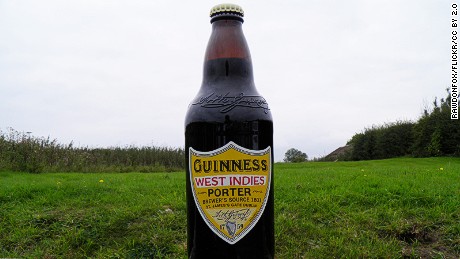
Dated December 14, 1801, it details the unique mix of roasted, malted barley, hops, yeast and water that made up the original Guinness West Indies Porter: a beer born to travel.
"It really is one of the most precious documents that we hold," says Archive Manager Eibhlin Colgan.
Have hops, will travel
If there's one thing about Guinness you'll hear bandied about more than any other, it's that the world's most famous porter does not travel well. It's said the black stuff tastes better in Ireland than anywhere else and, local lore has it, the best pint in Dublin's Fair City is poured at Mulligan's on Poolbeg Street.
But Guinness didn't get to be the global powerhouse it is today by only catering to taste buds lucky enough to be on Eire's soil.
When Arthur's son, Arthur Guinness II, took the reins in 1803, the beer empire began to grow -- and it followed the routes already created by the British Empire. Especially brewed to survive long sea journeys, Guinness West Indies Porter was hoppier than regular Draught Guinness -- and stronger too.
In 1817, eight barrels of porter journeyed across the Atlantic to South Carolina. By 1827, Guinness was being drunk in Africa, and by 1858 it had made it all the way to New Zealand.
At this time, Ireland was still governed by Britain and Arthur Guinness -- despite the patriotic associations his beer has today -- was a committed unionist and opponent of Irish nationalism.
Porter itself -- so called because of the dark beer's popularity with London's street and river porters -- is actually an English invention. But it was Ireland which made porter known around the world.
Guinness Foreign Extra Stout
The British Empire may be gone, but the Guinness empire remains. In 1962 -- two years after Nigeria gained independence from the UK -- Lagos became home to the first Guinness brewery outside of the United Kingdom. More breweries soon followed.
Today, Guinness is available in more than 100 countries worldwide and is brewed in almost 50.
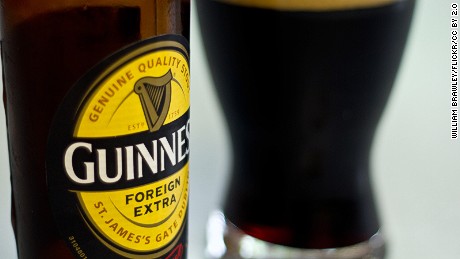
Guinness Foreign Extra Stout is the 21st-century descendant of the original West India Porter. It's stronger, heavier and punchier than regular Guinness, with a powerful 7.5% ABV. This is the Guinness variant you'll most often find in Africa, Asia and the Caribbean -- brewed on home turf.
In 2014, Guinness also introduced a new 6% ABV version of Guinness West Indies Porter modeled on the original 1801 recipe. It's part of a number of innovations which have helped Irish sales go up 4% in 2016, after several years of decline.
But will they now reveal the magic mix? Not a chance.
Says Colgan, "As we've kept this recipe secret for over 200 years, we're going to keep it that way.”
Latest Stories
-
Communities affected by construction of Akosombo Dam urge government to speed up compensation process
14 minutes -
World Cup visa scandal: Sports Ministry not shielding anyone – Sports Minister’s special aide
35 minutes -
World Cup visa scandal: Over 30 people misrepresented as GTA board members to US Embassy – Vincent Assafuah alleges
36 minutes -
Fire destroys wooden structure near Yesu Mo Villa at Bush Road
38 minutes -
NDC threatens sanctions over oversized campaign posters, gives aspirants 5 days to comply
2 hours -
Star Oil paid GH¢2.7bn in taxes, levies in nine months of 2026
2 hours -
Samson’s Take: The rule of law is cheaper before the bulldozer
2 hours -
GRA blames system failure for delay in issuing receipt over passenger’s customs duty
2 hours -
Livestream: Newsfile discusses World Cup visa scandal, beach demolitions, education strikes, BRICS bid
2 hours -
NC-PTAs welcomes end of teachers’ strike, urges parents to prepare children for Monday
2 hours -
Government procures over 2,000 transformers as Ghana’s electricity access hits 89.13% – Energy Minister
3 hours -
UTAG-UG threatens strike on October 19 over unpaid allowance
3 hours -
Let The Constitution direct Chieftaincy to deliver “All Development Is Local”
4 hours -
John Jinapor outlines renewable energy, nuclear power priorities for 2027
5 hours -
Ghana explores centre of excellence for hearing, communication and cochlear implant care
5 hours