

Audio By Carbonatix
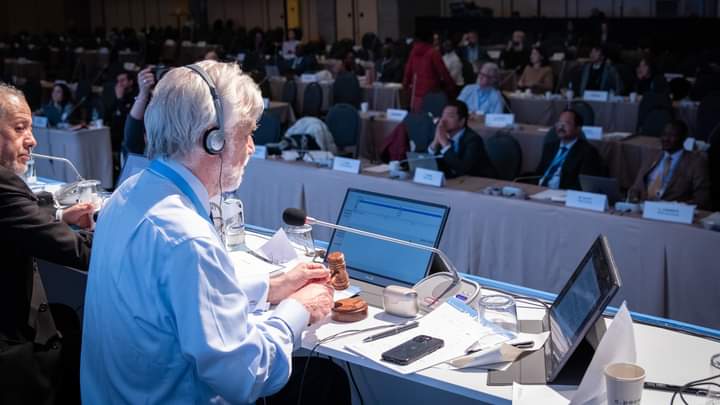
The Intergovernmental Panel on Climate Change (IPCC) has outlined its comprehensive plan for the seventh assessment cycle during the 60th Plenary session in Istanbul, Türkiye.
Over 300 delegates from 120 governments reached a consensus on the scientific structure of work, paving the way for essential reports on climate change science.
During the four-day meeting, governments committed to producing three crucial Working Group contributions to the Seventh Assessment Report: the Working Group I report on the Physical Science Basis, the Working Group II report on Impacts, Adaptation, and Vulnerability, and the Working Group III report on Mitigation of Climate Change. The Synthesis Report, summarizing the findings, is expected to be released by late 2029 after the completion of the Working Group reports.
Notably, the IPCC had previously decided to generate a Special Report on Climate Change and Cities and a Methodology Report on Short-lived Climate Forcers. Additional tasks for scientists include delivering a Methodology Report on Carbon Dioxide Removal Technologies, Carbon Capture Utilization, and Storage.
In a significant move, a revision of the 1994 IPCC Technical Guidelines on impacts and adaptation, along with the development of adaptation indicators, metrics, and guidelines, will accompany the Working Group II report as a separate product.
IPCC Chair Jim Skea highlighted the importance of these decisions, stating, "The Panel has taken a critical step in plotting the course for the entire cycle."
He said their decisions reflect the interest of member governments in getting policy-relevant, timely, and actionable scientific information as soon as possible and providing input to the 2028 second Global Stocktake, adding that, there is a notable emphasis on adaptation to climate change.
This decision signals the commencement of intensive scientific work for the new assessments of climate change science. It sets the tone for the organization's dedication to delivering crucial information for effective policy-making. Delegates also addressed budgetary matters and expanded the participation of observer organizations in the IPCC's activities, underlining this strategic roadmap's collaborative and inclusive nature.
Latest Stories
-
President Mahama ends Resetting Ghana tour of Ahafo Region
1 hour -
African negotiators seek delivery of climate commitments at COP31
1 hour -
BoG develops AI rules for financial sector
1 hour -
‘Big Push’: Government assures contractors of prompt payments
1 hour -
Court fines miner for breaking into gold buying shop
1 hour -
Tarkwa court jails labourer for three years over GH¢123,000 theft
2 hours -
GAEC must retain nuclear scientists for Ghana’s nuclear ambitions – Minister
3 hours -
Man reportedly mistaken for game and shot by hunter dead in forest
3 hours -
19-year-old mason jailed 15 years for defiling seven-year-old pupil
3 hours -
Ghana’s banking sector assets rise 20.47% to GH¢500.2bn – BoG Governor
3 hours -
22 injured as Sprinter bus overturns at Sege after tyre burst
3 hours -
UN housing expert urges Ghana to strengthen Rent Control Department amid housing affordability concerns
3 hours -
Delta-BCI partnership reaches 166,000 people with breast cancer education
3 hours -
Power restoration fault suspected in Kumasi Central Market fire
8 hours -
The 7-foot giant of Ngleshie Amanfro: Seven-foot Ghanaian Ephraim Saawa dreams of joining the national basketball team
9 hours