

Audio By Carbonatix
When a critically ill patient fails to respond to treatment, doctors often turn to their last resort drugs, one of which is carbapenem. However, this fallback is becoming less reliable for Senam Ahadzie, a researcher at the Kumasi Centre for Collaborative Research in Tropical Medicine (KCCR).
Her recent study revealed that one in ten Enterobacterales bacteria in her sample showed resistance to carbapenems
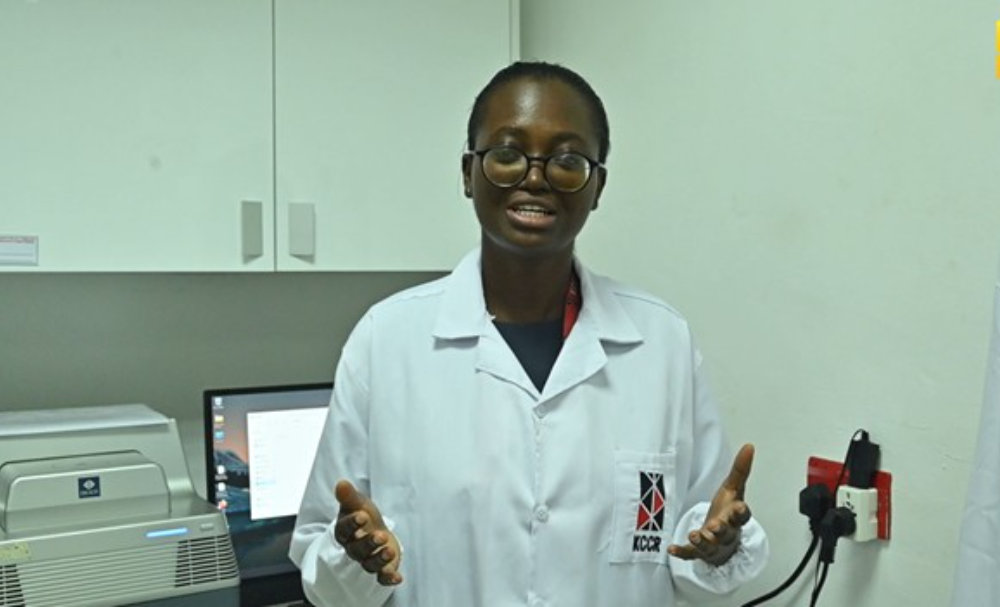
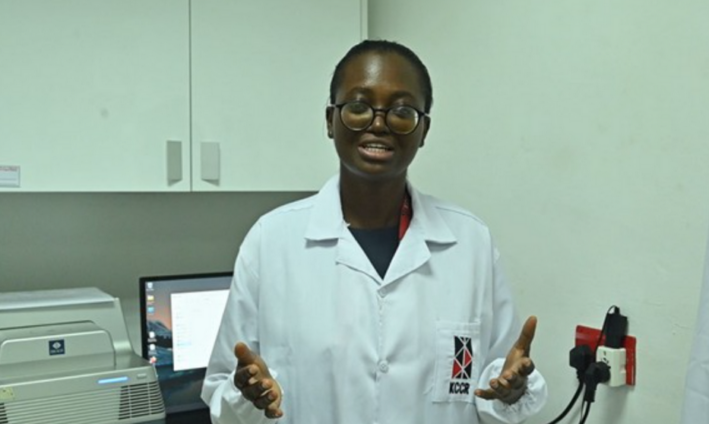
Senam is a Research Assistant with the Global Health and Infectious Diseases Group at KCCR, where she works as a Clinical Microbiologist. Her interest began with a simple fascination. “I’m intrigued by microorganisms,” she said. “It’s interesting how they cannot be seen but their impact can be seen and felt around us.”
With support from her masters’ supervisor, Senam focused her research on a group of bacteria known as Enterobacterales. Enterobacterales are a group of bacteria that mostly live in the gut. Some are harmless and help us digest food, but others can cause infections, especially when they get into places they shouldn't, like the blood or bladder.
Between January and August 2021, Senam collected and studied 139 bacteria samples from a hospital in Kumasi. Out of these, 14 were found to be resistant to carbapenems. This means about 1 in every 10 samples (10.1%) could survive even the strongest antibiotics.
Her study also found that many of the bacteria were no longer responding to other commonly used antibiotics like cefotaxime (84.2% resistance), cefuroxime (83.5%), and ciprofloxacin (71.2%). However, one drug, amikacin, still worked against most of them, with only 7.9% resistance.
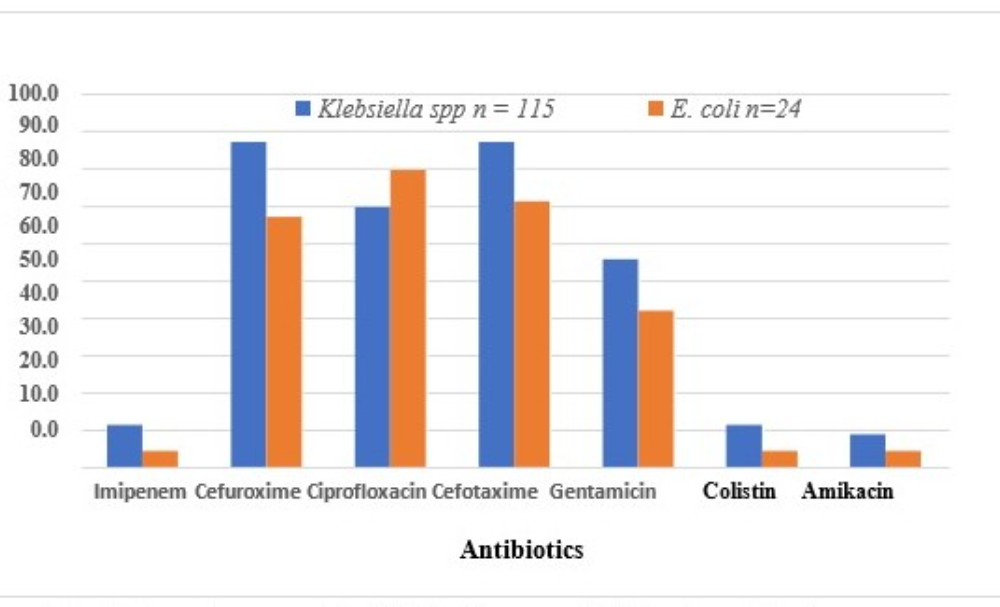
Nearly half of the bacteria samples could resist more than one type of antibiotic, and 13 of the 14 carbapenem-resistant samples could resist multiple drugs.
Senam also used real-time polymerase chain reaction (PCR), a method used to make many copies of a small piece of DNA, so it can be studied more closely. She found that all the resistant bacteria shared one thing: the blaNDM-1 gene, which helps them survive strong antibiotics.
Senam’s findings echo the need for stronger measures to control antibiotic use.
“If we do not act now, resistance to carbapenems will increase, and our options for treating serious infections will shrink,” she warned.
The path to completing her research wasn’t smooth. The COVID-19 pandemic delayed ethical approvals, and the high cost of molecular testing added pressure. However, with her institution's support, she was ankle to complete the work.
Senam hopes her research will lead to more awareness, better regulation of antibiotic use, and stronger surveillance systems. Her goal is to make the issue of resistance clearer to the public and to help shape policies that can slow its spread.
To those starting out in research, she offers this advice: “No matter how motivated or capable you are, challenges will come. A support system and your willingness to ask for help make all the difference.”
Latest Stories
-
Prosperity Architecture: Drawing II – Organising institutions for shared prosperity
11 minutes -
First female prime minister named in Morocco after winning elections
20 minutes -
Burkina Faso’s junta leader opens major gold refinery to keep mining profits at home
28 minutes -
Nigeria’s Ben Dancer completes 168-hour dance marathon, awaits Guinness verdict
38 minutes -
I’m now a minister of God – Actress Jumoke Odetola announces
47 minutes -
Banks accounted for 86% total enquiries for credit in 2025
49 minutes -
‘I paused for my mom’ – Kizz Daniel opens up on music break
52 minutes -
Habib Iddrisu rejects argument that court cases bar Parliament from investigating drug scandal
1 hour -
Over 25m enquiries conducted by financial institutions for credit appraisals, others in 2025
1 hour -
Venezuelan man shot by ICE in Texas is charged with assault
1 hour -
Eiffel Tower chief to quit after female staff replaced by men during religious visit
1 hour -
South Africa to clean up high-risk areas after 12 women killed
2 hours -
Kpandai case sets the precedent – Habib Iddrisu challenges Speaker’s rejection of drug probe
2 hours -
Habib Iddrisu questions Speaker Bagbin’s rejection of motion after Parliament recall
2 hours -
More than 400 detained as France student protests escalate
3 hours