

Audio By Carbonatix
Exactly 20 years today, Ghana’s Parliament unanimously passed the Criminal Code (Repeal of Criminal Libel and Seditious Laws) (Amendment) Bill.
Seven days later, on August 2, 2001, former President John Agyekum Kufuor gave his assent to the Criminal Code (Repeal of Criminal Libel and Seditious Laws) (Amendment) Act, 2001 (Act 602), a deed that freed journalists from suffering the pain of incarceration for exercising free speech and expression.
The repeal of the law, was in fulfillment of a campaign promise made by President Kufuor in the run-up to the 2000 elections, with the view to expanding the frontiers of press freedom as guaranteed under Chapter 12 of the 1992 Constitution, particularly Article 21(1)(a).
In the course of time, however, some people had called for the resurrection of the criminal libel law to deal with what they claim to be the recklessness and irresponsibility of the media.
Although the sins of the media may be as scarlet, or as red as crimson, the imperatives of a free press to democratic development render their sins as white as snow, for which compelling reasons nobody must disturb the quiet sleep of the criminal libel law in its grave.
“A free press can, of course, be good or bad, but, most certainly without freedom, the press will never be anything but bad,” French journalist Albert Camus had settled the matter decades before the repeal of the criminal libel law in Ghana.
It’s over but not over
The criminal libel and seditious laws imposed custodial sentences on journalists as punishment for their editorial indiscretion, and it is trite knowledge that in democracy, criminalization of free speech is a crime in itself.
So those advocating for the return of the criminal libel law may not succeed in driving us to the past, and the media, standing akimbo in a defiant mode, will continue to say: ‘No abaabas3i’- No turning back!
But, perhaps, what the anti-press freedom advocates may succeed in driving us to, about the past, is that, incarceration under the criminal libel regime, may be more comforting than the lacerations suffered by journalists, from assault in the current dispensation.
As the media in Ghana celebrate two decades of freedom from an obnoxious law that jailed many journalists, they do so, not oblivious of the need to be bailed from assault against journalists, a new norm of press freedom attack that may be worse than the criminal libel law.
Interestingly, two of the three arms of government – Executive and Legislature – that acted as collaborators to free the Fourth Estate of the Realm, from the old order (criminal libel law) yesterday, are today acting as conspirators to hold the media captive, under a new order (assault against journalists).
The Executive
Former President Kufuor took a bold and commendable step to repeal the criminal libel law, and he will forever remain a celebrity in the heart of the media fraternity, for undertaking such a worthy cause, in 2001.
But what the Executive has given the media thereafter, is brutality, handed mainly, by the Police and the Military, in a manner that would make spending time in jail, under the era of the criminal libel law, rather comforting.
The cases of Joy FM’s Latif Iddrisu, who was hit on the head by a Police officer to the extent of fracturing his skull; Emmanuel Ajarfor Abugri of modermghana.com, who was arrested and tortured by National Security operatives, and Caleb Kudah of Citi FM and Citi TV, who was brutalized by Ministry of National Security assignees, may suffice for a recall of journalists who have suffered inhumane treatment in the past two decades.
What is more disheartening, is that the perpetrators were or are supposed to be law enforcers, who ought to know the meaning of the rule of law; and in the cases of Ajarfor and Kudah, the ‘law enforcers’ had come directly from the offices of the Ministry of National Security.
The Legislature
Twenty years ago, Parliament unanimously passed the Criminal Code (Repeal of Criminal Libel and Seditious Laws) (Amendment) Bill. But thereafter, the House has not only failed, unanimously, to pay the bill of protecting press freedom and independence; it has, rather pathetically, led the assault against press freedom and, in some instances, the person of journalists.
Way back in the 18th Century, Member of Parliament (MP) Edmund Burke, sitting in the House of Commons of the British Parliament, declared the importance of the press in profound terms. Hear him:
“There are three estates in Parliament but in the Reporters’ Gallery yonder, there sits a Fourth Estate more important far than they all. It is not a figure of speech or witty saying, it is a literal fact, very momentous to us in these times”.
Two-and-half centuries later, on February 26, 2020, Speaker of Ghana’s Parliament, Prof Aaron Mike Ocquaye, had no such regard for the occupants of the Reporters’ Gallery as Burke did, making his point also in very profound terms. Hear him:
“I want to let the media know. If that which is reported to have happened should happen again, I have reminded you of the fact that, you are here as guests by my permission. Because of the importance, this House attaches to the MP profession, any such humiliation will make you an unwelcome guests and your welcome will be duly withdrawn” (Credit: modernghana.com).
Speaker Ocquaye’s anger and threat, were because some members of the Parliamentary Press Corps had left the Reporters’ Gallery in pursuit of ‘hot news’ about a Parliamentary-related matter inside Parliament House.
As the Akan adage asserts: “If the animal will not bite you, it will not bare its teeth at you”.
But unlike Mike Ocquaye, the MP for Assin Central, Kennedy Agyapong, is a businessman; he has no time for foreplay. So, he calls on the public to assault journalists anytime he despises one, and nobody can do him ‘foko’- Anything!
Indeed, nobody has done him ‘foko’, as he beats his chest boastfully around, a typical evidence of Parliament’s failure to protect press freedom, even from within its ranks.
The Judiciary
In all measure, the Judiciary has not played an active role in ‘murdering’ press freedom as much as the Executive and the Legislature have done.
Indeed, there are many instances where the Judiciary has defended press freedom in the courtroom, but they are too little for comfort.
While a headline like: “Court fines Hajia Fati Ghc9,000 for assaulting journalist” may sound victorious, it is not far-reaching enough to warrant the waving of white handkerchiefs by the media.
Rather, it may strengthen the resolve of the perpetrators to continue to beat the hell out of journalists, knowing very well that the punishment that awaits them, is like a toddler punching a giant.
That notwithstanding, the Judiciary remains the media’s hope for years to come, as far as dealing with attacks against journalists and press freedom, are concerned.
Media responsibility
Sometimes, while addressing the enemy and mapping out strategies to deal with him, it is also important to search for the enemy within and deal with him too.
The greatest enemy of the media under the current dispensation, is irresponsibility and that, must be fought on all fronts.
The more the media exhibits a high sense of responsibility, the higher the trust and confidence they would exact from the public, and the strengthening of trust and confidence will, in no doubt, weaken the hands of the assaulters.
As Ghana’s first President, Dr Kwame Nkurmah once said: “Internal vigilance is the price for liberty”.
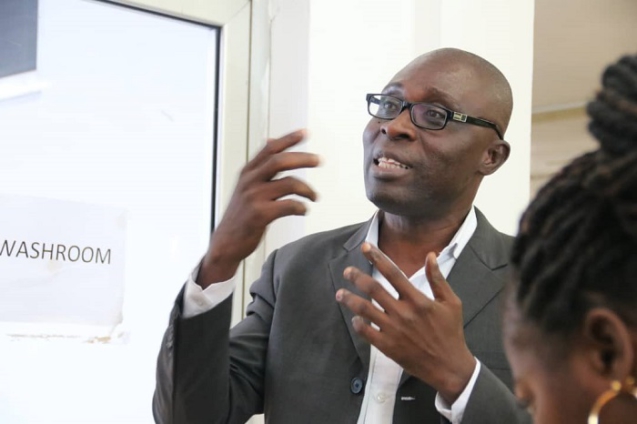
The writer is the General Secretary of the Ghana Journalists Association (GJA) and Communications lecturer at Wisconsin International University College, Email: kofiyebo@yahoo.com
Latest Stories
-
Nigeria set to launch National Digital Address System 9 years after Ghana showed the way
10 minutes -
Policy rate decision takes time to reflect in lower lending rates – BoG
20 minutes -
Western Regional Minister applauds Karpowership’s role in Ghana’s power sector
45 minutes -
Livestream: Road safety crises: Where are we getting it wrong?
47 minutes -
Enterprise Life celebrates 25 years of protecting families and building trust
55 minutes -
ICC London rules in favor of Ghana against Tullow over $400m tax charge
1 hour -
We are disappointed in ICC’s ruling over our corporate income tax assessment in Ghana – Tullow Oil
1 hour -
Cost of building inflation for August 2026 increases to 4.6% – GSS
1 hour -
Today’s front pages: Wednesday, September 30, 2026
2 hours -
Bawumia highlights agricultural, compulsory insurance reforms in IBAG engagement
2 hours -
Ghana will secure Tullow tax revenues while protecting Jubilee, TEN investments – Ato Forson
2 hours -
Ghana wins $393m Tullow tax arbitration as tribunal upholds GRA assessment
2 hours -
Gender Minister assures women’s group of action on Affirmative Action, Development Bank
3 hours -
Over 2,000 teachers in Dormaa comply with strike – GNAT Secretary
3 hours -
Food Buffer Stock seeks stronger liquidity buffer despite record profit
3 hours