

Audio By Carbonatix
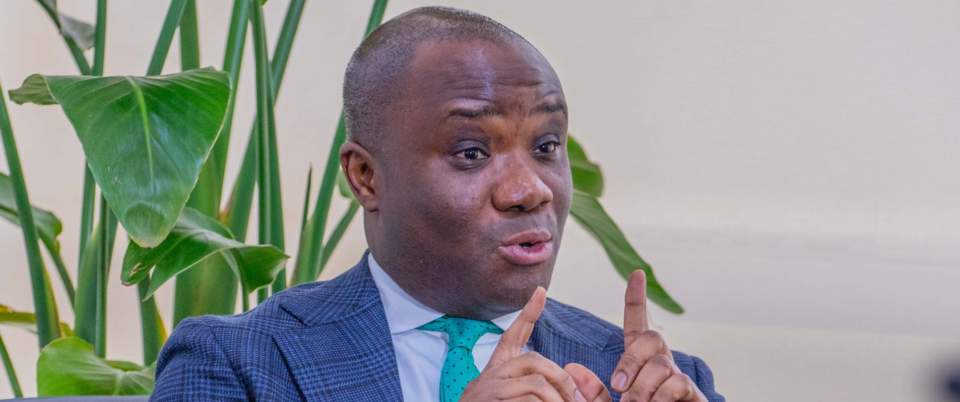
Minister in Charge of Government Communications Felix Kwakye Ofosu has defended President John Dramani Mahama’s request to the NDC Parliamentary leadership to suspend the introduction of a Private Members’ Bill seeking to scrap the Office of the Special Prosecutor (OSP).
His comments come amid concerns over possible executive overreach after President Mahama formally asked the Majority Leader, Mahama Ayariga, and the Majority Chief Whip, Rockson-Nelson Dafeamekpor, to halt their planned bill seeking to abolish the Office of the Special Prosecutor.
Speaking on JoyNews’ The Pulse on Thursday, December 11, he dismissed suggestions that the President was interfering with the work of the legislature, insisting that the President merely made a request, not a directive.
According to him, the President fully respects the principle of separation of powers and has no intention of dictating to Parliament.
“The President has not issued a directive but a request. It is true that the principle of separation of powers ought to be respected and the President respects that. But these are members of his party — the NDC — and on almost all issues, we tend to find a middle ground and consensus.
"So there is nothing wrong with engaging for further consultation to arrive at a common decision on a particular matter. It does not mean the President will get up and direct Parliament on what it should or should not do,”he stated.
When asked how he would personally navigate the issue as both a government spokesperson and a Member of Parliament expected to follow the direction of Parliamentary leadership, Mr. Kwakye Ofosu said:
“My records will show that when the matter first came up, I had my reservations. I felt doubtful about its necessity and about the work that has been done so far. But that does not mean the President—who is the leader of this nation—cannot hold a contrary opinion. And if he holds a contrary opinion and advances sound arguments, there is nothing wrong with considering them.”
He added that collaboration is essential when decisions have broader consequences for the country’s anti-corruption agenda.
“If other actors within the governance space are considering taking an action which the President believes may not augur well for the overall fight against corruption, there is nothing wrong with reaching out, dialoguing, and finding an amicable solution that benefits the people of Ghana,” he noted.
Latest Stories
-
Gov’t approves travel for DVLA staff to serve Ghanaians in diaspora – DVLA Boss
17 minutes -
We’re not interested in your theories – Afenyo-Markin rejects gov’t reserve policy, demands jobs
24 minutes -
Finance Minister unveils Ghana’s first comprehensive national policy designed to build external reserves
34 minutes -
GhIE urges Finance Minister to tackle road sector financial exposure
46 minutes -
Ghana appeals to Ukraine for release of citizens held as prisoners of war – Ablakwa
47 minutes -
Vudumane out with latest single ‘Love No Dey’
2 hours -
Health advocates call for nationwide HPV Vaccination for boys
2 hours -
Pope Leo to tour four African countries in first major overseas trip of 2026
2 hours -
Full text: Finance Minister presents Ghana Accelerated National Reserve Accumulation Policy
2 hours -
Rev Opuni-Frimpong calls for national dialogue on rising SHS indiscipline
2 hours -
Kumasi prodigy wins National Spelling Bee with ‘breviloquent’
2 hours -
Gov’t to purchase 3 tonnes of gold weekly in push for 15-month import cover – Ato Forson
3 hours -
The psychology behind scams: Why smart people get tricked
3 hours -
Clean Energy Chamber calls for lower import duties on EVs and components for local assembly
3 hours -
Communications Minister launches committee to safeguard sustainability of DTT platform
3 hours