


Audio By Carbonatix
One person has died after he was diagnosed with Lassa Fever, a disease that has killed at least 54 people in Nigeria within the past seven weeks.
The man, 26, reportedly died at the Tema General hospital in the Greater Accra Region.
The infection was confirmed by the Noguchi Memorial Institute, Myjoyonline.com has learnt.
Interacting the media Thursday, Director-General of the Ghana Health Service, Dr Anthony Nsiah-Asare confirmed the death but said the Service is working to stop the spread of the disease.
Lassa Fever is transmitted to humans via contact with food or household items contaminated with the urine, saliva faeces, and blood of infected rodents.
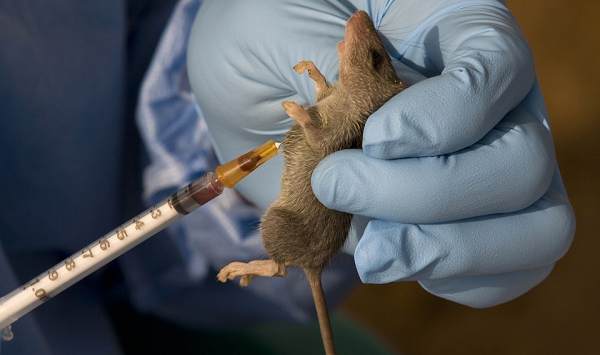
About 80% of the people who are infected with Lassa virus have no symptoms. One in five infections results in severe complications, with the virus affecting several organs such as the liver, spleen and kidneys.
It occurs in all age groups, both sexes and persons at the greatest risk are those living in rural areas, according to the World Health Organisation (WHO).
Demonstrating the preparation of the country, Dr Nsiah-Asare said currently all the frontline staff at the hospital that handled the patient before he died, were being screened.
He said further investigations to trace the background and all contacts of the deceased, were being pursued to prevent the spread of the virus.

Dr Anthony Nsiah-Asare
The GHS Director-General has called on the public to be extremely cautious of rodents, recommending good hygiene.
He also urged the public to report any suspected case of the disease.
Symptoms of Lassa fever
The incubation period of Lassa fever ranges from 6–21 days. The onset of the disease, when it is symptomatic, is usually gradual, starting with fever, general weakness, and malaise.
After a few days, headache, sore throat, muscle pain, chest pain, nausea, vomiting, diarrhoea, cough, and abdominal pain may follow. In severe cases, facial swelling, fluid in the lung cavity, bleeding from the mouth, nose, vagina or gastrointestinal tract and low blood pressure may develop.
Protein may be noted in the urine. Shock, seizures, tremor, disorientation, and coma may be seen in the later stages. Deafness occurs in 25% of patients who survive the disease. In half of these cases, hearing returns partially after 1–3 months. Transient hair loss and gait disturbance may occur during recovery.
Death usually occurs within 14 days of onset in fatal cases. The disease is especially severe late in pregnancy, with maternal death and/or fetal loss occurring in more than 80% of cases during the third trimester.
Latest Stories
-
Pentecost University to host international sustainability conference
4 minutes -
Ampofo Ankrah did not collect World Cup visa money – Lawyer
14 minutes -
Baffour Awuah to spend night in EOCO custody – Atta Akyea
16 minutes -
Torgbiga Wenya III opposes proposed elevation of 36 Anlo chiefs to Paramount status
24 minutes -
The strengthening El Niño and what it could mean for Ghana
27 minutes -
Baffour Awuah formally charged with money laundering, loss of public funds – Lawyer
28 minutes -
Drone flight over EOCO building could attract 30-year jail term – Security consultant
36 minutes -
Flying drone over EOCO premises is strictly prohibited – Security consultant
36 minutes -
SIC file was surrendered to client, EOCO has no reason to search Manhyia South MP’s firm – Atta Akyea
37 minutes -
EOCO search of Baffour Awuah’s law firm raises confidentiality concerns – Atta Akyea
38 minutes -
“I will never ignore an invitation from EOCO if I had received one” — Manhyia MP
40 minutes -
Baffour Awuah ready to cooperate fully with EOCO investigation – Bosome Freho MP
1 hour -
How a Ghanaian technology is helping fish farmers detect hidden threats before fish die
1 hour -
AI tool helps Ghanaian farmers identify crop threats from field observations
1 hour -
NEIP: Designing a Ghana Startup Agency that builds enterprises, not programmes
1 hour