


Audio By Carbonatix
Upper West Regional Minister, Dr Hafiz Bin Salih, has bemoaned the late reporting of patients who have been infected with Cerebrospinal Meningitis (CSM) in the region.
The area has recorded 33 deaths in the last three months with an additional 214 receiving treatment in 4 hospitals.
''The primary contributory factor to the death that we have recorded in the region is because patients report late to our health facilities," the Ministers said.
He further explained: "They are not dying because there is no medicine. I can say without any contradiction that we have more than enough medicine to take care of CSM patients in the Upper West Region."

Dr Bin Salih gave the assurance at a ceremony held at Nadowli where the NPP parliamentary candidate for the Nadowli-Kaleo constituency, Elvis Botaa, donated veronica buckets, liquid soap and hand sanitisers.
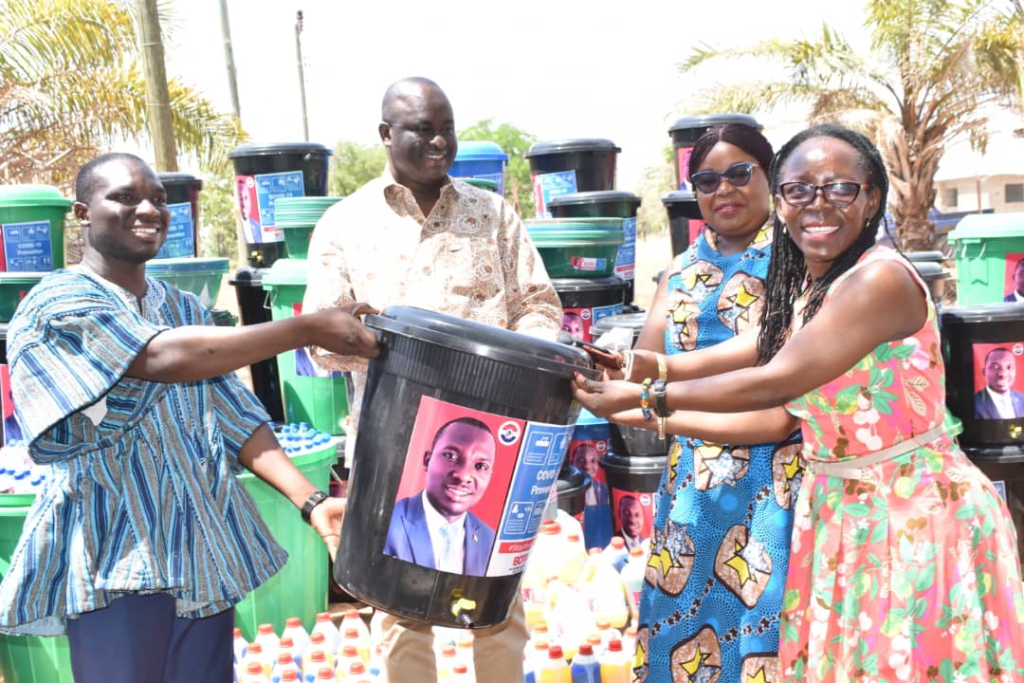
The Regional Minister also stated that though they have been overwhelmed by the fight on the Covid-19 pandemic, they have not been distracted from the cases of CSM.
He urged health practitioners in the region to include education on CSM when sensitising the people of the coronavirus.
''Lets us do away with the politics of CSM. That will not benefit any political party or individual in the region'.'
On the issue of the coronavirus, Dr Bin Salih said that the disease is no respecter of persons nor political party for which reason it must not be politicised. According to him, a united front is the best way of tackling the outbreak.
The Upper West Regional Minister was full of praise for the Nadowli-Kaleo health directorate for its handling of activities especially, in the wake of Covid-19. As a result, he donated GH¢2,000 to the directorate to aid in its work.
Nadowli-Kaleo District Director of Health, Phoebe Balangunyetimi, noted that Covid-19 is a common enemy that could successfully be fought by teamwork.
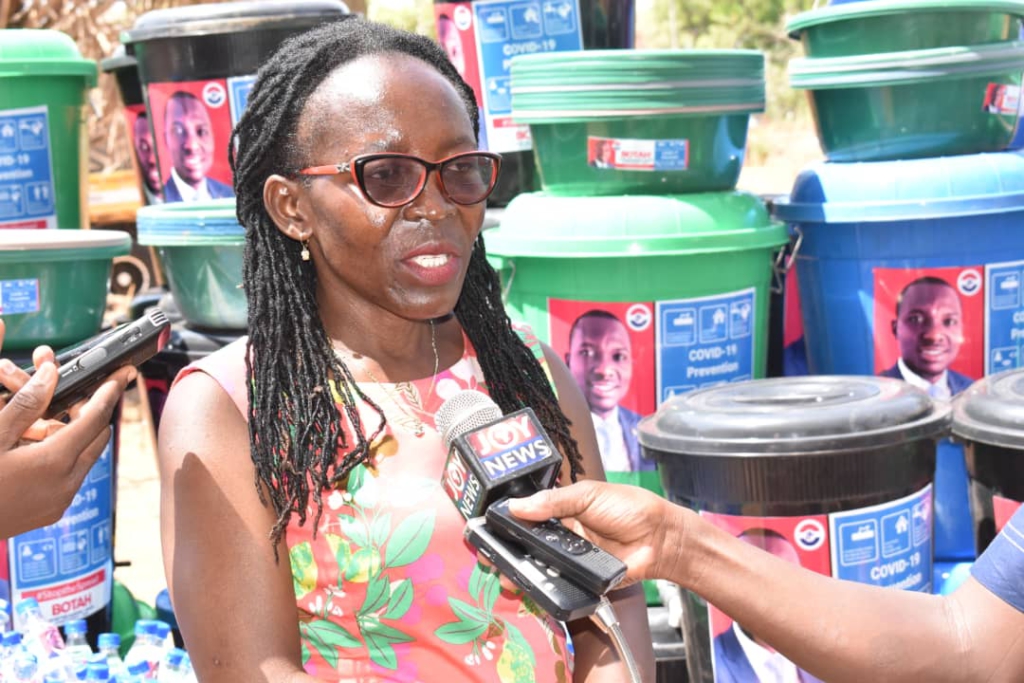
"No individual can fight it, it has no respect for age, color or political afflation. If you are going to fight an enemy you don't go with a disintegrated force., you go in a unified force so that you will be able to strategise to defeat the enemy," she said.
In this era, no amount of resources is too small. Whatever we get in the district or in the country, will go a long way in fighting the disease. If we break transmission here, we break transmission in other places,'' she added.
Latest Stories
-
The Ghanaian prophet and the mysterious death of his scottish wife Charmain Speirs
30 minutes -
Nearly 400 sentenced in Nigeria for links to militant Islamists
51 minutes -
Ghana’s recovery supported by gold strength despite global oil price pressures – Standard Bank Research
58 minutes -
Kwaku Azar writes: A-G vs OSP
2 hours -
Mfantsipim–Adisadel rivalry built excellence, not division – Sam Jonah
2 hours -
Vice President launches Mfantsipim’s 150 years of shaping Ghana’s greatest mind
2 hours -
I assure Otumfuo, Mahama will join him to commission KNUST Teaching Hospital by end of this year – Haruna Iddrisu
3 hours -
Barcelona dominate derby to extend La Liga lead
3 hours -
Gov’t to roll out free special education for persons with disabilities from July 1 – Education Minister
3 hours -
Importers and Exporters Association declares full support for Publican AI port system
4 hours -
“We used it to test our officiating officials’ readiness” – Bawah Fuseini after CAA Athletics event
4 hours -
Volleyball emerges as Ghana’s fastest rising sport
4 hours -
National Sports Fund needs strong leadership from the top – Administrator David Wuaku
4 hours -
JoySports Exclusive: Steve McLaren in talks with GFA after expressing interest in Black Stars job
4 hours -
Fire guts auto parts warehouse at Bubuashie, one fire officer injured
4 hours