

Audio By Carbonatix
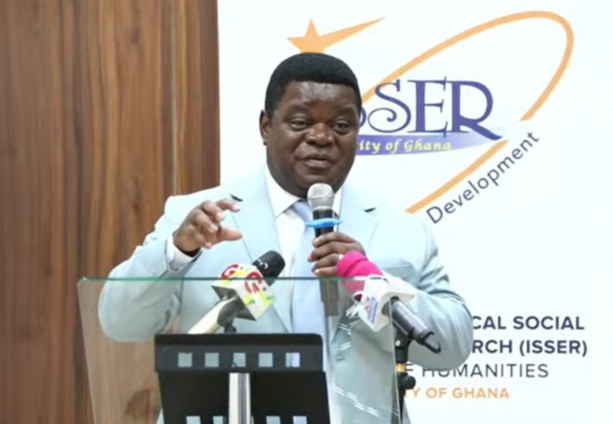
Prof. Petr Quartey of the Institute of Statistical, Social and Economic Research, (ISSER), has urged the government to revisit its decision to bear the fees of first-year students in public universities.
He acknowledged that while the decision is in fulfilment of a campaign promise made by the present administration, it may not be the most pressing challenge facing Ghana’s education.
The government is allocating GHȼ499,915 to fulfil the key campaign promise, but Prof. Quartey says the decision requires a review.
"What about students in private universities?" he asked. "Many of such private university students are from less privileged homes but are forced into private universities due to grades or limited public slots. Shouldn’t support be extended to such needy students in private institutions too?"
He also pointed to poor conditions in basic schools, citing instances of pupils sitting on blocks or lying on floors to write.
"Before paying fees for everyone, shouldn’t we invest in improving basic education infrastructure?" he questioned.
Accommodation challenges in universities were also cited as a concern. "Every year, only about 20% of students secure accommodation on campus. Is it efficient to pay fees for students who have no place to stay?"
The analyst called for a review of the free Senior High School (SHS) policy and other social interventions, stressing the need for sustainability and proper targeting.
"We’re struggling to sustain free SHS. Let’s revisit these policies to ensure value for money," he added.
On school feeding, he noted that the 33% increase in funding is good news but called for decentralised procurement to eliminate partisanship, saying there is too much politicisation in the programme.
He described disturbing reports of students being fed with little to no protein, urging reforms to ensure children receive proper nutrition.
Prof. Peter Quartey stressed the importance of leveraging ICT to enhance revenue mobilisation and welcomed the reintroduction of road tolls, saying "It’s a laudable idea, but let’s invest in infrastructure first to avoid congestion."
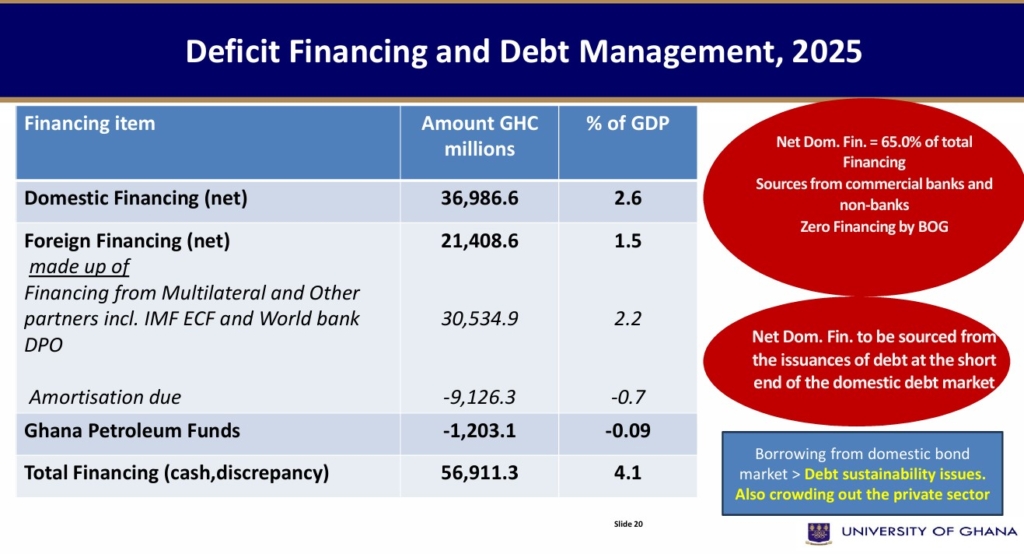
Ghana’s economic growth is projected to slow to 3.8% in 2025, down from earlier forecasts of 4%, raising fresh concerns about the country’s recovery prospects.
Industrial growth is also expected to fall sharply from 7.1% to 3.3%, despite the five tax reliefs and policy interventions aimed at stabilising the exchange rate and stimulating the economy.
Latest Stories
-
French Embassy trains Ghana Police CTU in counter-terrorism operations
9 minutes -
UPSA uncovers mass results manipulation involving 178 students, over 500 results compromised
44 minutes -
ECG announces planned power outages in parts of Tema from Sept. 29 to October 1
1 hour -
Sylvester Mensah urges Latenu FM to promote trade, export opportunities in Ga
1 hour -
Ga language under threat of decline as children shy away from speaking it – Sylvester Mensah
1 hour -
‘Let every Ga child you raise know the Ga language and story’ – Sylvester Mensah
1 hour -
‘We are not deterred’ – Ablakwa responds to backlash over South Africa evacuation
2 hours -
NCA announces major voice and data disruption across Northern Ghana due to fibre cuts
2 hours -
Photos: Housing solutions take centre stage at Day 2 of the 3rd Republic Bank-JoyNews Habitat Fair
3 hours -
Ghana Air Force passes out 293 recruits after six months of intensive training
3 hours -
EOCO vrs Baffour Awuah: EOCO should have secured warrant before arrest attempt at court – Inusah Fuseini
3 hours -
Triple fibre cuts disrupt telecom services across Northern, Oti regions – Sam George
4 hours -
Politicisation could undermine parliamentary probe into cocaine seizures – Dr Osae-Kwapong
4 hours -
EOCO chases MP: Can Section 41 cure lacuna in EOCO Act? – Inusah Fuseini asks
4 hours -
GNFS, GWL inspect fire hydrants in Ministries enclave; 23 found faulty
4 hours