

Audio By Carbonatix
The Textile Garment and Leather Employees Union (TGLEU) says local Ghanaian textile companies are capable of producing international standard fabrics purposely for nose mask.
The nose mask has become a hot commodity globally in the wake of the COVID-19 pandemic as health experts encourage its use to avoid contracting the virus.
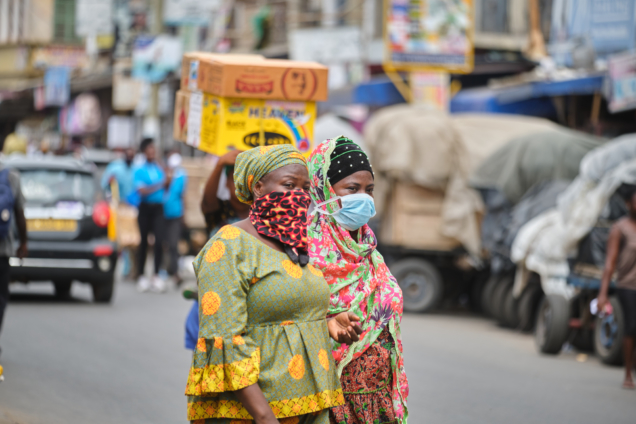
In Ghana, many people are now going into the sewing of cloth masks due to the scarcity of the disposable ones and the quest to provide the public with some protection that could also suit their pockets.
Mr Abraham Koomson, General Secretary of the Union and the Ghana Federation of Labour (GFL) in an interview with the Ghana News Agency on the new trend, said the Ghana Standard Authority (GSA), Ministry of Health (MOH) and other relevant agencies must ensure that cloths used for such masks met some specifications.
Mr. Koomson said the local textiles companies must be given the necessary specifications for cloths or fabric that could be used for the masks to ensure the health safety of users.
According to him, the use of cloths manufactured for fashion purposes was not suitable for the production of nose masks as they may have some health implications due to the dyes and other chemicals used in producing such cloths.
“There are health implications because of the chemicals and dyes used. Even more dangerous if the fabrics originate from China. People have become fashionable with these masks and therefore are defeating the purpose of its use if specifications are not considered”.
He said to ensure the safety of the people, only cloths with specifications produced by local textiles companies should be approved for use for the production of nose masks.
Mr. Koomson also appealed to government to consider producing such masks in large quantities so as to be able to distribute freely to everyone or have certified agents to sell approved nose masks to the public.
Latest Stories
-
David Selassie Anthony declares bid for NDC Deputy National Organiser
1 hour -
Amin Adam proposes 13 measures to strengthen Ghana’s debt transparency and market confidence
2 hours -
Mahama announces $2bn annual investment to accelerate industrialisation
2 hours -
Amin Adam urges monthly disclosure of Sinking Fund as Ghana prepares for DDEP repayments
2 hours -
Stronger banks will fuel business growth and jobs – ADB MD
2 hours -
Galamsey: ‘Rivers that fed our grandparents now run the colour of chocolate milk’ – Sam Jonah
2 hours -
We have been scammed by NDC, government is only doing PR – Abanga Fuseini
2 hours -
Republic Bank–JoyNews Habitat Fair opens in Ho today
2 hours -
BoG pledges stability to attract investment, urges stronger Africa–Asia partnerships
2 hours -
Amin Adam warns treasury bill dependence could expose Ghana to refinancing risks
2 hours -
Ghana better placed to withstand commodity price shocks – IMF
2 hours -
GAPTE intensifies efforts to increase bus availability for Aayalolo contra-flow
2 hours -
Amin Adam warns cedi depreciation could reverse Ghana’s debt relief gains
2 hours -
Fiscal discipline crucial for pension fund investments – Finance Minister
2 hours -
BoG Governor rallies IMF to back Africa’s digital sovereignty
2 hours