

Audio By Carbonatix
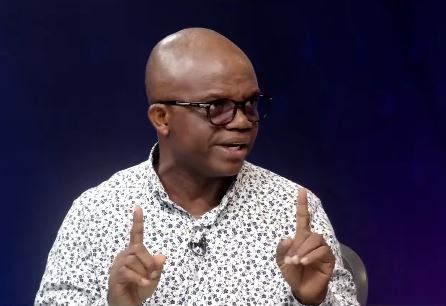
Former Deputy Finance Minister Dr Stephen Amoah has dismissed President John Mahama's claims that Ghana’s economy is in a dire state.
According to the Nhyiaeso MP, while the economy faces challenges, the President’s portrayal of the situation as a near-collapse is misleading and does not reflect reality.
“....Our President, John Mahama is respectfully creating a picture as if the economy is in a coma. Totally, it is not true," he asserted on JoyNews PM Express on Monday, March 3.
He argued that Ghana’s current economic trajectory under the former President Akufo-Addo-led administration is far better than what was handed over in 2016 by the National Democratic Congress.
He stated that while economic growth stood at 3.4 per cent in 2016, it had risen to 6.3 per cent by the end of 2024.
Similarly, agriculture, which grew at 2.7 per cent in 2016, had improved to 4.5 per cent by the time of transition.
Dr. Amoah also attributed some of the country’s economic challenges to global factors, particularly the impact of COVID-19.
He noted that Ghana’s debt-to-GDP ratio increased because of necessary debt financing, as government revenues took a major hit due to the pandemic.
“Maybe, if you say we have challenges, that one is true. Maybe our president is still dwelling on what happened with post-COVID, 2022, where the world grew negative 3.3 - we grew 0.4 or 0.5. We even grew positive, but it was too small,” he said.
He further noted that during the pandemic, civil servants were paid despite working in shifts, while over 40,000 private sector employees lost their jobs.
These, he said, were necessary but difficult decisions that impacted the economy.
“I've never seen in the history of this country that public and then civil service workers were asked to stay home, but they were paid for some months, and even beyond the months they ran a shift way over one year. That's if they’re 10, five workers go for one week or two weeks, and they were all being paid,” he explained.
Additionally, Dr. Amoah argued that Ghana’s debt situation should be analysed in context, stressing that debt-to-GDP ratio is more critical than nominal debt figures.
“You know, everywhere in the world, majorly, you use debt financing or your revenue. So if your revenue goes down badly, you will resort to debt financing. And debt to GDP is what matters, not even the nominal value,” he noted.
Latest Stories
-
NPP must aim for decisive 2028 parliamentary Majority — Minority Leader
26 minutes -
Ghana not afraid of Germany like a few years ago – Kurt Okraku
30 minutes -
UNESCO-Ghana, Manhyia Palace Museum seal partnership as 2026 Otumfuo Art Awards launched
55 minutes -
Ibrahim Mahama faces Police board as assault probe continues
1 hour -
UK–Ghana study tour strengthens partnership on roads and future transport systems
1 hour -
Renting out your Accra apartment: Should you short-let or long-let in 2026?
1 hour -
Government communication alone won’t fix tomato shortage – Dr Charles Nyaaba
1 hour -
Ghanaian community in Switzerland champions inclusive governance at Diaspora Dialogue Series
2 hours -
UN slavery resolution isn’t binding, but revives calls for reparations – Prof Appiagyei-Atua
2 hours -
Ablakwa expresses deep gratitude to UN member states for backing Ghana’s slavery resolution
2 hours -
Gender Minister engages management, introduces new Chief Director at MoGCSP
2 hours -
Last Gallop: The rise, fall and fight for Horse Racing in Ghana
2 hours -
Communications Minister launches Ghana Climate Atlas to strengthen planning and climate resilience
2 hours -
Maintain credibility, reduce commentary — NDC elections director advises Mussa Dankwah
2 hours -
NDPC urges time discipline and stronger systems to accelerate Ghana’s development
2 hours