

Audio By Carbonatix
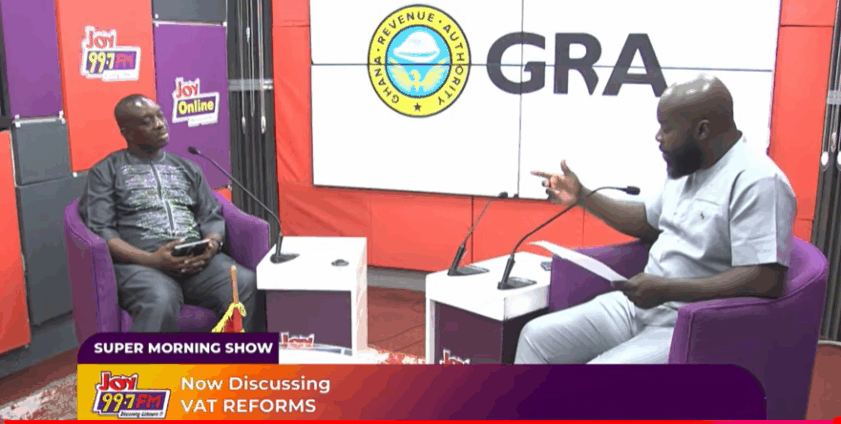
Chief Revenue Officer at the Domestic Tax Revenue Division Free Zones Unit of the Ghana Revenue Authority (GRA), Dominic Adamnor Nartey, says the newly passed VAT Act 2025 (Act 1151) will not automatically lead to higher prices of goods and services, despite concerns over the shift from a 4% flat rate to a 20% standard Value Added Tax.
He explained that the new law was introduced to simplify Ghana’s tax system and address long-standing distortions, stressing that price increases attributed to the policy are largely due to business pricing decisions rather than the tax itself.
Speaking on JoyFM’s Super Morning Show on Thursday, February 19, Mr Nartey said the VAT Act 2025 was necessary because Ghana’s VAT framework had become fragmented after years of multiple amendments.
“The Act was brought into existence because the last time we had a comprehensive review of VAT was 2013,” he said. “After that, it suffered a lot of amendments, making the Act fragmented. Act 1151 has come to consolidate all the scattered amendments and simplify the system.”
The new legislation has generated widespread public debate, particularly among traders who argue that the move to a higher standard VAT rate could increase the cost of goods and affect business competitiveness. Some business groups have expressed concern that companies not registered for VAT often charge lower prices, placing VAT-registered traders at a disadvantage.
However, Mr Nartey dismissed claims that the revised tax structure inevitably results in higher prices, insisting that proper pricing methods would prevent such outcomes.
“That is not exactly correct,” he said. “If you build your price according to what the GRA expects you to do, there is no difference.”
He further noted that the Act also seeks to correct tax distortions, including the cascading effect of taxes where multiple layers of taxation raise the final cost of goods. According to him, streamlining the VAT system will improve tax administration, enhance compliance, and make domestic revenue mobilisation more efficient.
The VAT reform forms part of broader government efforts to strengthen Ghana’s revenue base and improve fiscal management, although public discussion continues over its potential impact on businesses and consumers.
Latest Stories
-
Netherlands Fire Chief in Ghana to support fire safety reforms and market fire prevention efforts
4 hours -
Mason goes on remand for stealing
4 hours -
Gov’t cuts fuel taxes, deploys buses to curb impact of rising fuel prices
4 hours -
Interior Minister calls for intelligence-driven strategy as Ghana strengthens counter-terrorism efforts
4 hours -
Adenta Circuit Court remands Pastor William Gyimah over viral threats against Vice President
5 hours -
“We’ve implemented changes to prevent a repeat of the AFCON final” – CAF President Motsepe
5 hours -
Gov’t orders deployment of Metro Mass buses to cushion commuters amid fuel price hike
6 hours -
Key Indian state polls begin in test for Modi’s party
6 hours -
Playback: Gomoa Easter Carnival in photos
6 hours -
Gov’t orders removal of fuel taxes to ease pump price hikes
7 hours -
“Whatever the decision of CAS, we will respect it” – CAF President Motsepe after AFCON final meetings in Morocco
7 hours -
Emma Ankrah: When waiting becomes part of treatment – Reflections on hospital care
7 hours -
Ghana urges travellers to prepare for new EU border system roll-out
7 hours -
Mahama enforces fuel coupon ban for ministers as cabinet moves to slash fuel taxes
7 hours -
Task force probes strange fish deaths in Tema
7 hours