

Audio By Carbonatix
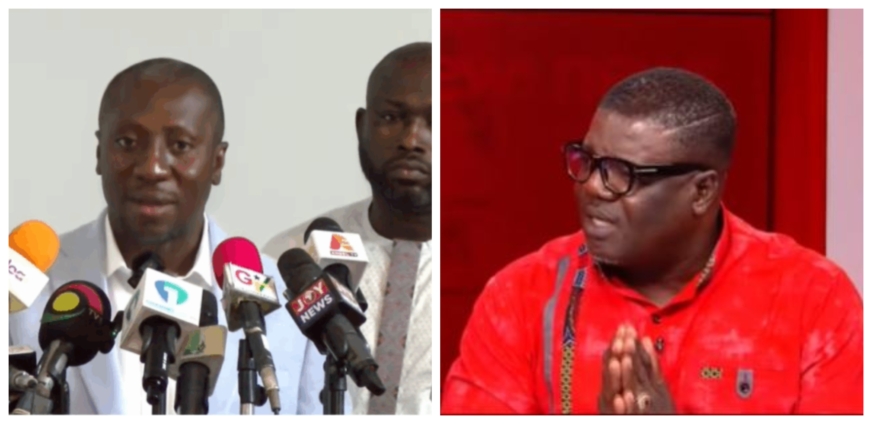
Member of Parliament for South Dayi, Rockson-Nelson Dafeamekpor, has dismissed claims by Minority Leader Alexander Afenyo-Markin that the Minority can block government business brought before Parliament under certificates of urgency.
Speaking in an interview on Joy FM’s Top Story on Monday, Mr Dafeamekpor questioned the constitutional basis of the Minority Leader’s position, insisting that no provision of the Constitution grants him authority to prevent the introduction of urgent bills.
“What is the Minority Leader saying? Which part of the Constitution gives him such powers that he can stop the government from introducing a deal in pursuance of Articles 106 and 108 under a state of urgency?” he asked.
His comments come after the Minority in Parliament warned that it would no longer allow bills and agreements to be rushed through the House under certificates of urgency without proper scrutiny.
Addressing journalists at a press briefing, Minority Leader Alexander Afenyo-Markin said the Minority would resist what he described as the abuse of parliamentary procedure when Parliament reconvenes on February 3.
“We promise the people of Ghana that when Parliament reconvenes, we are not going to allow the Majority to have it their way,” Mr Afenyo-Markin said, accusing the Majority of turning Parliament into a “fast-track” and “rubber-stamp” institution.
He cited laws such as the GoldBod Act and energy sector levies as examples of legislation passed under rushed procedures and warned that the Minority would oppose any further attempts to bypass detailed debate.
The Majority Chief Whip argued that Mr Afenyo-Markin’s posture was inconsistent with his own record when he previously served as Majority Leader.
“When he was Majority Leader, how many bills did he introduce under certificates of urgency, and who questioned him?” Mr Dafeamekpor said, adding that he was prepared to provide figures to show the number of bills and agreements fast-tracked under Mr Afenyo-Markin’s leadership, as well as those passed under former Majority Leader Osei Kyei-Mensah-Bonsu.
The Majority Chief Whip accused the Minority Leader of misleading the public and politicising parliamentary procedure.
Mr Dafeamekpor further rejected the Minority Leader’s claim that the lithium agreement was rushed through Parliament, insisting that the agreement did not even amount to a bill.
“The lithium agreement is not a bill. It is an agreement between government and an investor which, by law, must be brought to Parliament for ratification,” he explained. “In the course of the ratification, concerns were raised and government withdrew it so that those concerns could be factored into the agreement before it is brought back.”
Latest Stories
-
Consumer, business sentiments positive – BoG
6 minutes -
There’ll be no GHS500 Cedi note as part of Heritage Series issuance – BoG
23 minutes -
Heritage Series Cedi notes to modernise cedi while preserving national identity – BoG
37 minutes -
Ghana’s business environment at ‘Inflection Point’ as private Sector takes greater lead — Vish Ashiagbor
44 minutes -
At least 2 new airlines could join domestic aviation market by 2027 – GCAA Director General
53 minutes -
What if Ghana’s next tourism boom begins with Ghanaians?
1 hour -
Energy Commission to monitor EV charging stations
1 hour -
Invest with confidence, Ghana’s golden era is beginning – Finance Minister
1 hour -
Do Ghana to launch The Great Ghana Day Out on World Tourism Day
1 hour -
Clean up our politics before politics cleans us up
2 hours -
2025 was a turning point, says Abradu-Otoo as NAFCO posts record GH¢91.7m profit
2 hours -
Today’s front pages: Friday, September 25, 2026
3 hours -
‘FA President has four clubs; what do you think he would do?’ – Nana Baffour Awuah fires back
3 hours -
Kurt Okraku doesn’t like criticism, but Ghana football is beyond him – Nana Baffour Awuah
3 hours -
Ghana’s Liquidity Paradox: Why capital is not reaching productive businesses
3 hours