

Audio By Carbonatix
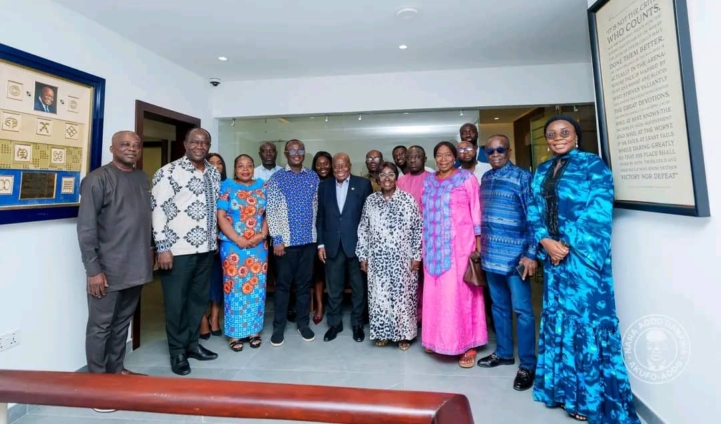
The New Patriotic Party (NPP) Presidential Elections Committee held a high-stakes consultative meeting with former President Nana Addo Dankwa Akufo-Addo at his private office in Labone on Friday, January 9, 2026.
The meeting forms part of a series of strategic engagements aimed at ensuring a seamless and transparent process as the party prepares to elect a successor to lead the NPP into the next general elections.

The committee, led by seasoned party stalwarts, briefed the former President on the current roadmap, logistical preparedness, and the vetting protocols established to maintain party unity.
The upcoming presidential primary is widely regarded as a watershed moment for the NPP.

Following the party's transition into opposition, the leadership is under immense pressure to present a candidate capable of reclaiming power.
Sources close to the committee indicate that the meeting at Labone focused on voter register integrity and conflict resolution mechanisms.
Former President Akufo-Addo, acting in his capacity as an elder of the party, reportedly emphasised the need for an even playing field to prevent internal fissures that could jeopardise the party’s chances in the national polls.

The engagement at the Labone office is seen as a move to secure the institutional blessing of the former President, whose influence remains significant within the party’s core base.
Insiders suggest that former President Akufo-Addo urged the committee to prioritise data-driven campaigning and to ensure that the eventual winner receives the total support of all losing candidates.
The Presidential Elections Committee is expected to release a final list of qualified candidates, following the conclusion of the appeals process for any disqualified aspirants.

The 2026 flagbearer race is expected to be one of the most contested in the party’s history.
Below are the critical details governing the process:
- Voter Base: Approximately 200,000 delegates are expected to cast their ballots across all 275 constituencies. This includes constituency executives, regional executives, members of parliament, and representatives from the party’s external branches.
- Vetting Standards: The Committee has introduced more stringent vetting criteria, focusing on the "marketability" and "untainted track record" of aspirants to withstand the rigours of a national campaign.
- Decentralized Voting: In a bid to enhance transparency and reduce the risk of centralising influence, the party will utilize a decentralised voting model, where delegates will vote simultaneously at designated centres across the country.
Latest Stories
-
I have supported highway authority financially to fix roads in my constituency – A Plus
9 minutes -
US, Iran fail to reach peace agreement after marathon talks in Pakistan
33 minutes -
ECG kicks off Phase Two of transformer upgrades at Lashibi; brief outages expected
1 hour -
Port crises loom as 11,000 drivers threaten four-day strike
2 hours -
A source of excellence across generations – Vice President Opoku-Agyemang lauds Mfantsipim
3 hours -
(Photos) Mfantsipim School launches historic 150th anniversary
3 hours -
Knights and Ladies of Marshall group backs Catholic Bishops’ stance on anti-LGBTQ+
4 hours -
Bright Simons writes: All the Filla in the Ibrahim Mahama/E&P – Gold Fields Saga
5 hours -
Monetise Idiocy In Ghana
5 hours -
The Ghanaian prophet and the mysterious death of his scottish wife Charmain Speirs
5 hours