

Audio By Carbonatix
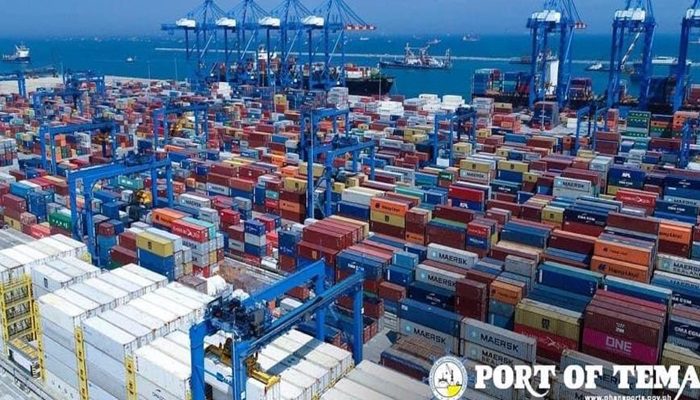
Opioid drugs worth approximately GH₵20 million have been intercepted at Tema Port.
The shipment was en route to Niger, its final destination.
This was made possible through the efforts of the Customs Division of the Ghana Revenue Authority (GRA), in collaboration with other stakeholders.
Following this, Minister of Health Kwabena Mintah Akandoh reaffirmed the government's commitment to preventing Ghana from being used as a transit point for opioid trafficking.
“Inasmuch as we are interested in facilitating trade in this country, we will not allow Ghana to be a safe haven for opioids. And let me tell you that the president is personally interested in this matter. On my way here, he called me twice, and it tells you how important and critical this particular issue is,” he told journalists at the port.
The seized shipment included Rahol Tapentadol 250 mg – 26 cartons; Tafradol Tapentadol 120 mg – 160 cartons; Timaking Tapentadol 120 mg – 40 cartons; Loperamide 2 mg – 190 cartons; Chlorpheniramine Maleate – 320 cartons.
On March 1, a Fellow in Public Health at the Centre for Democratic Development (CDD), Dr. Kwame Sarpong Asiedu, called on the Customs Division of the GRA to provide answers on how illegal opioids entered the country.
Speaking on Newsfile on JoyNews on Saturday, 1st March, Dr. Asiedu described the situation as alarming, following the BBC exposé on the influx of dangerous opioids.
He pointed out that the seizure of the drugs by the Food and Drugs Authority (FDA) confirms that they entered the country through Ghana’s ports. However, he noted that it was the Narcotics Control Commission (NACOC) that acted on intelligence to intercept them.
“The products being seized by the FDA means they got through our ports. It was NACOC that had intel which led to the seizure. So that is complete confirmation that these drugs are entering through our ports, and that is scary,” he stated.
Dr. Asiedu emphasised that Customs, as the custodians of the country’s entry points, including Tema, Takoradi, and Kotoka International Airport, must be held accountable. He explained that medicines are regulated products, meaning both the FDA and NACOC should be informed before clearance.
“If these containers got out of our ports without the knowledge of NACOC and the FDA, it means there is some level of complicity from Customs because the drugs did not go through the right channel,” he said.
He further raised concerns about weak collaboration between agencies responsible for securing the country’s drug supply chain.
Latest Stories
-
What everyone should know about C-sections
2 minutes -
Health Ministry engages Ga Mantse ahead of Free Primary Healthcare launch
32 minutes -
We can tackle multiple priorities – Sam George defends Anti-LGBTQ Bill push
1 hour -
Statement: Ghana Chamber of Mines’ Response to Claims in Joe Jackson’s “Ananse Stories about the Economy of Ghana”
1 hour -
GES opens 2026 teacher recruitment for licensed B.Ed graduates
1 hour -
Ghana must value skilled trades, build resilient learners — Ibn Chambas
1 hour -
Ghana must rethink education around relevance, resilience and responsibility — Ibn Chambas
1 hour -
Prince Harry faces defamation lawsuit from charity he co-founded
1 hour -
South Korea deploys thermal cameras to track escaped zoo wolf
1 hour -
Calls for royal meeting with Epstein survivors grow ahead of US visit
1 hour -
Ibn Chambas advocates blend of technology and human values in education
1 hour -
UMA improves healthcare access in Asutifi North with GH₵700k ‘Kim Taylor Legacy’ Walkway
2 hours -
Scholarships Authority and Fanaka University offer sponsorship for procurement and supply chain studies
2 hours -
Bisa Kdei drops new single ‘Go N Look’ featuring Medikal
2 hours -
Benin facing rising terrorism in north as French military presence faces growing criticism
2 hours