

Audio By Carbonatix
A Political Scientist at the University of Ghana, Dr Kwame Asah-Asante, says the legal controversy surrounding the powers of the Office of the Special Prosecutor (OSP) is being overstated and can be resolved through clear reforms, even as a court ruling continues to stir national debate over the agency’s independence.
His comments come in the wake of a High Court decision on April 15, 2026, which held that the OSP cannot prosecute cases without the express authorisation of the Attorney General, a ruling that has triggered strong reactions from civil society organisations and renewed scrutiny of Ghana’s anti-corruption framework.
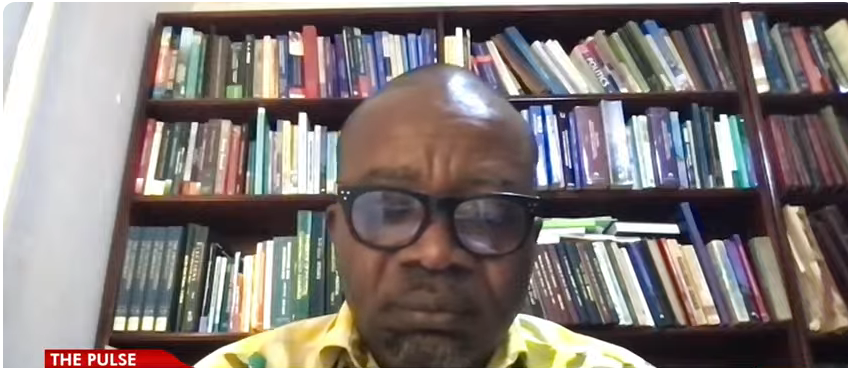
Speaking on JoyNews Pulse on April 23, Dr Asah-Asante questioned the intensity of public concern around the matter, suggesting that the issue is being complicated beyond necessity.
He also pushed back against arguments from civil society groups, including CDD-Ghana and IMANI Africa, which have warned that the ruling could weaken the OSP’s independence.
“I don’t understand the CSOs’ position,” he said, noting that the matter is already before the courts for interpretation. “So I’m struggling to understand where the government comes in. I’m really, really struggling.”
His remarks come after the CSOs cautioned President John Dramani Mahama against any steps that could undermine the OSP, arguing that such moves risk weakening Ghana’s anti-corruption fight.
The groups have also announced plans to join the ongoing Supreme Court proceedings as amicus curiae to defend the agency’s constitutional mandate.
But Dr Asah-Asante insists the debate should focus on workable solutions rather than escalating political tension. According to him, the core issue is whether the OSP’s requirement to seek authorisation from the Attorney-General genuinely hampers its operations.
“Is it difficult for OSP to get authorisation from the Attorney-General? If the answer is no, then I don’t see the problem. If the answer is yes, then it becomes a different conversation altogether,” he said.
He further suggested that if operational bottlenecks exist, they could be addressed either through administrative arrangements or, in some cases, an executive instrument to strengthen the OSP’s autonomy. In his view, the current debate risks creating the impression that the problem is beyond repair when practical options may exist.
“If indeed all of us are interested in the state fighting corruption head-on, then there is a way to make the OSP work very well,” he said. “I don’t see why we should treat this as something that cannot be fixed.”
Dr Asah-Asante also raised broader concerns about Ghana’s commitment to fighting corruption, arguing that the focus should be on strengthening institutions rather than deepening institutional conflict.
“Having looked at all these things, my question is: is the state interested in fighting corruption? If the answer is yes, then what can be done now to make the OSP function effectively?” he asked.
Ghana’s anti-corruption architecture has been under sustained public scrutiny in recent years, with successive administrations pledging to empower independent investigative bodies. The OSP, established to prosecute corruption-related offences independently, has often found itself at the centre of legal and political debates over the scope of its authority.
As the matter heads toward the Supreme Court, Dr Asah-Asante’s intervention adds another layer to the national conversation, one that shifts attention from alarm to the possibility of institutional reform.
Latest Stories
-
MTN set to deploy 5G services after winning spectrum licenses worth US$202m
30 minutes -
NPP national elections: 3,000–4,000 police to handle security, traffic in Kumasi – Karbo
3 hours -
Atta Akyea fumes as Manhyia MP is to spend another night in EOCO custody
3 hours -
SSNIT says La Beach clearance was to protect hotel investments, beaches to remain public
4 hours -
APSU congratulates St Augustine’s College after back-to-back National Investment Quiz wins
4 hours -
Renewed flood intervention at Mallam Junction raises hopes among residents, businesses
5 hours -
St Augustine’s College retain National Investment Quiz title after nail-biting grand finale
5 hours -
Education infrastructure investment will drive Banda’s development – Ahmed Ibrahim
5 hours -
Teacher unions strike: Gov’t presents fresh proposals as talks end inconclusively
6 hours -
51,000 teachers’ promotion arrears to be validated for October payment – Education Minister
6 hours -
Kwabena Boamah appointed Board Chair for Impact Investing Ghana
6 hours -
Striking teacher unions to meet Fair Wages and Salaries Commission on October 6
6 hours -
EOCO working with AG to arraign Nana Baffour Awuah before weekend court
7 hours -
Duraplast reassures customers after fire, announces October 5 reopening
7 hours -
Call off strike, gov’t will not renege on promotion arrears pledge – Haruna Iddrisu to teacher unions
7 hours