

Audio By Carbonatix
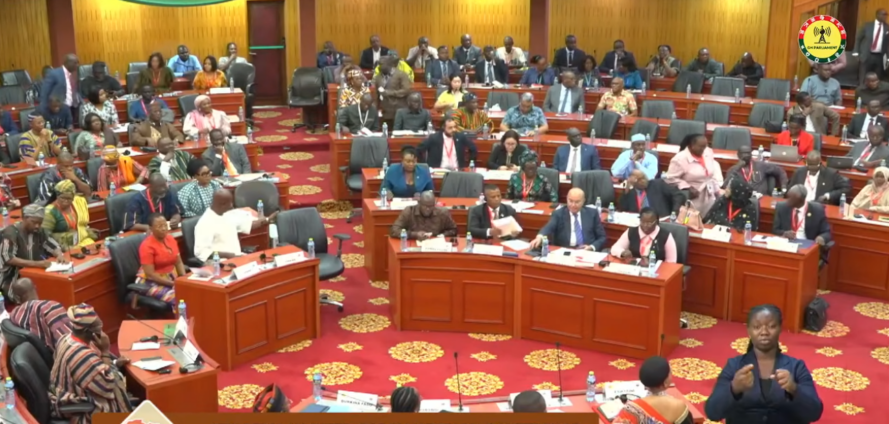
Leaders of parliaments from across Africa have cautioned against what they describe as growing external influence on family values and social policies on the continent, insisting that African nations must retain the right to define their own cultural and moral frameworks.
The issue dominated discussions at the opening of the Fourth African Inter-Parliamentary Conference on Family, Sovereignty and Values, currently underway in Accra.
The conference comes at a time when several African countries, including Ghana, continue to debate legislation relating to LGBTQI issues and the protection of traditional family structures.
Addressing delegates, representatives said that African countries should be allowed to determine their own social and cultural values without pressure from external actors.
A representative from Eswatini said attacks on the African family were no longer theoretical concerns but realities affecting communities across the continent.
"Along with other African nations, the people of Eswatini believe in mutual respect, honour, dignity, faith, interdependence, family, culture and tradition as core tenets of solidarity," the representative said.
She said that Eswatini's participation in the conference reflected its commitment to protecting what it considers foundational African values.
"We understand that attacks on the African family are not abstract debates. They manifest as rising divorce rates, child neglect, the erosion of parental authority and cultural confusion among our youth," he stated.
According to her, the role of African lawmakers is not to impose a single model of family life, but to safeguard the right of individual societies to define family according to their own histories, beliefs, and social realities.
"Our role as parliamentarians is not to impose a single model, but to protect the right of African societies to define family in a way that reflects our history, our faith and our lived realities. That is sovereignty," he said.
The representative further argued that national sovereignty must include the ability of African countries to legislate independently on issues affecting their people.
"Sovereignty means the power of African people to legislate for ourselves without fear or pressure. It means parliament, not foreign capitals, decide what is best for African children," he said.
She also criticised what he described as opposition to efforts by African nations to collectively defend their values and identities.
"As we speak, the voice of criticism, slander and misinformation is loud," she said.
"It would seem the very idea of Africans choosing to unite to protect their identity and sovereignty is frightening to those who seek to promote the anti-life, anti-family agenda."
The representative further claimed that Africa's social values were increasingly being challenged by foreign ideologies.
"We find ourselves to be gatekeepers for our nations at a time when the world is highly influenced by progressive woke ideology," she said, warning that such ideas were influencing global politics and affecting African youth.
The conference also heard a call for greater unity among African nations from the founder and General Overseer of Action Chapel International, Archbishop Nicholas Duncan-Williams.
Speaking to delegates, the Archbishop said Africa possessed enormous natural wealth and potential but needed visionary leadership, unity and a strong sense of purpose to achieve lasting development.
"There is no reason why our continent cannot achieve its goals," he said. "We are the richest continent in minerals across the nations of the world."
However, he said that national prosperity could not be achieved through natural resources alone.
"Nations don't become great or mighty through military strength or power, through gold, diamonds, oil or mineral resources. They become strong and prosperous by following deliberately the principles of doing right by country and by citizen," he said.
The Archbishop emphasised the importance of vision in national development, arguing that countries must have a clear understanding of their identity and future direction.
"Sovereign nations must know who they are, where they are and where they are going," he said. "It is vision that tells sovereign nations who we are, where we are going and what we want to achieve as a people, a civilisation or a nation."
He also urged Africans to place national interests above political and other divisions.
"Together we are better than when we are divided," he said. "Everything that divides us is an enemy to our progress."
Drawing inspiration from Ghana's first President, Kwame Nkrumah, Archbishop Duncan-Williams said African countries would only realise their full potential through cooperation and collective development.
He concluded with a vision of an Africa where future generations would no longer feel compelled to leave the continent in search of better opportunities abroad.
"I have a dream that in my lifetime Africa will be so developed by principles that work for us, not by principles that work for others, but by principles that work for us," he said.
"No son and no daughter of the continent of Africa will queue for visas to go to any other nation for greener pastures. Our sons and daughters will work and labour in their own countries, achieve their dreams and prosper within their own borders," he added.
Latest Stories
-
FA Cup final to be contested over two legs – GFA
1 minute -
GWL assures of efforts to improve water supply in Tema, Ashaiman amid shortages
14 minutes -
Community 25 residents demand answers over two-month water shortage
32 minutes -
Ampem Darkoa Ladies and Hasaacas Ladies clash in 2026 Women’s Champion of Champions
38 minutes -
Business dies when luxury takes over leadership
54 minutes -
No family should lose everything to save a loved one – GMTF administrator
56 minutes -
Bawumia has the dignity to lead and the vision Ghana needs – Gabby
1 hour -
GOC, GFA chart Olympic qualification roadmap for Black Queens, Black Meteors
1 hour -
Absa InspireMe 2026 highlights opportunities for women-led business growth
1 hour -
The only thing that flows regularly is THE BILL
1 hour -
KGL U17 Colts 2026: Prempeh Elite Academy lead Group A as Western Region secures top spot in Group B
1 hour -
‘You’ve never been touched by any scandal’ – Gabby celebrates Bawumia on his 63rd birthday
1 hour -
WPL 2026/27: GFA unveils dates for start of new season as Ampem Darkoa Ladies begin title defence
2 hours -
Ghana Embassy in Washington pays tribute to late academic Dr Kofi Akamani
2 hours -
Ibrahim Mahama urges Ghanaians to overcome fear and venture into business
2 hours