

Audio By Carbonatix
The death of a one-month-old baby girl who was the victim of female genital mutilation (FGM) in The Gambia has sparked widespread outrage.
The baby was rushed to a hospital in the capital, Banjul, after she developed severe bleeding, but was pronounced dead on arrival, police said.
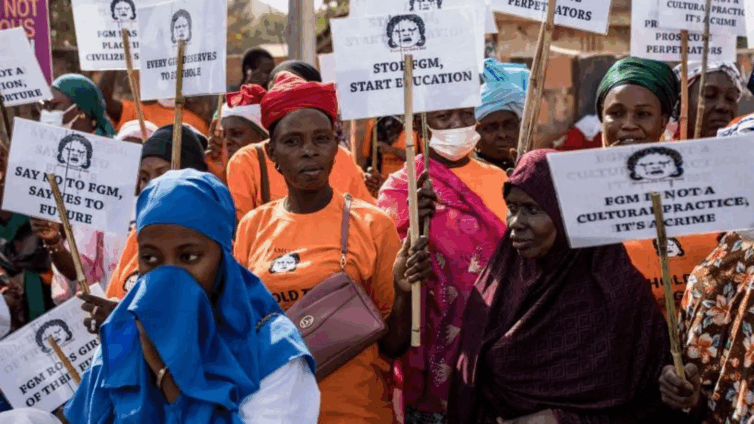
Although an autopsy is still being conducted to establish the cause of her death, many people have linked it to FGM, or female circumcision, a cultural practice outlawed in the West African state.
"Culture is no excuse, tradition is no shield, this is violence, pure and simple," a leading non-governmental organisation, Women In Leadership and Liberation (WILL), said in a statement.
Two women had been arrested for their alleged involvement in the baby's death, police said.
The MP for the Kombo North District, where the incident happened, emphasised the need to protect children from harmful practices that rob them of their health, dignity, and life.
"The loss of this innocent child must not be forgotten. Let it mark a turning-point and a moment for our nation to renew its unwavering commitment to protecting every child's right to life, safety, and dignity," Abdoulie Ceesay said.
FGM is the deliberate cutting or removal of a female's external genitalia.
The most frequently cited reasons for carrying it out are social acceptance, religious beliefs, misconceptions about hygiene, a means of preserving a girl or woman's virginity, making her "marriageable", and enhancing male sexual pleasure.
The Gambia is among the 10 countries with the highest rates of FGM, with 73% of women and girls aged 15 to 49 having undergone the procedure, with many doing so before the age of six years.
WILL founder Fatou Baldeh told the BBC that there was an increase in FGM procedures being performed on babies in The Gambia.
"Parents feel that if they cut their girls when they're babies, they heal quicker, but also, because of the law, they feel that if they perform it at such a young age, it's much easier to disguise, so that people don't know," she said.
FGM has been outlawed in The Gambia since 2015, with fines and jail terms of up to three years for perpetrators, and life sentences if a girl dies as a result.
However, there have only been two prosecutions and one conviction in 2023.
A strong lobby group has emerged to demand the decriminalisation of FGM, but legislation aimed at repealing the ban was voted down in parliament last year.
FGM is banned in more than 70 countries globally, but continues to be practised particularly in Africa's Muslim-majority countries, such as The Gambia.
Latest Stories
-
‘How does a bad settlement translate into criminality?’ – Atta Akyea questions EOCO
4 minutes -
Foreign Affairs Ministry launches ‘ECOWAS for All’ campaign to boost public awareness
12 minutes -
Baffour Awuah’s EOCO questioning centred on SIC matter – Bosome Freho MP
15 minutes -
Kwaku Bonsam appeals to Mahama, Ablakwa to facilitate his US travel for skin graft; says he’ll fund it
30 minutes -
Baffour Awuah arrested after surrendering to EOCO
32 minutes -
Baffour Awuah cooperating with investigators after surrender and arrest – EOCO
51 minutes -
Destruction of aspirants’ posters breaches democracy—Ashanti NPP Communications Director
1 hour -
BNI investigates Ampofo Ankrah over alleged $623,000 World Cup visa scheme
1 hour -
NPP National Delegates Conference: Police announce road closures, diversions around Baba Yara Stadium
1 hour -
Agric Committee demands financing plan for Pwalugu Irrigation Project before 2027 Budget
1 hour -
Minority calls for the immediate suspension of Ghana-Colombia maritime agreement
2 hours -
Ghanaian professional Sydney Hushie appointed UNFPA Chief of Digital Centre of Excellence
2 hours -
GHS urges health managers to use community scorecards to improve healthcare delivery
2 hours -
Ekyeamamfrom-Pivot irrigation project 90% complete but stalled over unpaid certificates
2 hours -
When the Gavel speaks, where is the choir that once sang for Wontumi?
2 hours