

Audio By Carbonatix
The plan
Paraguay earned their place on football’s greatest stage by going back to their roots: defensive strength and collective intensity. For years the team tried to play a possession-based game without succeeding in either defence or attack. Then, in August 2024, Gustavo Alfaro arrived with a clear message from day one, what he called “Paraguayan DNA, intensity and clean sheets. That’s what will take us to the World Cup”. He was not wrong.
The Argentinian coach remained faithful to the 4-4-2 formation in almost every match, only switching to a back five in the high-altitude games against Ecuador and Bolivia. At the World Cup he seems most likely to favour that classic 4-4-2, with perhaps an occasional 4-2-3-1.
Since replacing Daniel Garnero – sacked after a dismal Copa América – Alfaro has transformed the team. From his very first match, away against Uruguay in Montevideo, Paraguay looked a different side. Subsequent home victories against Brazil and Argentina convinced even the biggest skeptics that the “new” Albirroja was real.
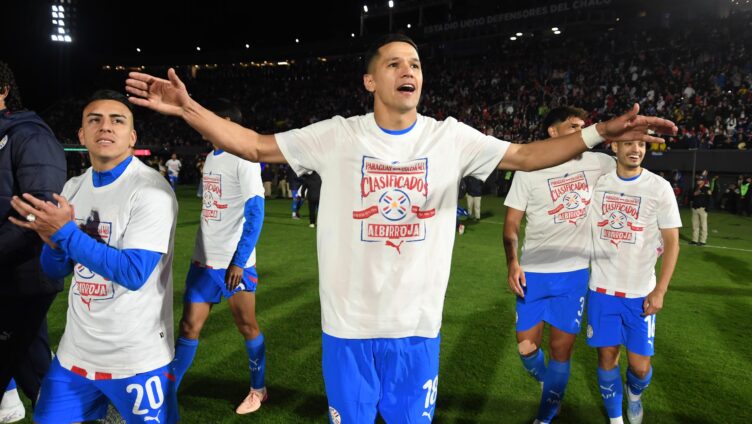
Away from home Paraguay have lost only once under Alfaro, against Brazil. They earned heroic draws in Bolivia, 4,100m above sea level, in Ecuador at 2,800m, and in the suffocating heat and humidity of Barranquilla against Colombia. Qualification was sealed with a tense 0-0 draw at home against Ecuador. The result triggered national euphoria. The celebrations were so intense the country’s president, Santiago Peña, declared the following day a national holiday.
While Paraguay’s greatest strength lies in their intensity and physicality, they can also produce good football, building smoothly from the back and relying on the game-changing talent of Julio Enciso.
The coach
Gustavo Alfaro has inspired the rebirth of the national team after years of failure. The Argentinian retired as a footballer in 1992, aged only 30, to concentrate on a burgeoning coaching career. Relying on toughness and defensive discipline, Alfaro guided humble Arsenal de Sarandí to glory winning the 2007 Copa Sudamericana and the 2012 Argentinian Primera División. Those triumphs defined his whole career: to this day, he is still regarded as a defensive coach. He once used a quote widely attributed to the former basketball player and executive Pat Riley to explain his philosophy: “If I want to build an offensive team, the first thing I have to do is work on defensive discipline, otherwise my ass is going to be out of here.”
One of his greatest achievements came when he led a young Ecuador side to the 2022 World Cup. A well-read man, who often uses philosophical phrases in press conferences to explain things, Alfaro is also known as “El Cazador (The Hunter)” in reference to the book he wrote after taking la Tri to Qatar, titled Cazadores de Utopías Imposibles, Hunters of Impossible Utopias.
Star player
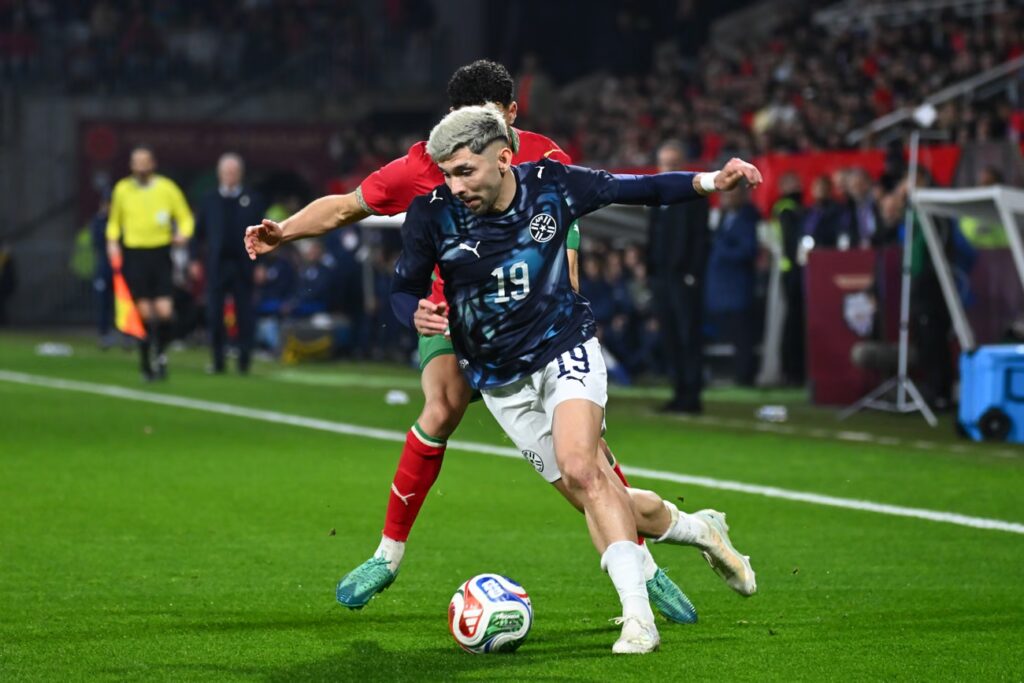
Julio Enciso. One of the greatest players produced by Paraguayan football in the last 20 years. La Joya (The Jewel) amazed with his talent in Libertad – who gave jobs to both his mother, a house cleaner, and his father, a street vendor, to convince them to move to Asuncion when their son was just 12 – and debuted for the national team at 17 before making the bold leap to the Premier League. He had some good moments in Brighton, scoring a Puskás Award-worthy screamer against Man City, however injuries and managerial changes gradually eroded his impact.
Enciso got married and found a new beginning in Strasbourg, where he currently plays. Fast and direct, a difference-maker, a game-changer in the final third, Enciso is a special talent. In honour of his grandfather, he fulfilled his dream of playing in a World Cup. “I dedicate this to him. He’s surely watching me from heaven,” he said.
One to watch
Damián Bobadilla. Unlike his father, the former goalkeeper Aldo Bobadilla, Damián Bobadilla never put on the gloves. And it’s a good thing he didn’t – he has become an excellent midfielder. But his father remains his great hero. “My dad didn’t have a cape, but he flew from post to post,” he once said affectionately. Bobadilla burst onto the scene at his boyhood club Cerro Porteño in 2021, showing all the strengths of a high-quality box-to-box midfielder: physicality, calmness, and clever decision-making. Since 2024 he has been playing for São Paulo in Brazil’s top division, where he has already established himself as one of the team’s key players. Now 24, if he continues performing at this level he looks ready for the next big step in his career.
Unsung hero
The entire team structure relies on Andrés Cubas. He provides balance, wins duels and fights for every ball as if it were the last challenge he will ever have to make. Although he is primarily a defensive midfielder, Cubas is also capable of initiating quick transitions into attack after regaining possession. Born in Argentina, and a former Argentina international at Under-20 level, Cubas promised his mother – who was born in Paraguay – that he would represent her country if he was given the chance. And he was. At 1.65m he is not physically imposing, but his intelligence, positioning and tenacity more than make up for it.
Probable starting XI
(4-2-3-1) Orlando Gill - Juan Caceres, Omar Alderete, Junior Alonso - Andrés Cubas, Damián Bobadilla - Diego Gómez, Julio Enciso, Miguel Almirón - Antonio Sanabria.
What to expect from fans at games?
Travel agencies in Paraguay are offering round-trip packages to the United States that include tickets to all three group-stage matches, with prices starting from US$20,000. Considering the average monthly wage in the country is around $450 it is an enormous sum of money. Nevertheless, thousands of Paraguayans fans are expected to make the journey to support La Albirroja at the World Cup after a 16-year absence. The streets of Inglewood and Santa Clara are likely to be filled with red, white and blue – not the stars and stripes, but the traditional Tricolor of Paraguay and the Albirroja jersey. And those colors will be joined by the iconic chanting: “La Albirroooo, la Albirroooo, la Albirroja, la Albirroooo!” on repeat.
This article is part of JoySports' collaboration with The Guardian. The cooperation enables readers to access team news, previews, and more from all 48 teams that qualified for the FIFA World Cup 2026.
Latest Stories
-
Power restoration fault suspected in Kumasi Central Market fire
11 minutes -
The 7-foot giant of Ngleshie Amanfro: Seven-foot Ghanaian Ephraim Saawa dreams of joining the national basketball team
50 minutes -
Government promises support for Kumasi Central Market fire victims
56 minutes -
Vibes The Movie: Big Ghun’s Ghanaian film earns five nominations at 2026 REFFA
1 hour -
MamaCare CEO warns unresolved conflicts among health workers could undermine maternal and neonatal care
2 hours -
Health professionals urged to translate medical knowledge into practice to save mothers
2 hours -
Conflicts among care providers linked to maternal, neonatal deaths – Expert
4 hours -
GIS marks 10th TIME conference, champions improved teaching practices
4 hours -
BRICS Or Balance? What Ghana’s bid really means
4 hours -
GPRTU wants full TRAFFITECH-GH implementation to start in 2027
4 hours -
Mahama announces plans to import electric wheelchairs for PWDs
4 hours -
KGL U17 Colts 2026: Western beat Prempeh Elite Academy to set up final final with Greater Accra Region
5 hours -
Late Solanke strike salvages 10-man Spurs draw at Man United
5 hours -
Gender Ministry to monitor welfare of Nana Akua Addo’s children amid domestic violence case
5 hours -
Benedict Okyere Yeboah: Ghana’s football problem goes beyond sacking a coach
5 hours