

Audio By Carbonatix
The debate over high lending rates will not go away anytime soon, as the Institute of Economic Affairs is calling on the Bank of Ghana, government and commercial banks to play their roles effectively, to bring down the cost of borrowing.
Whilst, it wants the Central Bank to find a more effective way in controlling inflation, amongst others, the economic and policy think tank is charging the government to restrain its borrowing to reduce pressure on lending rates. Also, it is urging banks to reduce their cost of operations and improve operational efficiency.
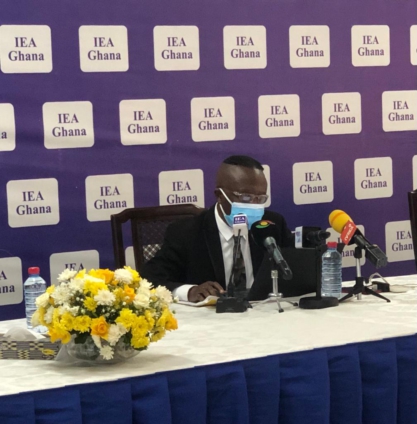
“Lending rates have been out of control in Ghana for years. This is the result of a multiplicity of factors, including persistent inflation; high cost of monetary policy; banks’ inefficiencies and high operational costs; high borrower risks; government incessant borrowing; and high bank taxes”, its Director of Research, Dr. John Kwakye disclosed at a roundtable discussion on “Making Monetary Policy in Ghana More Fit-For-Purpose".
He also said “the persistence of high lending rates has had negative effect on investment, growth and employment. Given the multiplicity of causes, monetary policy alone cannot resolve the problem. The solution must come from multiple relevant fronts”.
“BoG has a duty in ensuring a more effective way of controlling inflation so that monetary policy itself does not fuel lending rates. BoG must strengthen safety nets for borrowers, including through identification and credit worthiness schemes. BoG must ensure strong oversight of the banking industry to engender efficiency and high standard of operation and to prevent collusive and “customer capture” practices that tend to sustain high lending rates and other financial charges”, he pointed out.
“Banks, on the other hand, must improve their operational efficiency and reduce their costs to a minimum, including through modernisation of their processes and systems and through strategic company focus and foresight planning, so that these do not feed into lending rates. Meanwhile, government must restrain its borrowing to reduce pressure on lending rates by addressing the budget deficit bias. Government must also ensure that banks’ taxes are not out of proportion or inordinate so that they do not overly overburden them and thereby fuel lending rates”, he added.
MPC to maintain policy rate at 14.5%
Meanwhile, the IEA says it’s unlikely the Monetary Policy Committee of the Bank of Ghana will hike the policy rate presently at 14.5% on Monday 31st January.
This is because the 1.0% increase in the rate in November 2021 is yet to fully impact on the economy.
“Recalling that the MPC increased the Policy Rate by 100 basis points just two months ago at its November meeting, the likelihood of another follow-up increase may be low since the last hike needs time to work itself through the system. Also, importantly, such a decision would appear to be counter to what the Committee has touted as a successful enduring process of disinflation and the lowering of interest rates in recent times. Given these contending issues, our expectation is that the MPC will try and play it safe by holding the Policy Rate at its current level of 14.5%.”
“This should allow the Committee to buy a little bit of time until its next meeting in March 2021 when a few more inflation readings would have made the situation clearer on how to position the Policy Rate.
Latest Stories
-
Interior Minister urges traditional authorities to enforce anti-bushfire bye-laws
8 seconds -
3rd Republic Bank-JoyNews Habitat Fair Clinic ends on a high note after three days of strong patronage
2 minutes -
Ten climbers missing after avalanche hits Himalayan base camp
39 minutes -
NPP had more permanent fuel relief measures than current GH¢2 diesel cut – Amin Adam
1 hour -
Photos from the 3rd Republic Bank-JoyNews Habitat Fair Clinic
1 hour -
Ethiopia’s army promises restraint amid fears of new civil war
1 hour -
Amin Adam calls for review of fuel taxes as diesel prices remain above GH¢18
2 hours -
World Vision Ghana, Ahafo districts sign MoU for universal WASH coverage
2 hours -
When the gold engine stutters: What Ghana’s Cedi and reserves are telling us about the new economic architecture
3 hours -
Two reportedly die after being trapped in mining pit at Juaboso
3 hours -
Petrosol cleans up Wa Municipal Hospital, to donate medical equipment
3 hours -
‘If NPP was ‘insensitive’ over fuel prices, NDC must accept same description now’ — Amin Adam
3 hours -
KiDi brings the hits to London in sold-out UK headline concert
3 hours -
The last goodbye of Ghanaian shot dead in the US
4 hours -
MCC opens door to Ghana again as MiDA revives development partnership
4 hours