

Audio By Carbonatix
A Senior Research Fellow at the Noguchi Memorial Institute for Medical Research (NMIMR) has called for more reforms and investments to be made into the fight against malaria in the country.
Dr. Linda Eva Amoah said despite various interventions made to reduce malaria infections, pregnant women and children below five years remain highly susceptible to the disease.
She mentioned that cases of malaria among pregnant women usually affect the unborn babies, saying it is one of the leading causes of stillbirths in the country.
She warned this trend may get worse if practical steps are not taken to salvage the situation.
“They [children and pregnant women] are the ones that do suffer the most because for children under five, their immune system isn’t that well-developed and once you become pregnant, you also have become susceptible to a whole lot of different things.
“So, these two categories are very susceptible to malaria and most of our interventions are actually targeted to help them,” she said.
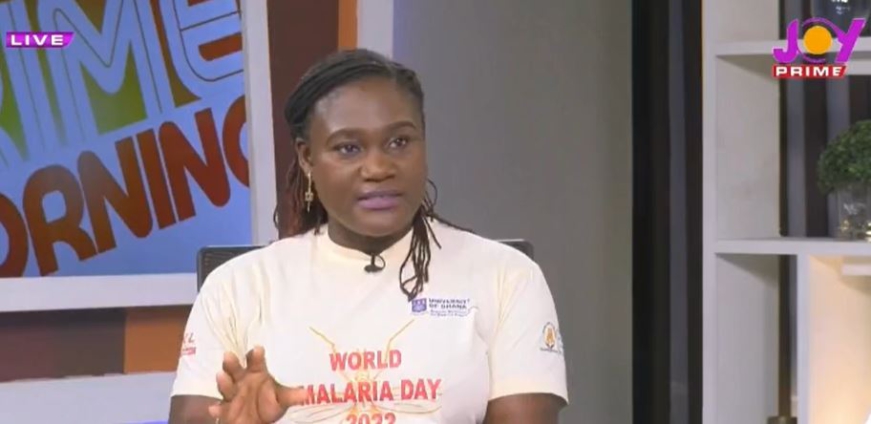
Dr Amoah stated in an interview on Prime Morning, Monday, that intervention efforts, investments and innovations must be accelerated by stakeholders to control spread and infections.
“I don’t think you can isolate one from the other; you need even to invest to become innovative. If you have a plan of how to make a very good diagnostic tool, without somebody investing in that idea, it can’t materialise.
“So, we do need investments – investment will help us actually even expand upon the current interventions that are ongoing and it will also help people who have some innovations to actually put their innovations out for it to actually materialise,” she added.
Currently, there is an indoor residual spraying exercise taking place nationwide to ensure that house walls are sprayed to prevent mosquitoes.
“Because the female anopheles mosquito lays its eggs in stagnant water, we have larviciding occurring across the country where we spray larvicides on the water bodies…that kills the mosquito larvae which would have grown into the adult mosquito.
“Then we have some control measures for pregnant women where women who go for ante-natal care are given medicine that prevents them from actually getting malaria,” Dr Linda Amoah listed.
Latest Stories
-
3 Co-wives, 5 children perish in canoe disaster – Maritime Authority insists life jackets use mandatory for all water transport
9 minutes -
Iran war lands ‘triple blow’ to flood-ravaged Sri Lankans
43 minutes -
Gunmen kill at least 11 people at Afghanistan picnic spot
57 minutes -
Woman, 25, in court for stealing baby at Bogoso
58 minutes -
Trump unveils giant gold-accented victory arch design for US capital
1 hour -
We spoke to the man making viral Lego-style AI videos for Iran. Experts say it’s powerful propaganda
1 hour -
Hungarians vote in big numbers on whether to end Orbán rule and elect rival
1 hour -
At least 30 feared dead in crush at Haitian tourist site
1 hour -
Boxing: Abdul Ahmed wins WBA Africa Cruiserwight title after dispatching Nigeria’s Eradeye
1 hour -
Nearly 2,000 displaced, schools damaged as windstorm wreaks havoc in Gushegu
2 hours -
Ghana’s Derrick Kohn to work under Marie-Louise Eta as she becomes first woman to coach men’s Bundesliga team
2 hours -
Accra Open Championships conclude with strong performances ahead of African Championships
2 hours -
Ghana to begin camping with 12 athletes after Accra Open Championships – Bawa Fuseni
2 hours -
Anthony Joshua declines showdown with Tyson Fury but admits they ‘probably’ clash next
2 hours -
Tyson Fury dominates Makhmudov, calls out Joshua next
3 hours