

Audio By Carbonatix
An Asian elephant in central Thailand has given birth to a rare set of twins, in what caretakers have described as a miracle.
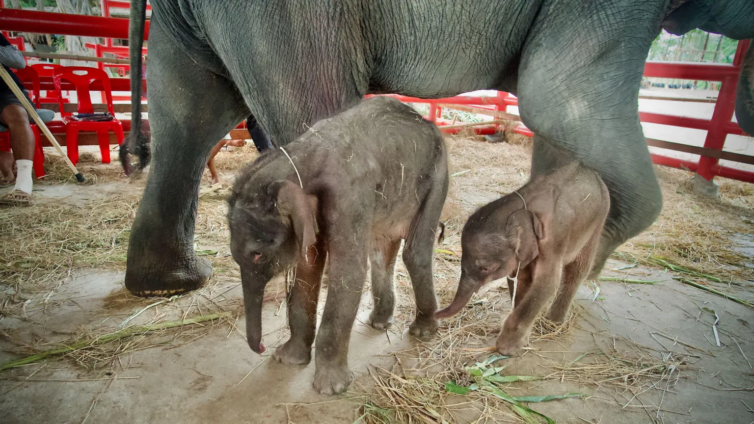
The mother, 36-year-old Chamchuri, was not expected to deliver twins and when she gave birth to a male calf last Friday, staff at the Ayutthaya Elephant Palace and Royal Kraal, had thought the delivery was done.
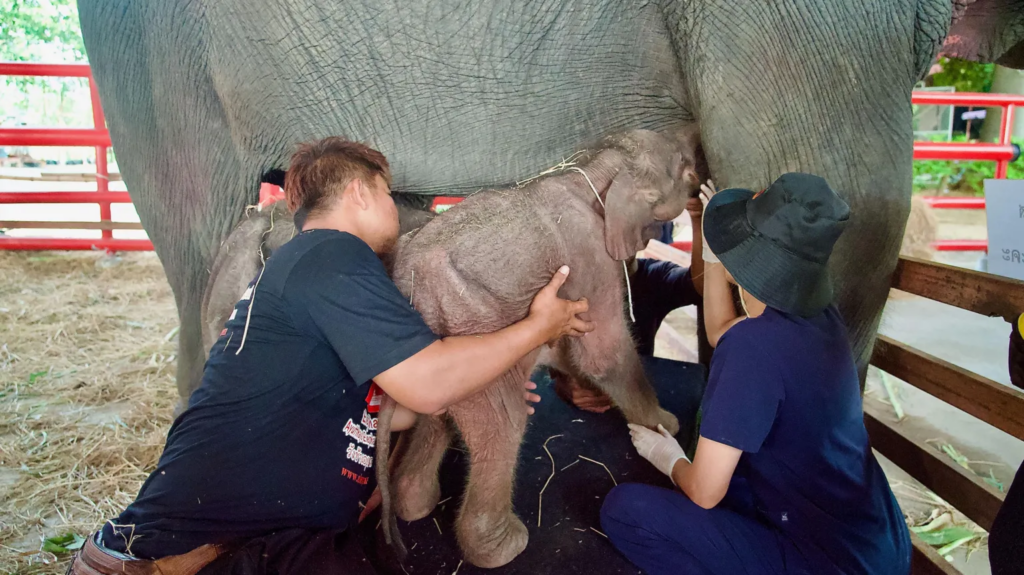
But while cleaning up the first calf and helping it stand on its feet, they heard a loud thud and realised that Chamchuri had given birth to a second calf, a female.
The second birth sent the mother into a panic and caretakers had to restrain her to prevent her from stepping on the female calf. One caretaker was hurt in the melee.
Dramatic footage on social media showed a crowd of caretakers - known locally as mahouts - frantically separating the female calf from the mother, with blood from the birth still visible on her hind legs.
Twins occur in only one percent of elephant births and male-female are even more rare, according to Save the Elephants, a research organisation.
"Once we pulled the second baby elephant out, away from the mother, the baby stood up. We were all cheering because it’s a miracle," veterinarian Lardthongtare Meepan told the BBC.
"We’ve always wanted to see elephant twins but not everyone can see this because it doesn’t happen a lot," said Ms Meepan, who grew up at the elephant park, and is herself a mother of twins.
Charin Somwang, a 31-year-old mahout, broke his leg while restraining the mother.
"I was so happy, I couldn’t feel the pain," he told the BBC, adding he felt the extent of the injuries only when he was brought to the hospital.
"It’s normal that the new mother will always try to kick or push the baby... I was afraid that she might break the baby elephant, so I put myself forward and tried to block the mother from the smaller one," said Mr Somwang, who has been working at the park for 15 years.
Elephants are considered sacred in Thailand, where a majority of the population is Buddhist. They are also a national symbol.
Since the birth, the Ayutthaya Elephant Palace and Royal Kraal has featured the twins in live streams on social media.
Park visitors, including children, are also allowed to see the twins, but only after disinfecting their footwear and their hands.
A sign near the nursery reads: "Please don't touch the elephant babies".
They will be named seven days after birth in accordance with Thai custom.
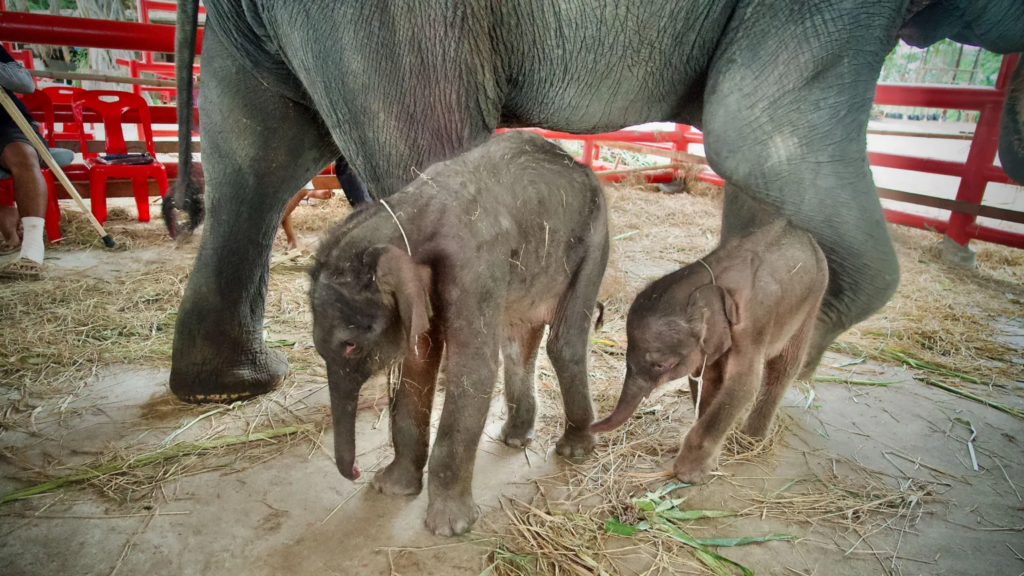
At 55kg (121lb) the female calf is slightly smaller than usual and has to step on a stool during feeding with her mother. Her brother is heavier at 60kg.
The park claims its elephants were rescued from begging on the streets. In 1989, Thailand banned logging in natural forests, leaving mahouts who worked in that industry jobless.
This forced them to make elephants perform tricks for tourists in exchange for money. This practice was outlawed in 2010 - though there are still rare cases of this happening.
In Ayutthaya, Thailand's former capital, some elephants carry tourists on their backs to temples and historic ruins.
Conservationists oppose elephant riding as they say this stresses the animals out and amounts to abuse.
An earlier report by the World Animal Protection (WAP) says that harsh methods are used to get a wild elephant to carry a human on its back. The process starts soon after it is captured. It is often referred to as "breaking-in" or "crush".
Aside from Ayutthaya, elephants have also become tourist draws in highland villages in Chiang Rai and Chiang Mai in the north, where tourists can feed them with bananas, go walking with them and bathe them with mud.
The Asian elephant is an endangered species due to poaching, illegal trade and habitat loss, according to the International Union for Conservation of Nature.
More elephants are used for tourism in Thailand - over 3,000 - than anywhere else. Unlike other countries with captive populations, those in Thailand are nearly all privately owned.
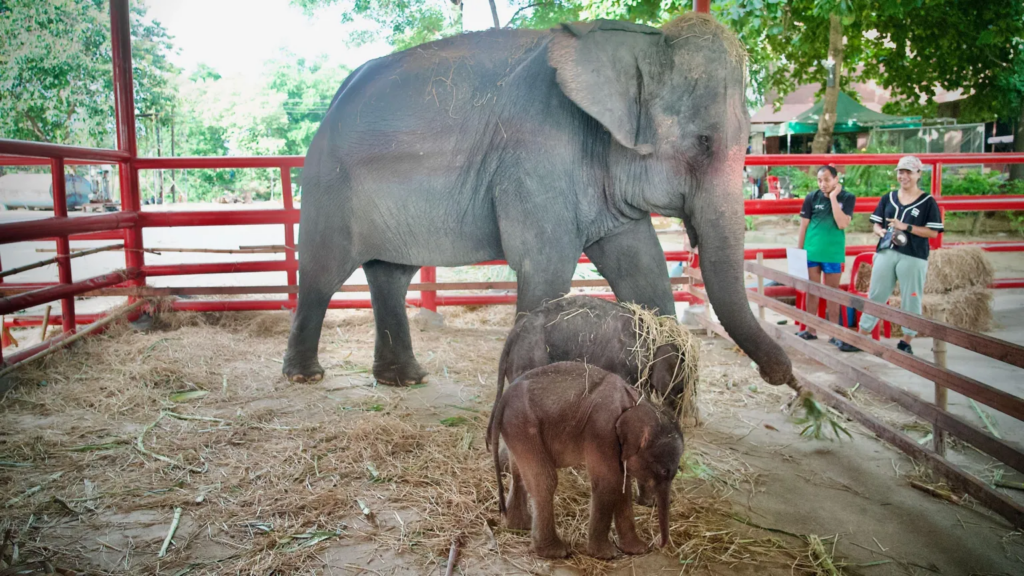
Compared to their African counterparts, Asian elephants have smaller ears round and hunched backs.
Meanwhile, visitors continue to flock to the park in Ayutthaya to see the twin babies, as they await their names.
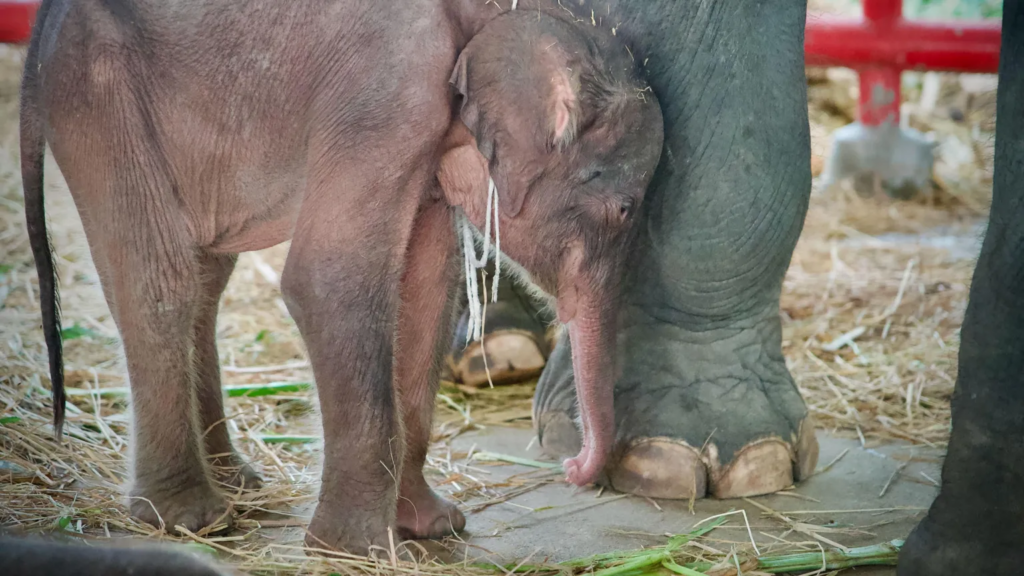
They walk in a small pen covered with hay as they roll their trunks on their mother's leg.
"I am always happy when I see elephant gives birth," said Mr Somwang, their mahout who is recovering from injury.
"It doesn’t need to be twins. Elephant babies always bring joy," he said.
Latest Stories
-
The Inconvenient Truth: We cannot pray for the cure while protecting the disease
13 minutes -
MTN Ghana trains civil society organisations on artificial intelligence
50 minutes -
GoldBod FX framework aims to make dollar supply predictable – Acheampong
1 hour -
How does a Ghanaian team make it to the BAL?
2 hours -
Ghana’s investment climate presents opportunities for industrial growth and job creation.
2 hours -
‘I paid thousands to a company for jobs that never came’
2 hours -
SSNIT intensifies informal sector enrolment drive with Techiman float
2 hours -
Ghana seeks long-term mining investments that benefit local communities – Armah-Kofi Buah
2 hours -
GHATOF demands compensation for 85 businesses affected by La Pleasure Beach demolition
2 hours -
Bono Regional Minister calls for investor education to drive economic growth
2 hours -
Ghana’s Ambassador to China, Kojo Bonsu, presents credentials to Nepalese President
2 hours -
Fairtrade Africa’s Cocoa Hubs Project strengthens rural service centres in cocoa-growing communities
3 hours -
MPs are not development officers – Edem Kpotosu
3 hours -
SEC cautions investors against fraudulent investment schemes
3 hours -
Land Ministry urges rCOMSDEP operators to reserve earnings for land reclamation
3 hours