

Audio By Carbonatix
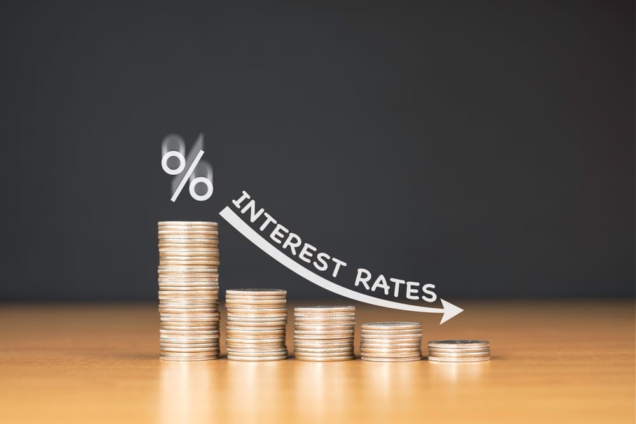
With interest rates rising on the money market, the Bank of Ghana has been urged to cap interest rates of commercial banks to bring down the cost of borrowing further in the country, Chief Finance Officer, Dr. Williams Peprah has said.
This proposition has consistently been suggested by the Institute of Economic Affairs.
Dr. Peprah also wants the Central Bank to cap banks’ investments in government securities to free up space for firms to borrow.
Speaking to Joy Business, Dr. Peprah, said commercial banks should be compelled to lend to the real sector of the economy at reasonable rates.
“Already, we have 50% of our graduates who are unemployed because there is liquidity shortfall in the country. And what we can do as a country to remedy this situation in my opinion, we should put a cap on commercial bank operation in terms of interest and their profit that they generate.”
“I know commercial banks have to increase their shareholders net-worth by charging more interest but we should be able to push our commercial banks to focus on lending to industries. So I will recommend that the Central Banks advise that the portfolios of commercial banks are looked at.”
He again advised government to reduce its borrowing on the domestic market to enable businesses to have access to funds to expand.
“Government needs a lot of money to operate and what government is doing and which is happening is to accept higher interest rate to be able to entice investors to be able to invest in government’s bonds. But the impact this situation is having is that it’s going to increase the cost of doing business in the country, especially when it comes to the cost of production. Also, you see banks not giving money to production entities, but rather investing in government bonds.”
“Government must reduce its borrowing. It must find innovative ways to increase revenue to ease the cost of credit”, Dr. Peprah added.
Interest rates start inching up
Interest rates begun going up but marginally, as the challenges within the fiscal economy reflects on the monetary economy.
According to the latest auctioning results of Treasury bills by the Bank of Ghana, interest rates of the short term financial instruments went by slightly.
Despite government’s position of keeping interest rates low, it has now been forced to revise its note by accepting a slightly higher yield for the short term financial instruments.
The auctioning results indicated that the interest cost went up by about 0.20% for both the 91-day and 182-day T-Bills.
Government however secured a little above ¢1.511 billion, but accepted ¢1.508 billion from the sale of the T-bills.
Latest Stories
-
Photos from the 3rd Republic Bank-JoyNews Habitat Fair Clinic
3 minutes -
Ethiopia’s army promises restraint amid fears of new civil war
12 minutes -
Amin Adam calls for review of fuel taxes as diesel prices remain above GH¢18
44 minutes -
World Vision Ghana, Ahafo districts sign MoU for universal WASH coverage
1 hour -
When the gold engine stutters: What Ghana’s Cedi and reserves are telling us about the new economic architecture
2 hours -
Two reportedly die after being trapped in mining pit at Juaboso
2 hours -
Petrosol cleans up Wa Municipal Hospital, to donate medical equipment
2 hours -
‘If NPP was ‘insensitive’ over fuel prices, NDC must accept same description now’ — Amin Adam
2 hours -
KiDi brings the hits to London in sold-out UK headline concert
2 hours -
The last goodbye of Ghanaian shot dead in the US
2 hours -
MCC opens door to Ghana again as MiDA revives development partnership
3 hours -
CSIR moves to turn scientific research into jobs, national growth
3 hours -
More patrons troop in as 3rd Republic Bank-JoyNews Habitat Fair clinic enters final day stretch
3 hours -
German, Russian foreign ministers hold rare talks amid rising tensions
3 hours -
Gov’t to develop policy for Ghanaian Sign Language in education
3 hours