

Audio By Carbonatix
Low-income countries reportedly consume significantly fewer materials and produce far fewer climate impacts, with a consumption rate six times lower and climate impacts ten times lower in comparison to high-income countries.
Over the last five decades, upper-middle-income countries have seen a more than twofold increase in resource consumption due to their expanding infrastructure and the transfer of resource-intensive activities from high-income countries. Despite these trends, per capita resource usage and associated environmental impacts in low-income countries have remained relatively low and stable since 1995.
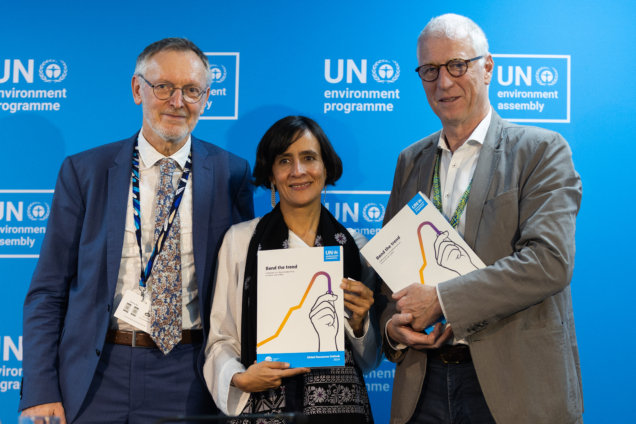
This was captured in the 2024 Global Resource Outlook, released by the International Resource Panel during the sixth session of the UN Environment Assembly.
The report advocates for significant policy changes to enable humanity to live sustainably within its means and urges for a reduction of projected resource use by one-third while simultaneously promoting economic growth, enhancing well-being, and mitigating environmental impacts.
The report highlights a significant increase in resource use since 1970, rising from 30 to 106 billion tonnes, or from 23 to 39 kilograms of materials utilised on average per person per day. This growth has resulted in profound environmental consequences, with resource extraction and processing contributing to over 60 per cent of planet-warming emissions and 40 per cent of health-related impacts from air pollution.
Specifically, the extraction and processing of biomass, such as agricultural crops and forestry, are responsible for 90 per cent of land-related biodiversity loss and water stress, as well as one-third of greenhouse gas emissions. Similarly, the extraction and processing of fossil fuels, metals, and non-metallic minerals, including sand, gravel, and clay, collectively account for 35 percent of global emissions.
“The triple planetary crisis of climate change, nature loss and pollution is driven from a crisis of unsustainable consumption and production. We must work with nature, instead of merely exploiting it,” said Inger Andersen, Executive Director of UNEP. “
"Reducing the resource intensity of mobility, housing, food and energy systems is the only way we can achieve the Sustainable Development Goals and ultimately a just and liveable planet for all.”
Latest Stories
-
‘Our missing players are more important’ – Gambia coach fires shot at Ghana
9 minutes -
Today’s front pages: Tuesday, September 29, 2026
12 minutes -
Ghana ‘showing up differently’ on global stage – Joyce Bawah Mogtari
40 minutes -
Ghana’s tuna industry in crisis as 20 hook-and-line vessels collapse
1 hour -
South Tongu MP launches apprenticeship programme for 159 young people
2 hours -
The Pusiga connection behind Gertrude Atongi’s work in New York
2 hours -
Teachers took promotion exams in December to beat government clearance deadline – GNAT
2 hours -
NPA launches 2026 staff welfare week with focus on teamwork and employee wellbeing
2 hours -
Ghana, Saint Kitts and Nevis sign labour deal to strengthen protections for Ghanaian nurses
2 hours -
Delayed promotions put teachers’ retirement benefits at risk – GNAT
2 hours -
No ‘Bawumia candidates’ in NPP executive elections – Anthony Karbo
2 hours -
Over 3,000 displaced as flooding overwhelms Hohoe communities
2 hours -
Sunyani East NPP executives begin reconciliation drive ahead of 2028 polls
2 hours -
Agric Minister engages Ga Mantse on agriculture transformation agenda
2 hours -
Aayalolo expansion targets private car users, not trotro operators – Mahama Ayariga
3 hours