

Audio By Carbonatix
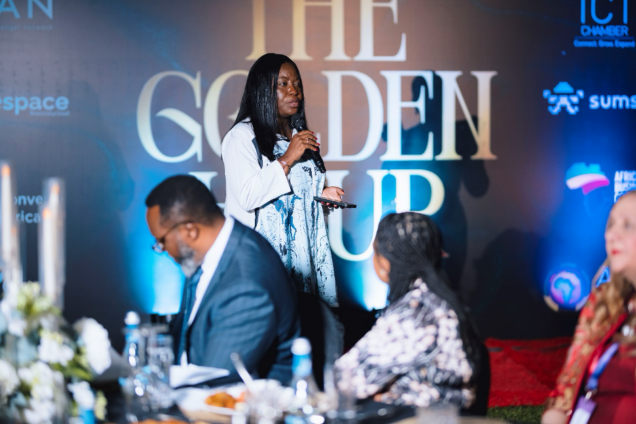
The Chief Executive Officer of Telecel Ghana, Patricia Obo-Nai, has called for a concerted and deliberate structural solution to close the gender gap in Africa’s digital economy.
She argued that Africa owes the next generation of girls concrete solutions to tackle structural barriers that limit their participation in science, technology, engineering, and mathematics (STEM) fields.
Madam Obo-Nai was speaking at ‘The Golden Hour’ dinner and dialogue session in Kigali, Rwanda, a precursor event of the Forward Africa Leaders Symposium themed Women, Power and the Next Generation Digital Africa.
She said that cultural expectations, a lack of visible role models, and weak institutional support systems continue to restrict girls’ access to STEM opportunities long before career choices are made.
Citing the UNDP workforce data that claims only 27 per cent of professionals in STEM across Africa are female, she described the gap as evidence of systemic exclusion rather than a lack of ability.
“When women are excluded, Africa loses talent, creativity, and insight. We lose the diversity of ideas and perspectives that drive innovation, and we limit our collective ability to solve the complex problems facing our continent,” she said.
Madam Obo-Nai said Telecel Ghana has deliberately structured its digital skills programmes to address gender imbalance, particularly through its Foundation-led STEM initiatives targeting upper primary and junior high students.
According to her, the telecom operator has designed training programmes in coding, robotics, the Internet of Things, and mobile application development, with 70 per cent of participants female.
She also referenced the Telecel Female Engineering Student Scholarship Programme, which she said has supported more than 100 women since 2011 through tuition assistance, mentorship and work placements, with the aim of strengthening the pipeline of female talent in engineering and related fields.
Beyond programmes, Madam Obo-Nai emphasised the need for broader institutional change, arguing that inclusion efforts must extend beyond training initiatives to encompass policy, hiring, and leadership systems that actively create opportunities for women.
She said the digital systems currently being built across Africa, from fintech to artificial intelligence and data governance, will ultimately be inherited by girls who are currently in basic and secondary schools.
Ing. Obo-Nai called on leaders in the room to identify specific actions they had taken to support girls who are not yet in leadership spaces, the mentorship gaps that still exist in their organisations, and the commitments they were willing to make to expand access for young women.
The Golden Hour, hosted as part of the Forward Africa Leaders Symposium pre-dialogue series, is an intimate dinner-and-conversation platform that brings together senior leaders, policymakers, and industry executives to reflect on Africa’s development priorities through focused thematic discussions.
Designed as a curated space for candid exchange, the session encourages leaders to interrogate the systems shaping the continent’s future.
Latest Stories
-
Association of Small-Scale Industries empowers trade executives in Bono East with a mentorship programme
5 minutes -
AMA evacuates refuse along Graphic Road, warns against indiscriminate dumping
10 minutes -
STC interdicts driver over Pokuase overtaking incident
14 minutes -
Ekumfi: How $6m EXIM participation built a $53m industrial asset — now poised for a 24-Hour Economy breakthrough
15 minutes -
4 arrested, 142 parcels of suspected Indian hemp seized as officers reject GH¢50k bribe
15 minutes -
No MMDCE can say they don’t see galamsey – Local Government Ministry
17 minutes -
Ghana, Germany explore stronger partnership in technical and vocational education
23 minutes -
AMA urges motorists and road users to comply with traffic regulations
24 minutes -
Sam George urges One Million Coders participants to complete all three levels
24 minutes -
Communications Minister announces 2,800-site telecom expansion during Volta visit
26 minutes -
Impunity fuelling sexual abuse in Ghana – Angela Dwamena-Aboagye
27 minutes -
NUGS condemns alleged sexual abuse by Obuasi SHTS headmaster, calls for prosecution
30 minutes -
President Mahama urges investors to employ trained local residents as 1,238-acre industrial park takes off
34 minutes -
Media doing its job, but politicians fuelling insults on social media – NMAG president
36 minutes -
Child protection must be the state’s responsibility, not NGOs’ burden – ARK Foundation Boss
42 minutes