

Audio By Carbonatix
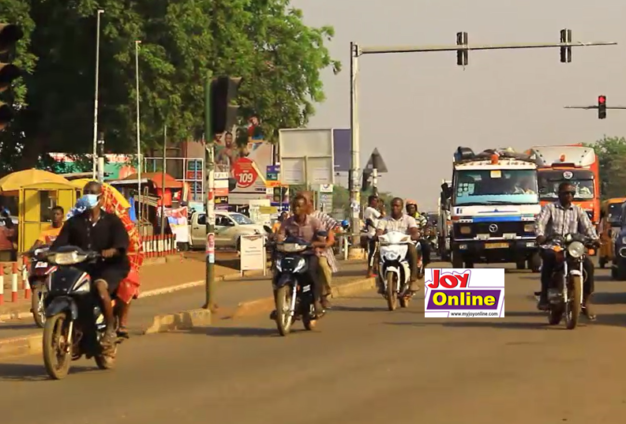
Riding a motorbike creates a sense of freedom that is hard to replicate. While motorbikes and cars are both reliable means of transportation, many would argue that a motorbike provides certain advantages.
But is it poverty or a matter of choice that influences the use of motorbikes? Motorbikes are extremely fuel-efficient. Users spend less money on petrol compared to cars.
When it comes to the number of kilometres per litre of petrol, motorbikes outperform vehicles. But riding a bike requires much more focus and concentration.
It is very dangerous, and there are far too many preventable deaths. Motorbike riders spend less time in traffic, cause less congestion, less dangerous to third parties, and take up less parking space.
"When you are on a motorbike and there is traffic, you know how to find your way out," one resident said.
Studies have shown that idling engines are a major cause of emission; an engine idling may actually be emitting twice as much as it would when in motion.
Motorbikes are far less likely to get stuck in traffic. Motorbike riders say their machines make them come alive and be in touch with the world.
"If they steal my motorbike, I will cry," another rider in Tamale said.
For this reason, those who can afford cars also prefer the motorbike. It is therefore not a matter of poverty but choice in using motorbikes.
"Some people have cars but they still motorbikes to use," one resident said.
Motorbikes also require less maintenance and take less space on the road. In towns like Tamale, where public transport is unreliable or non-existent, motor bikes offer an affordable way to get around.
But rough road conditions and an unregulated motorbike market also mean that mode of transport is dangerous.
It is estimated that helmets are 37% and 41% effective in preventing fatal injuries to motorbike riders and passengers, respectively.
This means for every 100 riders without helmets killed in accidents, 37 riders and 41 passengers would have been saved if all 100 had worn helmets.
Latest Stories
-
‘The gravest crime against humanity’: What does the UN vote on slavery mean?
21 minutes -
Catholic Bishops back Mahama after US university rescinds honorary degree over LGBTQ stance
46 minutes -
Ablakwa expresses disappointment over US ‘no’ vote on the UN Slavery Resolution
1 hour -
India grants ‘penalty-free’ exit window for overstayed Ghanaian nationals
2 hours -
This Saturday on Prime Insight: Experts to probe slavery and next NDC flagbearer
3 hours -
This Saturday on Newsfile: ‘No-bed syndrome’ and sole-sourcing under the lens
3 hours -
Only 14% of the world’s cities breathed safe air in 2025, new global report finds
3 hours -
Ghana’s air quality improves for the first time since 2021; country places 11th in Africa – IQAir 2025 report
4 hours -
Ghana’s £32 million debt to UK universities halts government-sponsored education
4 hours -
Chad, DR Congo have dirtiest air in Africa; Réunion, Canary Islands cleanest, IQAir 2025 report
4 hours -
Divine Mission Academy advances to finals of 2026 Luv FM VitaMilk Primary Schools Quiz
4 hours -
Iran-backed hackers breach FBI director Kash Patel’s personal emails
5 hours -
University of Ghana beat UENR to reach 2026 Honda Football Championship final
5 hours -
President Mahama urges international partners to respect Ghana’s position on LGBTQ issues
5 hours -
UDS edge UBIDS to reach 2026 Honda Football Championship final
5 hours