

Audio By Carbonatix
Russian drones struck a passenger bus and a train in southern Ukraine on Wednesday, killing five people, Ukrainian officials said, as Moscow pressed on with strikes on transport links and infrastructure.
A photo posted on Telegram by a regional governor showed a white vehicle with blown-out windows and a line of what appeared to be blood streaming down its side. Reuters has not verified the image.
"There is no military logic to this, just another act of brutality," Ukraine's President Volodymyr Zelenskiy said on social media, urging the U.S. and Europe to press ahead with toughening sanctions against Russia.
ESCALATING STRIKES ON ECONOMIC TARGETS
Moscow and Ukraine have traded escalating strikes in recent months on logistics and other economic targets, aimed at hampering each other's war effort and damaging morale.
With Ukraine's airspace closed since Russia's full-scale invasion in 2022, buses and trains have become a vital transport link for ordinary Ukrainians and businesses.
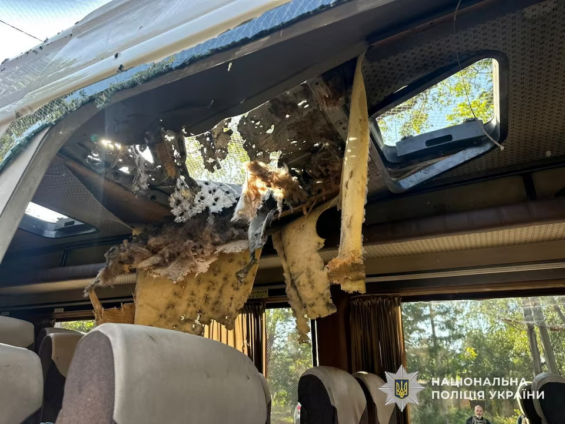
The drone attack on the passenger bus near the frontline city of Nikopol killed four men and a woman early on Wednesday, police said.
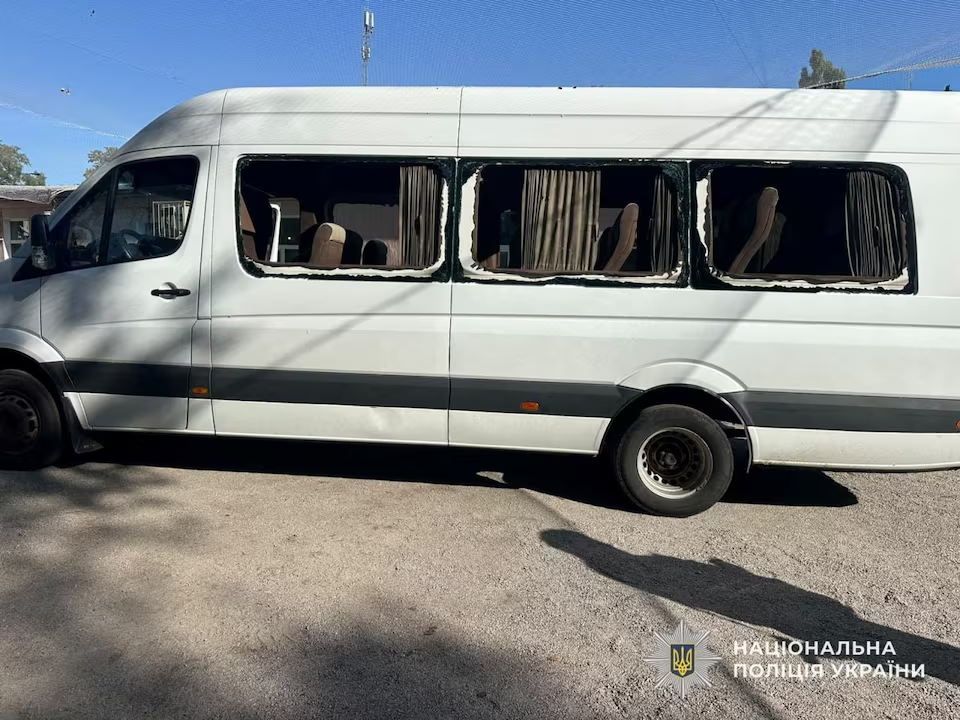
A further seven people were injured in the attack, said the governor of the surrounding Dnipropetrovsk region, Oleksandr Hanzha, who posted the photo.
There was no immediate comment from Russia on the attack. Both Ukraine and Russia deny deliberately targeting civilians in the war, triggered by Moscow's full-scale invasion of its neighbour.
ATTACK ON PASSENGER TRAIN
A Russian drone also attacked a passenger train in Ukraine's southern Mykolaiv region, the acting regional governor said.
All 168 passengers and crew were evacuated and no one was injured, Heorhii Reshetilov said on Telegram. The train was attacked twice more after the first strike, he said.
Zelenskiy said that, in addition to the Mykolaiv train attack, a locomotive in Kovel — near the border with Poland — was also struck.
The incidents follow similar attacks recently, including on a train near Ukraine's border with NATO-member Poland on Sunday, shortly after European diplomats and political figures had used the same line.
Russia has intensified its attacks on Ukrainian railways, hitting 120 passenger wagons, 304 locomotives and 43 railway stations so far this year, the state rail operator told Reuters.
The company said that Russia has attacked 1,700 railway facilities in total since the start of the year, up from 1,206 facilities in 2025 and 842 in 2024.
"Russian forces strike passenger trains, locomotives, stations, and railway routes knowing exactly how essential they are for civilians, evacuations, and Ukraine's economy," Ukraine's Foreign Minister Andrii Sybiha said on X.
"This is not collateral damage. It is a systematic hunt for people and an attempt to paralyse civilian life," he said.
Latest Stories
-
EOCO returns Hanan’s £6,700, GH¢2,750 and devices after defence challenge
8 minutes -
Opplift Youth Entrepreneurs Summit 2026 equips entrepreneurs with skills, mentorship and support
21 minutes -
Rival clubs want range of punishments for Man City
32 minutes -
Tear gas in Paris and Marseille as school protests grow across France
42 minutes -
Kane inspires England to win over Czech Republic in UEFA Nations League
51 minutes -
Finland orders halt to work on two Google data centres
1 hour -
Substitute Merino scores twice as Spain win in Croatia
1 hour -
Ronaldo wants Portugal ‘punishment’ but not retiring
1 hour -
White House defends Trump comment to let Iran ‘take out’ LA and San Diego
1 hour -
Asos confirms hackers sent ‘unauthorised’ notification to app users
1 hour -
US televangelist Jim Bakker, disgraced from sex scandal and fraud, dies at 86
2 hours -
Congolese-born golfer to represent Ghana at Turkish Airlines World Cup grand final
2 hours -
Amazon wins global rights to stream Emmys in six-year deal
2 hours -
European Film Festival returns to Ghana after a 5-year break
2 hours -
PTA backs teachers’ strike, threatens street protest if gov’t misses October 30 deadline
2 hours