


Audio By Carbonatix
Scores of people are leaving their homes in Burundi's capital ahead of a promised government crackdown.
A cycle of violence began in April with protests against President Pierre Nkurunziza's third-term bid.
Mr Nkurunziza gave a deadline of midnight on Saturday for Burundians to hand in illegal firearms or face being "dealt with as enemies of the nation".
Earlier this week, the UN secretary-general condemned the "inflammatory rhetoric" in Burundi.
And the Brussels-based International Crisis Group said the language was "chillingly similar" to that used in Rwanda before the genocide of 1994.
Agencies reported that many people were leaving Cibitoke and Mutakura, two neighbourhoods of the capital, Bujumbura, that have seen anti-government protests.
"Now I decide to leave as everyone is leaving," one elderly Mutakura resident, Marguerite Bigira, told the Associated Press news agency.
"There is fear everywhere. But I still believe in God and all this will end."
Another fleeing resident, Marie, told Agence France-Presse: "I was terrified, I understood that this time they would kill every last one of us."
The violence, in which close to 200 people have been killed, began in April when the president said he would stand again.
He argued that his first term as president did not count towards the constitutional two-term limit as he was chosen by MPs.
Mr Nkurunziza was duly re-elected to a third term with 70% of the vote in July.
The weapons ultimatum has led to a spike in killings.
On Friday, the body of Welly Nzitonda, the son of a leading human rights activist, was discovered.
UN Human Rights Commissioner Zeid Ra'ad al Hussein said the killing, which he called an assassination, "reinforces fears that there is a systematic policy of targeting members of the opposition, journalists, human rights defenders and ordinary citizens perceived to be opposing the government".
UN Secretary-General Ban Ki-moon said the discovery of bodies in Bujumbura was now a regular occurrence - and many victims showed evidence of summary execution.
Mr Ban said Burundian authorities had a responsibility to protect civilians.
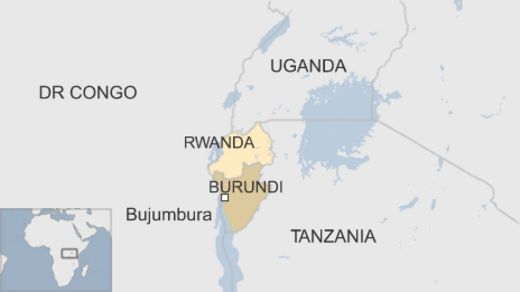
The International Crisis Group and others were commenting on remarks by Burundi's Senate President Reverien Ndikuriyo - who threatened to "pulverise" opponents who did not lay down arms.
Uganda is leading regional efforts to broker peace talks and the UN Security Council is expected to discuss the violence at a meeting on Monday.
Latest Stories
-
Bobby Banson condemns EOCO’s attempted arrest Nana Agyei Baffour Awuah
2 minutes -
When Kumasi begins to look like somebody is in charge
2 minutes -
Parliamentary probe into cocaine seizure would be a waste of time – Inusah Fuseini
9 minutes -
Cocaine seizure: Focus on Ghana’s reputation, not partisan blame – Osae-Kwapong
15 minutes -
Two Invitations, Three Interrogations: Did Baffour Awuah tell the whole story?
24 minutes -
Drug cartels may be seeing Ghana as easy route – Lenin Anane Agyei
1 hour -
Ghana risks gaining notoriety as drug-trafficking hub – Bobby Banson
1 hour -
Government dismissed my drug trafficking warning, then tried to arrest me – Ntim Fordjour
1 hour -
Day Two: 3rd Republic Bank-JoyNews Habitat Fair Clinic underway at Junction Mall
1 hour -
NACOC addressing inherited gaps in fight against drug trafficking – Deputy Director-General
2 hours -
Taekwondo goes to school as GTF launches five-region youth campaign
2 hours -
The issues Mourinho is struggling to fix at Real Madrid
2 hours -
Hundreds throng EducationUSA College Fair in Kumasi in pursuit of abroad studies
2 hours -
Drug bust: NACOC should be part of port inspection team – Twum-Barimah
2 hours -
Ward appointed Liverpool’s sporting director
2 hours