

Audio By Carbonatix
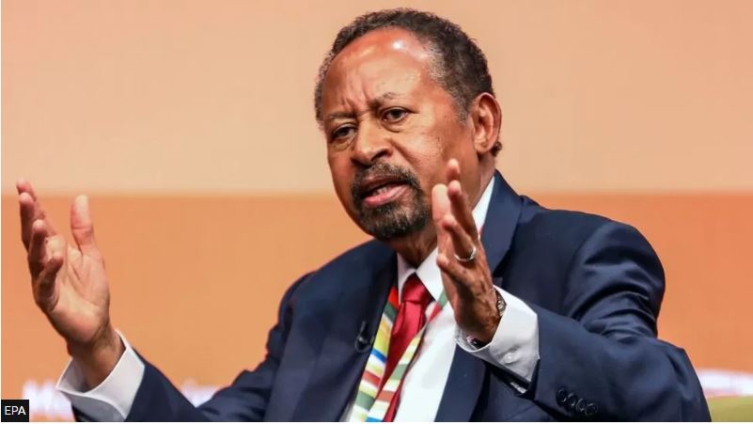
Sudan's former Prime Minister Abdalla Hamdok has warned that the conflict in his country could become worse than those in Syria and Libya.
The fighting between the regular army and the paramilitary Rapid Support Forces (RSF) would be a "nightmare for the world" if it continued, he said.
Early on Sunday, warplanes and heavy anti-aircraft fire were heard over the capital Khartoum, residents said.
The army said it was attacking from all directions, using heavy artillery.
The fighting that started on 15 April has left hundreds dead, while tens of thousands of people are fleeing the country.
Thursday night's extension of an uneasy ceasefire between the rival factions followed intensive diplomatic efforts by neighbouring countries, as well as the US, UK and UN. But the 72-hour extension has not held.
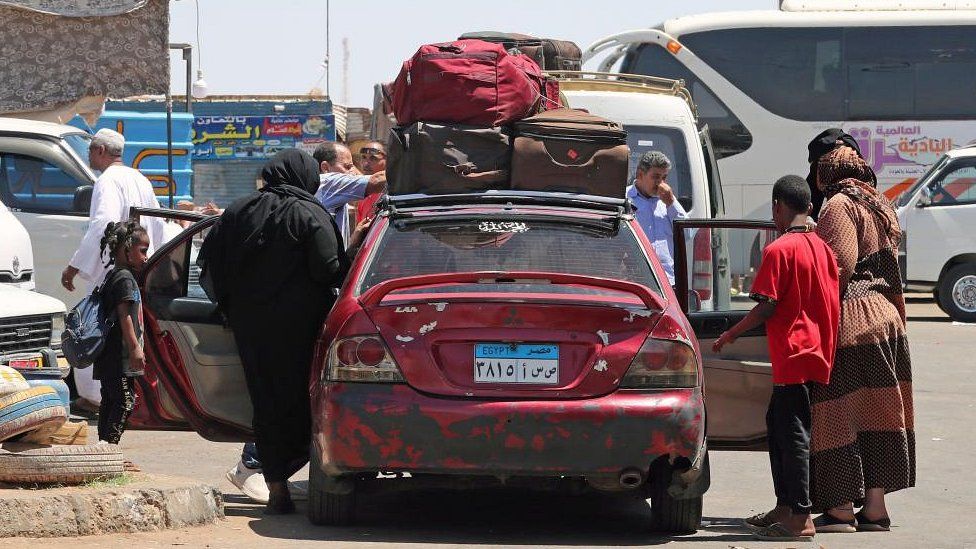
Meanwhile, there are chaotic scenes in Port Sudan where people are desperate to board ships, some of which are heading to Saudi Arabia and Yemen.
The UK government said it had ended its evacuation operation. The Foreign Office said the last flight left Khartoum at 22:00 local time (20:00 GMT) on Saturday, and in total nearly 1,900 people were flown out.
The US government meanwhile said a US-organised convoy had reached Port Sudan to evacuate more US citizens by ship to Jeddah in Saudi Arabia. It said hundreds of Americans had already left Sudan, in addition to the diplomats evacuated by air a week ago.
Speaking at a conference in the Kenyan capital Nairobi, Mr Hamdok called for a unified international effort to persuade the Sudanese army chief and the RSF leader to hold peace talks.
"This is a huge country, very diverse ... I think it will be a nightmare for the world," he said.
"This is not a war between an army and small rebellion. It is almost like two armies - well trained and well armed."
Mr Hamdok - who served as prime minister twice between 2019 and 2022 - added that the insecurity could become worse than the civil wars in Syria and Libya. Those wars have led to hundreds of thousands of deaths, created millions of refugees and caused instability in the wider regions.
Army commander Gen Abdel Fattah al-Burhan and RSF chief Gen Mohamed Hamdan Dagalo, better known as Hemedti, disagree about the country's proposed move to civilian rule, and in particular about the timeframe of the 100,000 strong RSF's inclusion into the army.
Both factions fear losing power in Sudan, partly because on both sides there are men who could end up at the International Criminal Court for war crimes committed in the Darfur region almost 20 years ago.
Millions of people remain trapped in Khartoum, where there are shortages of food, water and fuel.
Sudan's army has urged people in Khartoum to remain indoors and stay away from windows, as it deploys tanks and other artillery in an effort to recapture areas held by the RSF.
The RSF says the army is widening the conflict by deploying the Central Reserve police - a unit with a reputation for brutality against civilians.
Violence is also reported to have been particularly bad in El Geneina, a city in Darfur in western Sudan, with claims that militia groups have looted and torched markets.
Hemedti has told the BBC he will not negotiate until the fighting ends.
He said his fighters were being "relentlessly" bombed since the truce was extended.
"We don't want to destroy Sudan," he said, blaming army chief Gen Abdel Fattah al-Burhan for the violence.
Gen Burhan - the head of Sudan's regular army - has tentatively agreed to face-to-face talks in South Sudan.
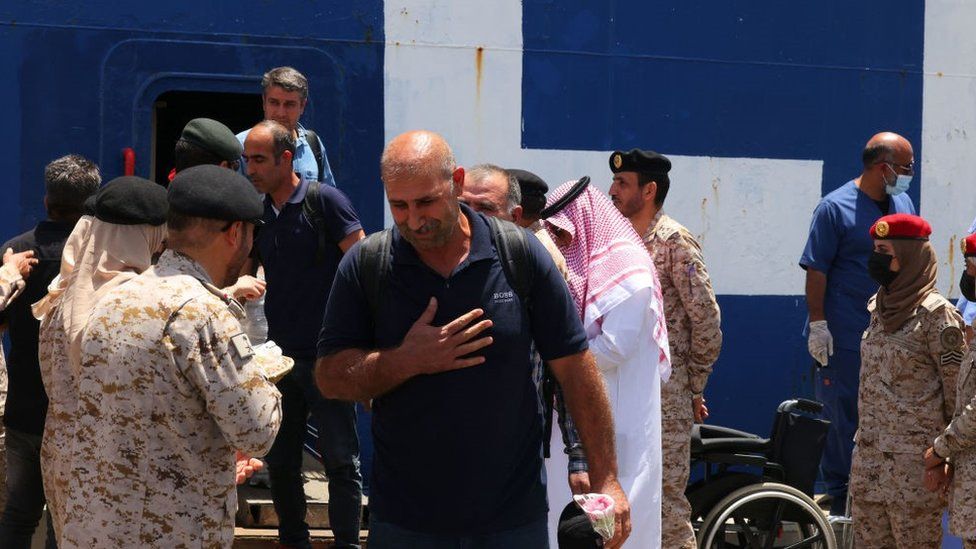
Around 2,000 people have arrived in Jeddah from Port Sudan. Most are expected to be flown home via charter flights arranged by their governments within the next few days.
Speaking to BBC's Chief International Correspondent Lyse Doucet in Jeddah, Nazli, a 32-year-old Iranian civil engineer who fled with her fellow engineer husband, recalled the fighting they fled.
"We couldn't even sit on our balcony; the gunfire was everywhere," she said.
"Please please help our family in Sudan," cried Rasha, a Sudanese-American mother of four children - who spoke of hiding for three days, terrified.
"I call on the world to protect Sudan," she pleaded, underlining fears that once all the foreign nationals have fled, the fighting will intensify.
Latest Stories
-
Benedict Okyere Yeboah: Ghana’s football problem goes beyond sacking a coach
3 minutes -
GPL 2026/27: Darkwah Wiafe’s winner sees All Blacks beat Kotoko
9 minutes -
ITF World Tour : Patel Wins Boys’ Singles Final at J100 Accra
21 minutes -
Ghana must pursue BRICS partnership if it brings economic benefits – Kpebu
25 minutes -
Success and Wright Claims J100 Accra Girls’ Doubles Championship
25 minutes -
ITF J100: America’s Wright wins J100 Accra Girls’ Singles Title
32 minutes -
Expedition hopes to find aviator Amelia Earhart’s plane on remote island
32 minutes -
US seeks changes to rejected $109m health compact with Ghana – Mahama
1 hour -
Nine dead in mass shooting at Pennsylvania home
1 hour -
‘Time for Ukraine to get new president,’ says Trump after Zelensky condemns diesel deal
1 hour -
Hincapie injury adds to Arsenal issues after Guimaraes rescue act
2 hours -
Henderson scores twice as Chelsea thumb Bournemouth
2 hours -
Photos: Mentapulse Africa convenes health and labour summit to address talent retention
2 hours -
Mahama inspects Nkokɔ Nketenkete plant, eyes Bechem as chicken capital
2 hours -
Ghana not seeking full BRICS membership, applying as Partner Country – Ablakwa
2 hours