


Audio By Carbonatix
Thousands of demonstrators across Sudan have taken part in what appears to be the biggest series of rallies against President Omar al-Bashir since protests began in December.
In Khartoum, demonstrators reached the army headquarters for the first time. The presidential compound is nearby.
Security forces used tear gas and made several arrests.
The rallies marks the 34th anniversary of the coup that overthrew the regime of former President Jaafar Nimeiri.
Why are people protesting?
The protests were originally sparked by a hike in the cost of living but are now calling for the president, who has been in power for nearly 30 years, to step down.
Sudan's economy has long been strained since the US imposed sanctions more than 20 years ago, accusing Khartoum of sponsoring terror groups.
”‹”‹”‹”‹”‹”‹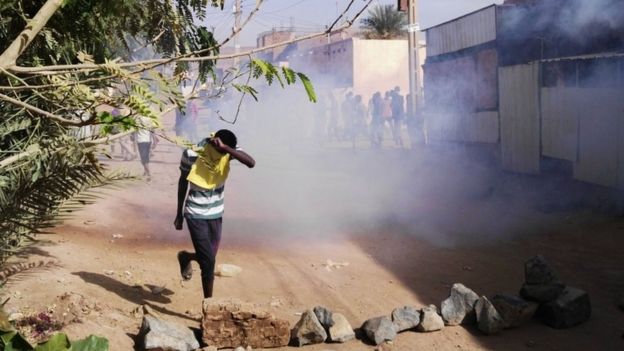
Authorities have used tear gas to try to disperse the protesters
On 19 December 2018, the Sudanese government announced the price of fuel and bread would rise.
In the year leading up to this, inflation was high while the Sudanese pound was rapidly dropping in value.
The announcement of the price rises triggered protests, which evolved into calls for President Omar al-Bashir to step down.
His rule has been blighted with accusations of human rights abuses. In 2009 and 2010, the International Criminal Court (ICC) charged him with counts of genocide, war crimes and crimes against humanity. A warrant for his arrest has been issued.
Who are the demonstrators?
The Sudanese Professionals Association (SPA) - a collaboration of health workers and lawyers - has been organising the protests.
Doctors have emerged as a leading force and as a result are being targeted by the authorities.
It is estimated that up two thirds of the protesters are women, who say they are demonstrating against Sudan's sexist and patriarchal society.
How has the president responded?
In February, it looked like he might give in to protests and step down, but instead Mr Bashir declared a state of national emergency.
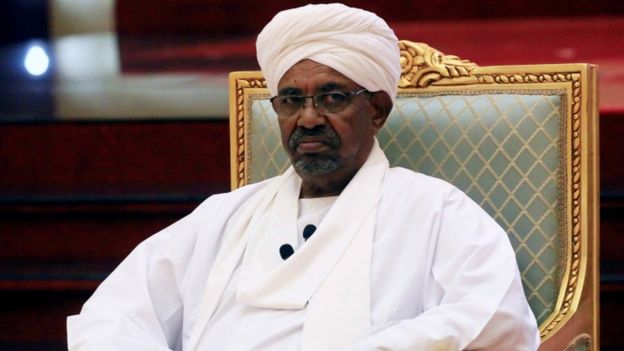
President Bashir spoke to the National Dialogue Committee at his palace on 5 April
On the streets, security has been heavy, with tear gas used indiscriminately and reports of violence commonplace.
Sudanese authorities have been accused of arresting prominent activists and targeting medics, which the National Intelligence Security Service has denied.
Authorities say 31 people have died in protest-related violence so far, but Human Rights Watch says the figure is more like 51.
The pressure group Physicians for Human Rights says it has evidence of killing, persecution and torture of peaceful protesters and the medics caring for them.
Latest Stories
-
Labour Minister wants SOEs to help shape new public pay system
4 hours -
IPEC will ensure Equity and Sustainability in SOEs Compensation
4 hours -
White House bars CNN from travelling with Trump on Air Force One
5 hours -
Fennis wins second consecutive ITF J60 title in Accra
5 hours -
Spain beat England in thriller after Kane penalty miss
5 hours -
GPL 2026/27: Zaidan’s late goal ends Hearts of Oak unbeaten start
5 hours -
CEOs demand clarity on pay harmonisation, board autonomy as FWSC engages SOEs bosses over IPEC transition
5 hours -
2026 Women’s Super Cup: FC Savannah, Epiphany Warriors maintain top spots ahead of final group games
6 hours -
‘Is EOCO responsible for determining lawyers’ fees?’ – Baffour Awuah
6 hours -
David Beckles claims second J60 Accra title
6 hours -
No France cocaine suspect linked to Mahama, Vice President’s security details – NACOC
6 hours -
Anwelle Foundation launched in Jirapa to tackle poverty, youth unemployment
6 hours -
Joy Sports Editor Fentuo Tahiru Fentuo to moderate inaugural Music Meets Football Summit in Zambia
7 hours -
Court premises too volatile for Baffour Awuah’s attempted arrest by EOCO – Inusah Fuseini
7 hours -
Drug bust: Under no circumstances will NACOC leadership be compromised – Twum-Barimah
7 hours