

Audio By Carbonatix
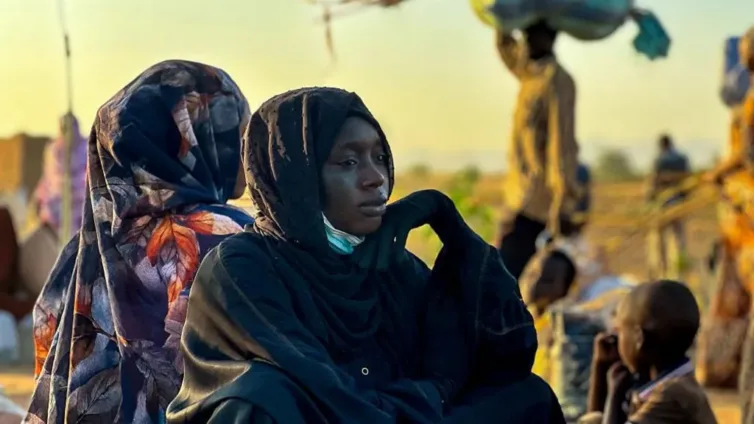
Sudan’s Rapid Support Forces (RSF) committed crimes against humanity and ethnic cleansing during their brutal campaign to seize the city of el Fasher, according to a new report from Amnesty International released this week. The investigation documents a pattern of systematic abuses, including murder, torture, sexual slavery, and the forced displacement of civilian populations during the 18-month siege that culminated in the city’s fall in October 2025.
Documenting systematic abuses
The Amnesty report, titled City Under Siege, Children Under Fire, details a campaign explicitly targeting non-Arab communities, particularly the Zaghawa ethnic group. Researchers verified these findings through 247 interviews and an analysis of 89 open-source videos and satellite imagery. The evidence reveals that RSF fighters frequently used dehumanising ethnic slurs to justify the violence. These crimes included the deliberate targeting of children, who were subjected to widespread abduction, forced recruitment, and sexual violence.
"Children were not collateral damage of this violence – often, they were deliberately targeted and have suffered immensely. They have been killed, injured, raped, abducted, and forcibly recruited on a massive scale," said Amnesty International secretary general Agnès Callamard.
One 17-year-old survivor from the town of Abu Zerega provided a harrowing account of his encounter with RSF militia members. "They tied me up and beat me with sticks and the back of an AK-47. Then one of them approached on a camel and… just shot me in the leg," he said. During that same attack, eight of his cousins were killed, including four boys between the ages of 11 and 17.
Lethal impact on civilians
The assault on el Fasher remains one of the deadliest episodes in Sudan’s three-year civil war. United Nations experts have previously noted that the violence bore the "hallmarks of genocide," with more than 6,000 people reportedly killed in just three days of fighting last October. The new report also highlights the extreme deprivation caused by the siege, noting that many women were forced to give birth in sweltering underground bomb shelters while suffering from severe malnutrition and stress. The conflict has triggered a catastrophic humanitarian crisis, displacing more than 14 million people and leaving 28 million facing acute hunger.
Demands for accountability and intervention
Amnesty International has identified three specific RSF commanders—Gedo Hamdan Ahmed Mohamed, Abbas Khater Bakhit, and Al-Fateh Abdullah Idris—whom it believes are responsible for these violations of international law. The organization is now calling for an immediate ceasefire and the urgent deployment of an international protection force.
"The world was warned of the horrors that civilians in el-Fasher confronted as the RSF laid siege to the city. It is a stain on the conscience of humanity," Callamard said. She emphasized that international intervention must include robust legal action. "It also requires strengthening accountability by ensuring sufficient support for all existing accountability mechanisms for Sudan, including the International Criminal Court, and U.N. and African Union-backed fact-finding missions. Commanders identified in this report should be investigated and, where there is sufficient admissible evidence, prosecuted," Callamard added.
RSF response and the broader conflict
The RSF has not provided a formal response to the Amnesty report. Although the organization shared its findings with RSF leader Gen. Mohamed Hamdan Dagalo last month, no reply was issued. While the paramilitary leadership has previously acknowledged that some violations took place, they continue to assert that the scale of the atrocities is being exaggerated and deny broader accusations of war crimes. Both the RSF and the regular Sudanese army remain under intense international pressure as the fighting continues to destabilize the region.
A regional imperative for peace
The ongoing instability in Sudan threatens the security and social fabric of the entire continent. African leaders and regional bodies hold a unique responsibility to prioritize the protection of civilian lives over political maneuvering. The path toward regional stability requires a decisive, unified stance from our own institutions to enforce accountability and facilitate a lasting ceasefire. As the African Union and neighboring nations witness this tragedy, the demand for justice must move beyond rhetoric and translate into meaningful protection for those suffering on the ground.
As continental stakeholders grapple with the scale of these atrocities, the lack of a unified regional response remains a primary obstacle to peace. Ensuring that justice is pursued for the victims of el Fasher will require not only sustained diplomatic pressure on the warring parties but also a concrete commitment to shielding civilians from a war that shows few signs of abating.
Latest Stories
-
Tarkwa court jails labourer for three years over GH¢123,000 theft
26 minutes -
GAEC must retain nuclear scientists for Ghana’s nuclear ambitions – Minister
57 minutes -
Man reportedly mistaken for game and shot by hunter dead in forest
60 minutes -
19-year-old mason jailed 15 years for defiling seven-year-old pupil
1 hour -
Ghana’s banking sector assets rise 20.47% to GH¢500.2bn – BoG Governor
1 hour -
22 injured as Sprinter bus overturns at Sege after tyre burst
1 hour -
UN housing expert urges Ghana to strengthen Rent Control Department amid housing affordability concerns
1 hour -
Delta-BCI partnership reaches 166,000 people with breast cancer education
1 hour -
Power restoration fault suspected in Kumasi Central Market fire
7 hours -
The 7-foot giant of Ngleshie Amanfro: Seven-foot Ghanaian Ephraim Saawa dreams of joining the national basketball team
7 hours -
Government promises support for Kumasi Central Market fire victims
7 hours -
Vibes The Movie: Big Ghun’s Ghanaian film earns five nominations at 2026 REFFA
8 hours -
‘I’m a fulfilled man’—Justice Korbieh on missing out on Supreme Court despite two nominations
8 hours -
MamaCare CEO warns unresolved conflicts among health workers could undermine maternal and neonatal care
8 hours -
Health professionals urged to translate medical knowledge into practice to save mothers
8 hours