

Audio By Carbonatix
The Inspector-General of Police (IGP), Christian Tetteh Yohuno, has forcefully refuted widespread allegations that the Ghana Police Service (GPS) denied a police officer essential medical care following a serious accident in the Ashanti Region.
The claims, which gained traction after a distressing video showing the officer with a severely swollen leg circulated on social media, were dismissed by the IGP as misleading and inaccurate.
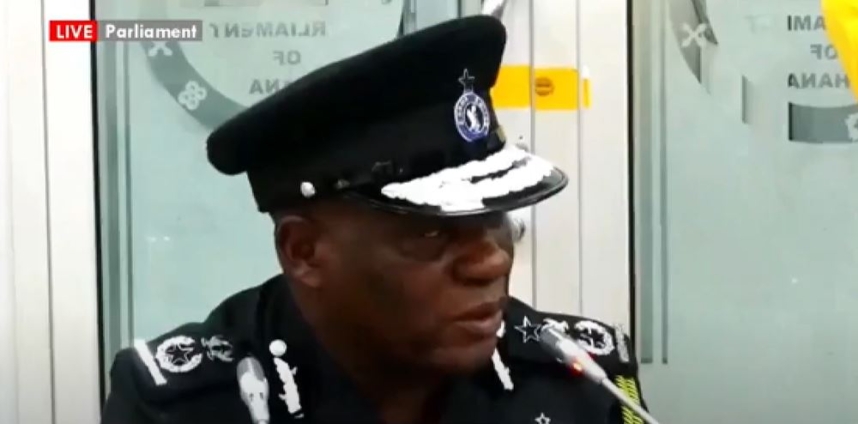
Speaking to the media in Accra on Thursday, November 13, 2025, Mr. Yohuno provided a detailed timeline of the events, arguing that the Service had, in fact, facilitated advanced treatment for the officer.
The police officer, who sustained injuries in an incident near Asante Mampong, was initially treated at the Komfo Anokye Teaching Hospital (KATH), one of Ghana’s premier medical centres. Following stabilization, he was subsequently transferred to the dedicated Police Hospital in Accra for further specialized care.
The critical turning point in the officer’s treatment involved a difficult medical recommendation:
- Medical Advice: Doctors at the Police Hospital advised that the officer’s lower leg required amputation below the knee to prevent further complications and save his life.
- Patient/Family Decision: The officer and his family declined the recommended amputation procedure, opting instead to seek alternative treatment methods outside the Police Service's structured medical plan. The medical team respected this decision, prioritizing patient autonomy.
The IGP indicated that the officer’s condition deteriorated after this decision, leading him to publicize his condition.
“The foot got worse, and he later decided to publish his condition in the media,” Mr. Yohuno stated. He categorically denied the central allegation of neglect: “The Ghana Police Service has never denied any officer access to healthcare.”
The IGP revealed that the Police Administration only became aware of the full extent of the officer’s situation and his distress after the video surfaced online. This public appeal has now prompted an internal response.
Mr. Yohuno stressed that the Police Administration is actively working to contact the officer and his family to initiate discussions regarding the next steps in his care and recovery, reiterating the Service's non-negotiable commitment to personnel welfare.
The Police Service maintains a robust internal healthcare system, utilizing the Police Hospital and its regional clinics to cater to the health needs of its approximately 40,000 personnel nationwide, ensuring every officer is entitled to quality healthcare under its service agreements.
The IGP concluded by reaffirming the Service’s dedication to the welfare of its personnel, emphasizing that all officers are entitled to comprehensive healthcare support throughout their service.
Latest Stories
-
GPL 2026/27: Medeama go three clear as Hearts of Oak recover and Bechem stage stunning comeback
3 minutes -
Ntiamoah Foundation launches “BEYOND 20” anniversary campaign
23 minutes -
Credit Risk Management Directive: BoG to begin implementation for banks, others from July 1, 2027
40 minutes -
Ghana Brands Awards 2026: Leading brands, business trailblazers to shine on November 20
56 minutes -
T-bills auction: Demand improves as government exceeds target by about 76%; interest rates soften
1 hour -
Ziope undertakes initiative to build a technologically inclined community, commissions self-help ICT lab
1 hour -
ECG announces power outage in parts of Tema, Central Region due to network fault, maintenance
2 hours -
When the Gospel Becomes a Weapon: The church, blackmail and the abuse of faith
2 hours -
JoyNews’ Jacqueline Ansomah Yeboah selected for UK Media Excellence for Emerging Technology Fellowship
3 hours -
Mental Health Alliance urges government to operationalise Mental Health Fund
3 hours -
Ghana–Holy See agreement heads to Parliament after Cabinet approval
3 hours -
Luv FM Corporate Games 2026: Kumasi Central Prisons, Amanfiman Bank win big amid fun
3 hours -
WAFU B U17: Ghana top Group A after win over Togo
4 hours -
Ho Central Mosque reopens amid unresolved leadership dispute that led to closure
5 hours -
Minority caucus questions GH¢16.4m in Ablakwa’s SA evacuation spending, demands independent audit
5 hours