

Audio By Carbonatix
Truly, "We are not in normal times". This has been the cliché to calm all fears and to strengthen us as we fight the one enemy known as "coronavirus".
This enemy rose from an outbreak in Wuhan and now has become a devastating pandemic within a period of months. According to figures collated by John Hopkins University, the United States of America (USA) has, by far, the largest number of cases, with more than 85,000 fatalities, and also has the world's highest death toll.
Followed by France, Italy, Spain and the UK - the worst-hit European countries - with all of them recording more than 25,000 deaths. Ghana has recorded over 5,000 cases with few deaths and a good number of recoveries.
With great efforts to curb and eradicate this enemy, analysis and reports from the World Health Organization (WHO) outlined some directive health protocols which could reduce the spread of the virus. Some of these directives were to; practice social distancing, avoid social gathering - in effect, closing schools and other institutions, and placing limits on traveling. Reports have proven that these directives and others are yielding positive results in controlling the spread, but have we thought of its implications on students in rural areas?
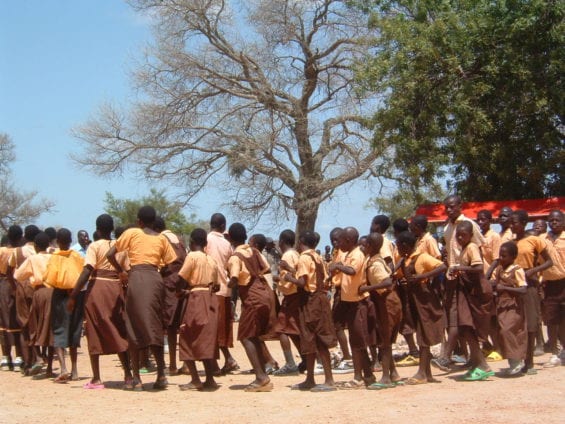
Most students study best on campus than at home. This is because of the availability of reading materials, and other resources. Students, because of the directives by which schools have been closed, are compelled to learn from home. This is a new culture creeping in and it has been very difficult for students especially those in the rural and the peri-urban areas who may not have access to books from a library and assistance of real teachers. This is making studies from such homes a burden for these students.
These same students living in the rural areas became alarmed when there was the introduction of online learning. Without access to electricity, the internet, smartphones and other technological devices, students have become handicapped. This has rather put stress on the students since they have no means of acquiring these devices and accessing the internet to study with their other colleagues.
In attempt to overcome the challenge of eLearning, students who chose to study on their own are gradually becoming independent in studies. The spirit of group work and collective studies is slowing down. If care is not taken, these students may gradually develop the habit of self-centeredness and extreme independence in studies.
As students become restless in prolonged waiting to return to school for studies, they begin to adopt and adapt to new lifestyles that might keep them busy or occupied. Female students who used to spend their vacation learning skills like baking or trading are now idle at home. Male students who used to play around with their other friends have their movements restricted. It is no doubt that in their youthful ages, they have very strong sexual desires. If not checked, these male students, having nothing else to do, might start exercising orgasms.
It could be observed that most students in the rural areas depend on relatives in the urban areas to support them. Such support often comes in the form of clothing, provisions, stationery, food, etc. These benefits have now reduced since there are limits on traveling and doing business. This is making life for the students very difficult.
Also, those families who took loans or sold properties to send their wards to school are living in despair. This is affecting their wards since their families now see them as burdens or the unfortunate ones in the family. These feelings of the students could lead to depression and other emotional, psychological and physical challenges with time.
In as much as the President strives to put these helpful measures in place to control the spread of the coronavirus, there is the need to look beyond and reach out to students in rural areas who are disadvantaged due to these laid-down measures.
Author: Rev. Fr. Stephen Kofi Sakpaku
Email: sonnichristus@yahoo.com
Latest Stories
-
Republic Bank JoyNews Habitat Fair to connect prospective homeowners with exhibitors in Ho from October 16 to 18
9 minutes -
Obaasima Summit: ‘AI is not a spiritual attack’ — Rev. Dr. Ofori-Boateng urges young women to embrace technology
19 minutes -
GHS to distribute 80,000 pairs of locally-made protective footwear to health workers
26 minutes -
GoldBod boosts local jobs as 90% of gold undergoes refining in Ghana – Sammy Gyamfi
28 minutes -
The search for the politically unblemished: Are we asking the impossible of public appointees?
30 minutes -
Ghana seeks climate finance access for debt-restructuring countries
39 minutes -
Afenyo-Markin urges stronger media scrutiny of public institutions
40 minutes -
GoldBod recovers GH¢38.7m in legacy PMMC debts, targets remaining arrears
42 minutes -
62 out of every 100 commercial meters inspected missing from Ghana Water database – MD
43 minutes -
GoldBod gets BoG authorisation to sell forex, Sammy Gyamfi tells PAC
45 minutes -
Ghana Water revenue mobilisation below 50% of potential – MD
52 minutes -
Ghana’s democracy must accommodate dissent and constructive criticism – Haruna Iddrisu
53 minutes -
Fact check: Trump posts fake quote of Denzel Washington supposedly praising him
54 minutes -
UPSA students lament high fees at private hostels, call for government intervention
1 hour -
We will upgrade Ghana’s credit ratings if government maintains fiscal discipline, policy effectiveness – Moody’s
1 hour