

Audio By Carbonatix
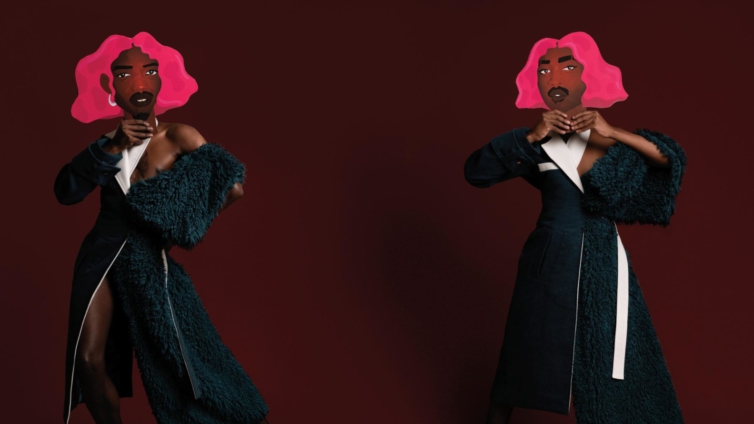
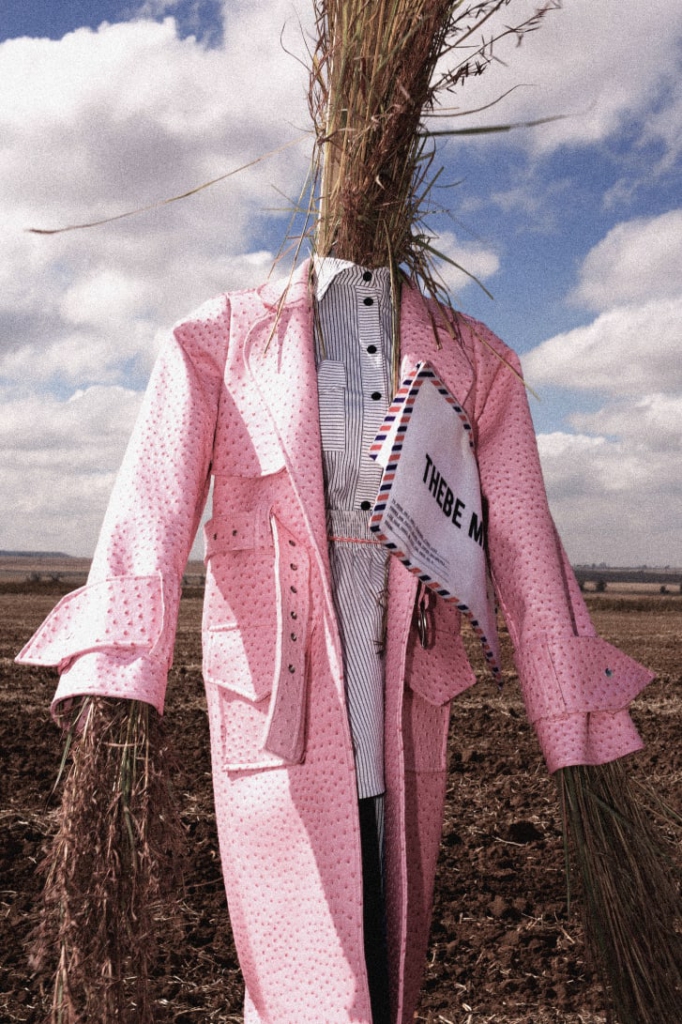
At just 25 years old, South African fashion designer Thebe Magugu can already boast about having one of his creations in the permanent collection of the Fashion Institute of Technology in New York. The piece, a faux ostrich coat, entered the collection after featuring in the F.I.T.'s 2018 exhibition
"Pink: The History of a Punk, Pretty, Powerful Color."
This year, Magugu was described as "the leader of his generation" by the judging panel of London's International Fashion Showcase, where he was crowned winning designer. In an interview at Somerset House, in London, Magugu talked about South Africa's creative scene.
How did you get started in fashion?
Thebe Magugu: I'm from Kimberley, in South Africa. As a kid, I used to make little sketches that my mother would find under my bed. One day she bought me a stack of fashion magazines and a sketchbook, and told me that if I was really going to do this I had to practice every day.
Eventually I moved to Johannesburg to study fashion design and photography (at the LISOF Fashion School). Three years ago, I opened my namesake label, which I've been working on ever since.
What do you look to communicate as a designer?
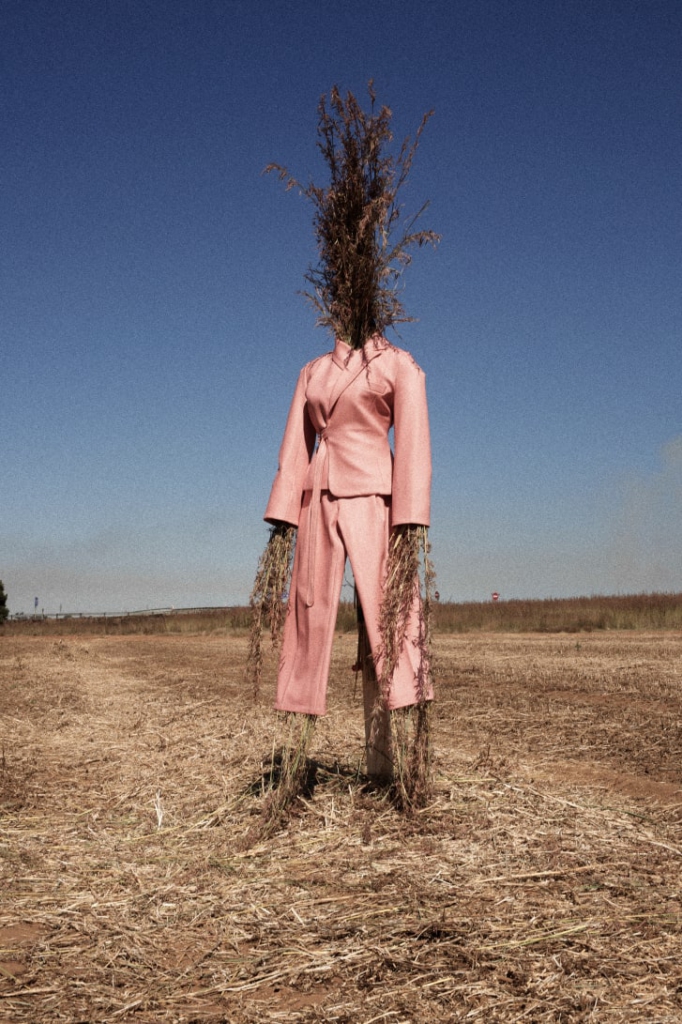
My goal is to create clothes that merge my South African heritage with contemporary shapes and proportions. I come from a very rich culture: there's a lot of beadwork, a lot of craft. I want to merge these references with my global outlook. It's a project that reflects a more authentic Africa, one that recognizes that we are forward-looking, open to the world.
What kinds of cuts or fabrics do you favor?
I do a lot of pleating and printing, so I use fabrics that are receptive to that. But I also love juxtapositions: merging fabrics that don't necessarily go together, or in an unexpected way.
I think people tend to have set ideas about African design. But we are so much more experimental in our proportions and cuts than people realize, and I want my work to reflect that.
What drew you to womenswear? What kind of woman are you designing for?
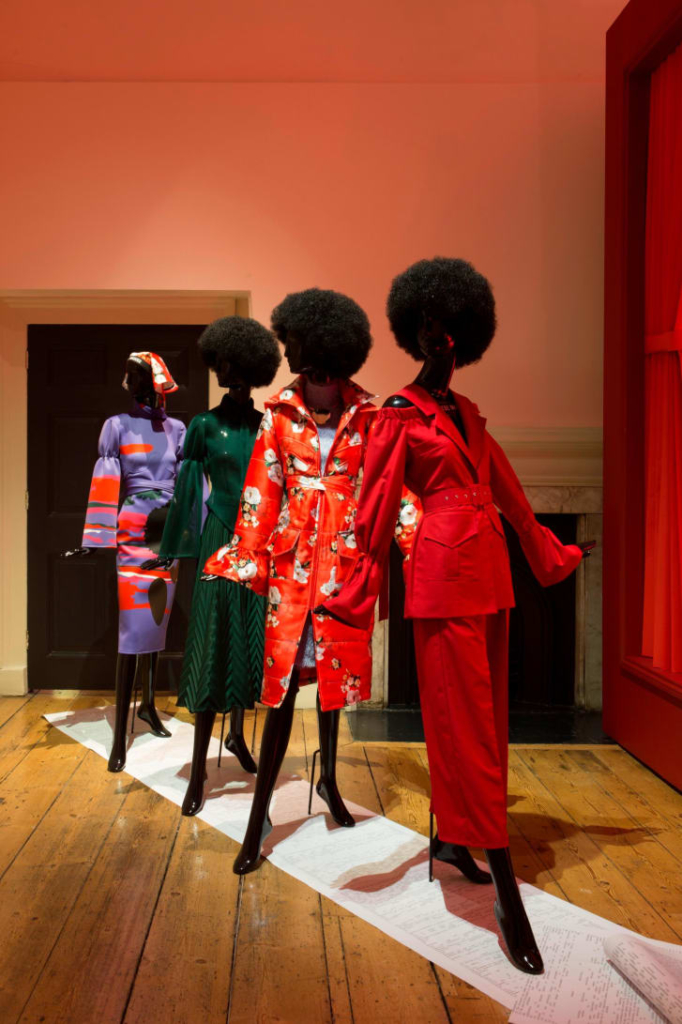
I was surrounded by women as a child -- my mother, my aunts and grandmothers -- and their ideas about style really influenced my own journey in fashion. My mother in particular is always very put together, and you can see that in my clothes, too. My mother is also quite magnetic, and I have always wanted my clothes to do that for people, to invite people in.
I don't necessarily design with a type of woman in mind; my clothes could look good on someone young or old. My primary concern is to design clothes that make women feel beautiful but that are also functional. And I want my clothes to tell a story, because fashion is such an intelligent medium and I want to make as much use of it as possible.
Which piece are you proudest of?
The Girl Seeks Girl dress, which I made for the (2018) Home Economics collection, because it was rooted in something much bigger. A South African woman called Karabo Mokoena had been murdered by her boyfriend (in 2017), and her death sparked a wider conversation about the status of women in the country.
The dress is illustrated with a print of a woman crying into the arms of another woman. It was my way of saying that South African women needed each other more than ever, because it really seemed like there was a war raging against them.
What's the most challenging thing about South African fashion, and the most exciting?
It's still an emerging market, which certainly brings its own challenges. There's a lack of proper manufacturing, and fewer boutiques and customer touch points. That said, we have a real culture of making do.
The most exciting thing is definitely the young people. They're the ones having the critical conversations about what it means to be South African. That's why for the past five months I've been working on a zine, called Faculty Press, highlighting work by friends and other collaborators who are doing such innovative work in their respective fields. I wanted to pull all of it together in order to really show the face of contemporary South Africa.
What are you most looking forward to now?
To see the way people respond to Faculty Press. I'm also very excited for to my brand to expand into Europe and the US, to be able to share my point of view with a wider audience.
This interview has been condensed and edited for clarity.
Latest Stories
-
Linking LEAP to productive inclusion could cut extreme poverty by 2030 – UNICEF
47 minutes -
Trade Ministry backs use of creative arts to rehabilitate prison inmates
48 minutes -
Negotiations with government to continue despite strike suspension – GNAT
52 minutes -
‘Ghana cannot afford to waste public resources; every cedi has a job’ – Ato Forson
54 minutes -
Ghana expects economic boost as World Assemblies of God Congress brings 10,000 delegates to Accra
1 hour -
Joy in Nayilifong as Farouk Aliu Mahama donates 100kVA transformer to improve power supply
1 hour -
Chief Justice urges employers to tackle mental health stigma in workplaces
2 hours -
Analysis: Ghana’s yellow fever numbers reveal a gap between vaccination and protection
3 hours -
Education Ministry welcomes suspension of teachers’ strike
3 hours -
Vice Chancellors Ghana appeal to striking university administrators to resume work
3 hours -
KNUST postpones 2026/2027 academic year reopening indefinitely amid GAUA strike
3 hours -
Fire destroys mattress factory at Sokoban in Kumasi
3 hours -
ECOM-SMS Ghana launches ‘Agriculture Our Future Clubs’ to address threat of ageing farmer population
4 hours -
Nicholas Atsu Kumi
4 hours -
Cherif Sarr: Economic participation needs more pathways, not one prescribed route
4 hours