

Audio By Carbonatix
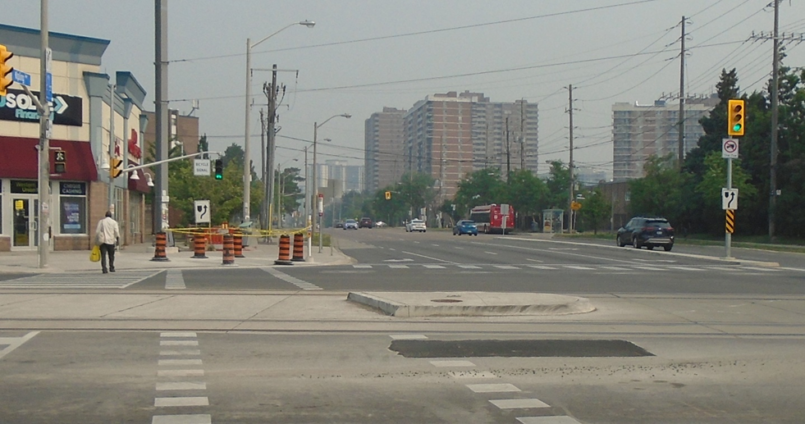
A dense blanket of wildfire smoke has turned Toronto's skyline into a haze-filled landscape, pushing air quality to hazardous levels as out-of-control wildfires continue to rage across northern Ontario, forcing evacuations and raising serious public health concerns.
The smoky conditions, driven south by prevailing winds during an intense heat wave, have transformed the city's skyline into a hazy orange-grey landscape and prompted widespread health advisories.
According to provincial wildfire officials, more than 140 wildfires remain active across Ontario, with dozens classified as out of control.
The largest fires continue to threaten remote communities in northwestern Ontario, forcing mandatory evacuations in several First Nations and surrounding areas. Emergency crews remain on the front lines as extreme heat, dry vegetation and shifting winds complicate firefighting efforts.
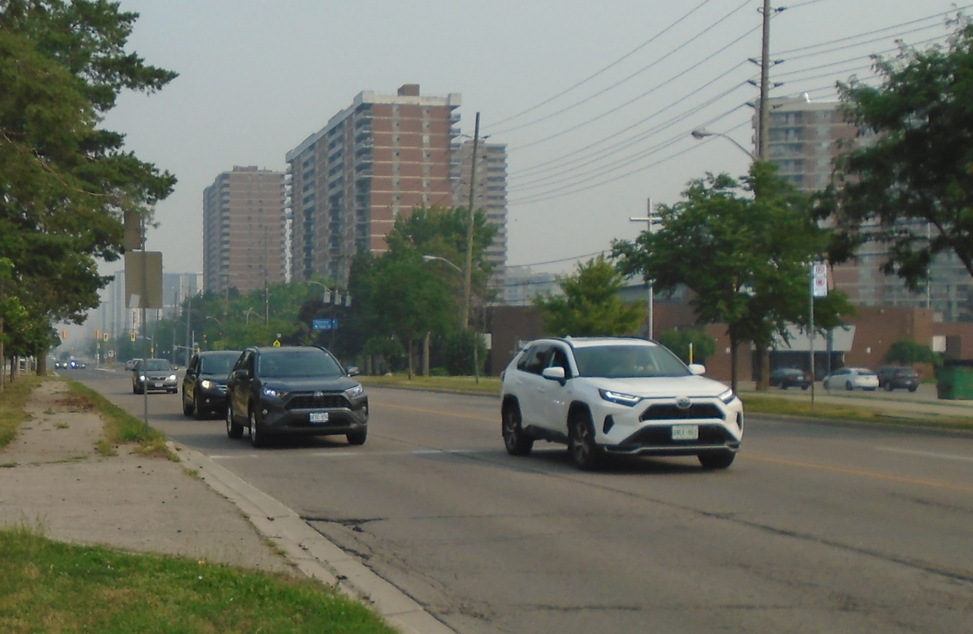
In Toronto, Environment Canada has warned that the Air Quality Health Index has reached very high-risk levels as fine particulate matter from wildfire smoke spreads throughout southern Ontario.
Residents have reported the smell of smoke across the city, while landmarks including the CN Tower and Toronto skyline have appeared partially obscured by thick haze throughout the day.
Meteorologists say a combination of northwesterly winds and a persistent high-pressure system has transported smoke hundreds of kilometres from the wildfire zones into southern Ontario.
The weather pattern has trapped smoke closer to ground level, significantly reducing air quality and limiting visibility across the region.
Health officials are advising residents, particularly seniors, young children, pregnant people and those with heart or lung conditions, to remain indoors whenever possible.
People are encouraged to keep windows and doors closed, operate air conditioning on recirculation mode and use portable air purifiers where available.
Those who must spend extended periods outdoors are advised to wear a properly fitted N95 respirator to reduce exposure to fine smoke particles.
The smoke event comes as Ontario experiences one of its most challenging wildfire seasons in recent years.
Persistent hot and dry conditions have fuelled rapid fire growth across northern regions, while firefighters continue working to protect threatened communities and critical infrastructure. Officials caution that additional evacuation orders may be issued if fire behaviour changes.
Forecasters expect smoky conditions to persist until weather systems shift and stronger winds help disperse the smoke. While some improvement may occur over the coming days, authorities warn that air quality could deteriorate again depending on wildfire activity and changing wind patterns.
Residents are urged to monitor official weather forecasts, wildfire updates and local public health advisories, limit strenuous outdoor activity during periods of poor air quality, and remain prepared for rapidly changing conditions as Ontario's wildfire emergency continues.
Latest Stories
-
Daily Insight for CEOs: Building new revenue streams
4 minutes -
‘Save part of the cake for us’ – Ga Mantse asks Roads Ministry to create jobs quota for Ga indigenes
8 minutes -
COCOBOD raises GH¢3.4bn in first cocoa notes offer, 15% below indicative GH¢4bn target
11 minutes -
Dzata Cement proves Ghanaians can build large-scale businesses – Ibrahim Mahama
17 minutes -
The fallen noble profession: The sad tale of the Ghanaian teacher
19 minutes -
Cybersecurity compliance mandatory for critical infrastructure owners – Sam George
19 minutes -
Teachers’ strike: Final-year SHS students worry over lost learning time and WASSCE preparation
21 minutes -
The Bamba revolution and a maiden broadcast
27 minutes -
WAFU B U-17 Championship: Black Starlets’ road trip to Burkina Faso was planned – Joe Abu Salam
53 minutes -
South Korea recalls Ukraine envoy over prisoner-of-war row
54 minutes -
Caretaker killed and two teachers injured in knife attack at Poland school
58 minutes -
Adwoa Safo calls for unity, endorses brother as Kristo Asafo Church leader
1 hour -
Russian strike on buses kills 33, say officials, as deadly attacks on Ukraine surge
1 hour -
Group of 20 graduates rescued after being abducted in Nigeria
1 hour -
LA 2028: Black Queens set for first steps of Olympic Games against Mauritius
1 hour