

Audio By Carbonatix
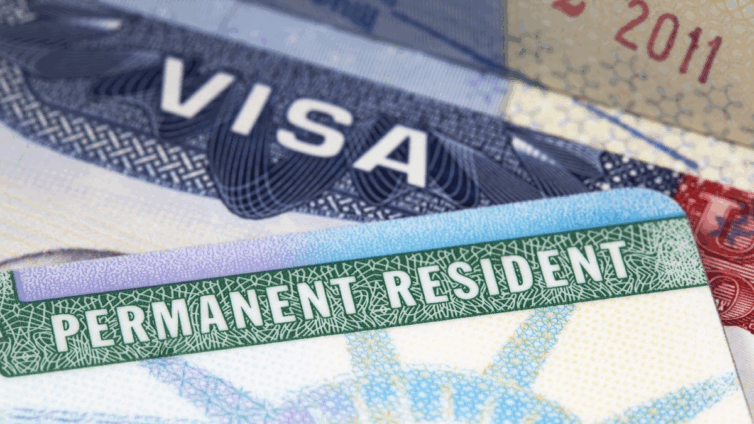
President Donald Trump suspended the green card lottery program on Thursday, which allowed the suspect in the Brown University and MIT shootings to come to the United States.
Homeland Security Secretary Kristi Noem said in a post on the social platform X that at Trump’s direction, she is ordering the United States Citizenship and Immigration Services to pause the program.
“This heinous individual should never have been allowed in our country,” she said of the suspect, Portuguese national Claudio Neves Valente.
Neves Valente, 48, is suspected in the shootings at Brown University that killed two students and wounded nine others, and the killing of an MIT professor.
He was found dead Thursday evening from a self-inflicted gunshot wound, officials said.
Neves Valente obtained legal permanent residence status in 2017, U.S. Attorney for Massachusetts Leah B. Foley said.
The diversity visa program makes up to 50,000 green cards available each year by lottery to people from countries that are underrepresented in the United States, many of them in Africa.
Congress created the lottery, and the move is almost sure to invite legal challenges.
Nearly 20 million people applied for the 2025 visa lottery, with more than 131,000 selected, including spouses, as the winners.
After winning, they must undergo vetting to win admission to the United States. Portuguese citizens won only 38 slots.
Lottery winners are invited to apply for a green card. They are interviewed at consulates and subject to the same requirements and vetting as other green-card applicants.
Trump has long opposed the diversity visa lottery. Noem’s announcement is the latest example of using tragedy to advance immigration policy goals.
After an Afghan man was identified as the gunman in a fatal attack on National Guard members in November, Trump’s administration imposed sweeping rules against immigration from Afghanistan and other countries.
While pursuing mass deportation, Trump has sought to limit or eliminate avenues to legal immigration. He has not been deterred by the fact that they are enshrined in law, such as the diversity visa lottery, or in the Constitution, as with a right to citizenship for anyone born on U.S. soil. The Supreme Court recently agreed to hear his challenge to birthright citizenship.
Latest Stories
-
Association of Small-Scale Industries empowers trade executives in Bono East with a mentorship programme
5 minutes -
AMA evacuates refuse along Graphic Road, warns against indiscriminate dumping
10 minutes -
STC interdicts driver over Pokuase overtaking incident
14 minutes -
Ekumfi: How $6m EXIM participation built a $53m industrial asset — now poised for a 24-Hour Economy breakthrough
15 minutes -
4 arrested, 142 parcels of suspected Indian hemp seized as officers reject GH¢50k bribe
15 minutes -
No MMDCE can say they don’t see galamsey – Local Government Ministry
17 minutes -
Ghana, Germany explore stronger partnership in technical and vocational education
23 minutes -
AMA urges motorists and road users to comply with traffic regulations
24 minutes -
Sam George urges One Million Coders participants to complete all three levels
24 minutes -
Communications Minister announces 2,800-site telecom expansion during Volta visit
26 minutes -
Impunity fuelling sexual abuse in Ghana – Angela Dwamena-Aboagye
27 minutes -
NUGS condemns alleged sexual abuse by Obuasi SHTS headmaster, calls for prosecution
31 minutes -
President Mahama urges investors to employ trained local residents as 1,238-acre industrial park takes off
34 minutes -
Media doing its job, but politicians fuelling insults on social media – NMAG president
36 minutes -
Child protection must be the state’s responsibility, not NGOs’ burden – ARK Foundation Boss
42 minutes