

Audio By Carbonatix
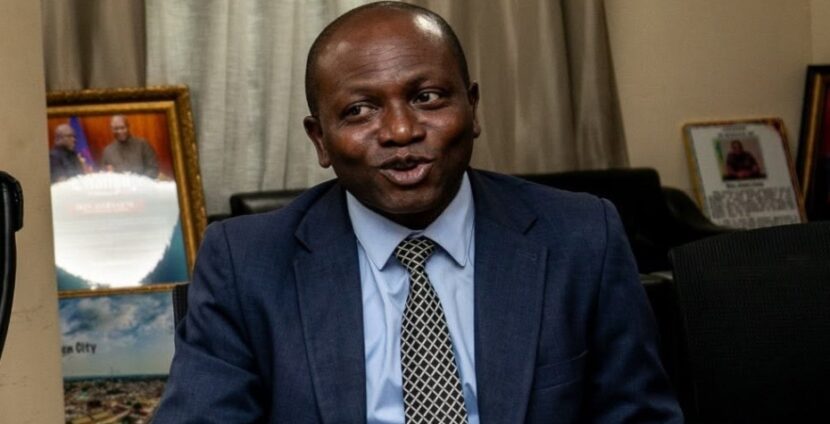
The Registrar of the Health Facilities Regulatory Agency (HeFRA), Dr. Winfred Korletey Baah, has provided critical clarity on the government's new Free Primary Healthcare policy, describing it as a historic and "uniquely organised" intervention designed to eliminate financial barriers for Ghana's most vulnerable populations.
The Free Primary Health Care (FPHC) initiative was officially launched by President John Dramani Mahama on April 15, 2026. The policy aims to provide all Ghanaians with free access to essential preventive and promotive health services at the primary level without the need for National Health Insurance Scheme (NHIS) enrollment.
Speaking on JoyNews’The Pulse on Thursday, 16th April 2026, Dr. Baah explained that while certain elements of primary care have been free in the past, this specific rollout represents the first time the country is implementing a blanket, sub-district-level fund dedicated entirely to preventative and promotive health.
A significant portion of the policy’s impact targets the estimated 40% of Ghanaians for whom the cost of a National Health Insurance Scheme (NHIS) subscription remains a barrier to entry.
Dr. Baah noted that this new fund bypasses those hurdles to ensure care reaches the "poor and the default."
“To have it now as a blanket free at the sub-district level... this is the first time. It has never happened before,” Dr. Baah stated. “What we are witnessing now is a specific fund for the first time to help us have a country-wide effort to achieve Universal Health Coverage.”
Unlike traditional healthcare models that require patients to visit a hospital, the Registrar revealed that this program is "intentional" in its outreach. Medical teams will be deployed directly into communities to identify and treat ailments before they become critical.
“As part of the program, we are going to go to their homes, to the market, to everywhere, and screen people, bring them to the clinic,” he explained. “It is more like mandatory—not mandatory by force—but once it comes to the market, you see people will do it.”
As the lead regulator, HeFRA has already begun the process of vetting the infrastructure supporting the rollout. Dr. Baah confirmed that his team inspected and licensed the first health platform used during the launch on Wednesday.
The agency is not merely checking buildings but is ensuring the technical integrity of the medical equipment being deployed.
“All the machines that are being used are being calibrated. We are also going to be monitoring the whole process to make sure that they provide safe and quality healthcare to the people of Ghana,” Dr. Baah assured.
Latest Stories
-
Obuasi SHTS case: Eduwatch calls for sex offenders’ register and mandatory background checks for teachers
2 minutes -
GloMeF CEO urges intensified public education on new road traffic regulations
14 minutes -
‘Any tax on ChatGPT is an attack on education and innovation’- Akim Swedru, MP
17 minutes -
Obuasi SHTS sexual abuse scandal exposes systemic failure in child protection – Moving Masculinity
18 minutes -
Hubtel CEO calls for national data-sharing framework to boost AI development
20 minutes -
Twelve Golden Rules of real estate development in Ghana, Africa
25 minutes -
Five new telephony cell sites in Ashanti Region to be activated in October 2026 – Sam George
25 minutes -
Mahama cuts sod for Afienya Industrial Park, targets 120 enterprises
30 minutes -
Rush for fuel from accident tankers is stealing, punishable by law – NPA boss, Edudzi Tamakloe
36 minutes -
GhIG pushes for legislation to regulate geoscientists’ activities
42 minutes -
Mfantsipim @150: Ace Anan Ankomah leads project to preserve school’s musical heritage
46 minutes -
Gov’t launches rCOMSDEP in Ahanta West, Mpohor Fiase to promote responsible community mining
47 minutes -
AI is forcing professionals to rethink how they deliver value – Hubtel CEO
50 minutes -
Daily Insight for CEOs: Strengthening the CEO’s Leadership Legacy
51 minutes -
Jimmy Aglah’s ‘When the River Testified’ approved by NaCCA as Supplementary Reader
60 minutes