

Audio By Carbonatix
Fenice Metal Technology Limited Company, a Ghanaian cable manufacturer, says it would help the country to significantly cut down the importation of finished cable products through a vibrant import substitution strategy.
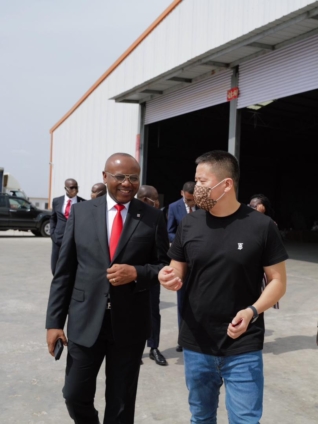
The Founder and Chief Executive Officer of Fenice, Lu Changshou, said the company has developed an innovative technology that permits it to obtain refined copper from recycled material thereby reducing the country’s reliance on expensive imported copper rods. Prior to the intervention, almost all local cable manufacturers had to import all the raw materials, especially the copper rod from Europe.
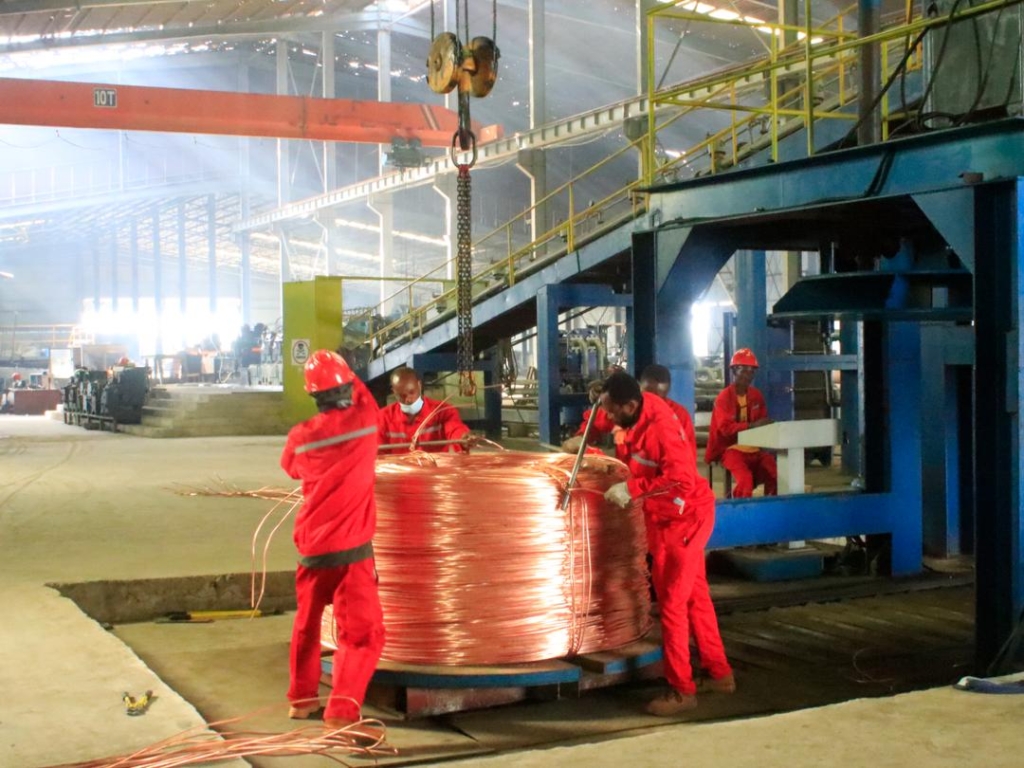
Fenice Metal Technology Limited, which has set up the first copper recycling plant in West Africa, said it plans to expand its copper rod production from the current 600 tons per month to 1,600 tons per month over the next five years to meet demand of local cable manufacturers.
The CEO said the supply to local manufacturers would help them to save cost and bring down the price of their products to be able to compete favorably with the imported ones. This would also save the country millions of US dollars thereby augmenting government’s efforts to strengthen the dollar.
"Today in Ghana more than 80% of the cable is imported, while 20% is locally made. So, we have the intention of reversing this trend given the goodwill of the Ghanaian people towards Fenice”.
"We have the confidence that we are going to facilitate the same story here in Ghana just as we did in Nigeria. We are going to help the industry to achieve import substitution," he said.
The CEO said while the plant had the capacity to produce 1,600 tons, the inability to access enough raw materials locally was stifling growth.
"But we are working on it and in the next few years, we expect to see growth," he said.
"So, for now, due to the low availability of scrap for recycling, the maximum we can get is 600 tons monthly. But in the future, if the market is going well, we can import the scrap copper," he added.
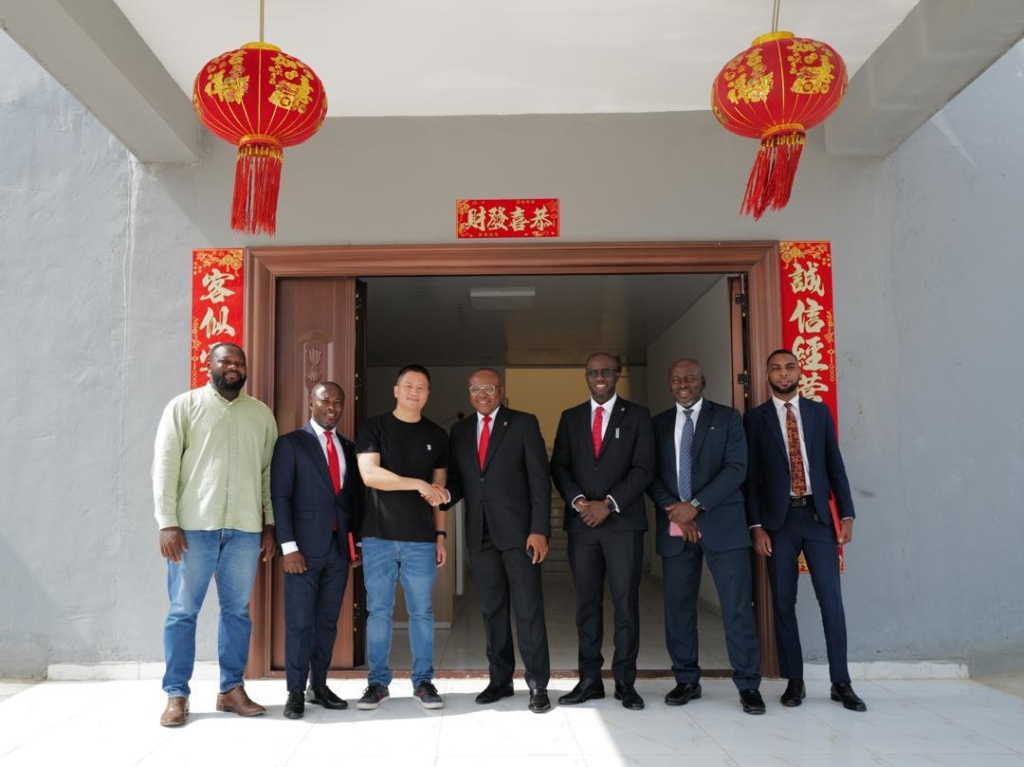
Mr Lu Changshou said there was the need to gradually get more market share from imported copper by enhancing quality and ensuring affordable price.
"So, we are very confident. We are very passionate. We will reach there," the CEO added.
He said the company had the ambition of becoming the number one producer in the industry.
"And we don't see the other cable factory as competitors. We see them as partners."
He said although there was enough output from Ghanaian manufacturers, all of whom produce good quality cables, the business is currently affected by imported products mainly from India and Turkey. Some of these imported products do not meet Ghana’s stringent quality standards.
"For me, I just want to help the country to achieve import substitution. That is the only way that, let's say, the country can work. We are here for the long haul, and we want to be part of the Ghana success story."
"A country like Ghana cannot rely on importation. You cannot borrow money to spend."
"You need to help yourself to achieve self-dependence in all the products, including cables. And by investing in the country, you are going to create a lot of job opportunities. You are going to generate a lot of revenue for Ghana."
The Founder emphasised that his company specialises in manufacturing PVC insulated cables of all sizes. He highlighted the integration of state-of-the-art equipment and machinery, coupled with a distinctive production approach, as key factors setting their products apart. He asserted that their cables uphold high quality standards, having undergone rigorous testing and approval by the Ghana Standards Authority (GSA). Furthermore, he underscored their competitive pricing advantage, attributing it to their in-house production of copper rods, the primary raw material essential for cable manufacturing.
The company currently has around 100 workers, who are all accommodated at the factory site at Tsopoli in the Greater Accra Region.
“We could have more, but last year we had some challenges. They are trying to frustrate us. Thank God, we are strong enough to survive” he added.
The Founder urged the government to support local manufacturing companies and listen to their concerns and help resolve them.
There is also the need for the government to lift the high taxes on manufacturing companies, provide incentives to reduce the cost of doing business and make the environment conducive for growth.
He called on the government to ban the direct export of scrap copper to encourage value addition locally.
Latest Stories
-
Labour Minister wants SOEs to help shape new public pay system
2 hours -
IPEC will ensure Equity and Sustainability in SOEs Compensation
2 hours -
White House bars CNN from travelling with Trump on Air Force One
3 hours -
Fennis wins second consecutive ITF J60 title in Accra
3 hours -
Spain beat England in thriller after Kane penalty miss
3 hours -
GPL 2026/27: Zaidan’s late goal ends Hearts of Oak unbeaten start
3 hours -
CEOs demand clarity on pay harmonisation, board autonomy as FWSC engages SOEs bosses over IPEC transition
3 hours -
2026 Women’s Super Cup: FC Savannah, Epiphany Warriors maintain top spots ahead of final group games
3 hours -
‘Is EOCO responsible for determining lawyers’ fees?’ – Baffour Awuah
3 hours -
David Beckles claims second J60 Accra title
4 hours -
No France cocaine suspect linked to Mahama, Vice President’s security details – NACOC
4 hours -
Anwelle Foundation launched in Jirapa to tackle poverty, youth unemployment
4 hours -
Joy Sports Editor Fentuo Tahiru Fentuo to moderate inaugural Music Meets Football Summit in Zambia
4 hours -
Court premises too volatile for Baffour Awuah’s attempted arrest by EOCO – Inusah Fuseini
5 hours -
Drug bust: Under no circumstances will NACOC leadership be compromised – Twum-Barimah
5 hours