

Audio By Carbonatix
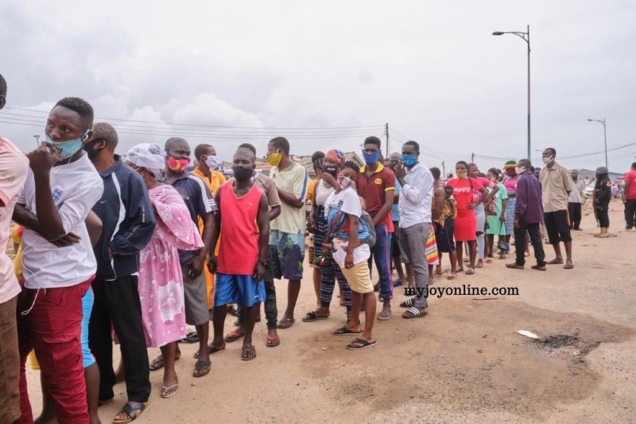
A lecture at the Department of Statistics and Actuarial Science at KNUST has predicted that Greater Accra, Central and Western will be the battlegrounds in the December polls.
Dr Emmanuel De-Graft Johnson Owusu Ansah says comparing the data of registrants from the just ended voter registration exercise, to that of 2016, the said regions have witnessed significant gains.
He believes this is likely to alter the dynamics of the upcoming elections.
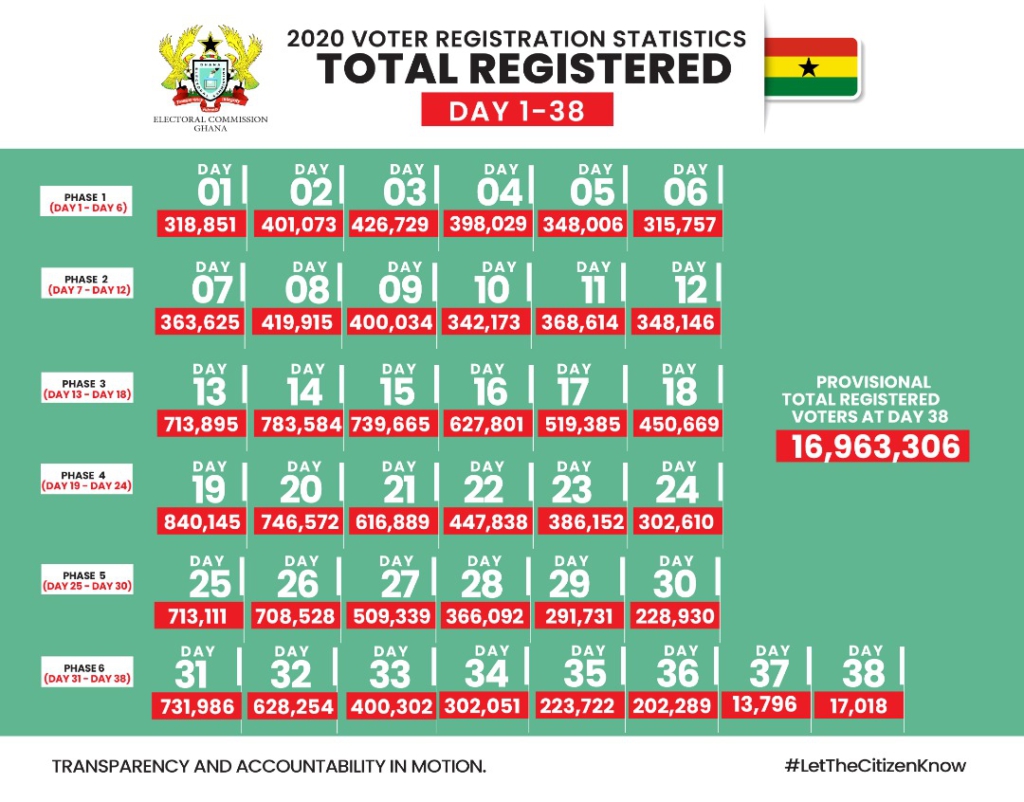
"As of the last mop-up, the EC said that it had up to 16,963,306 people who have registered and then if you look at that, you'll have the regional distributions that they have, giving the majority to the Greater Accra Region which actually resorted to some three and a half million.
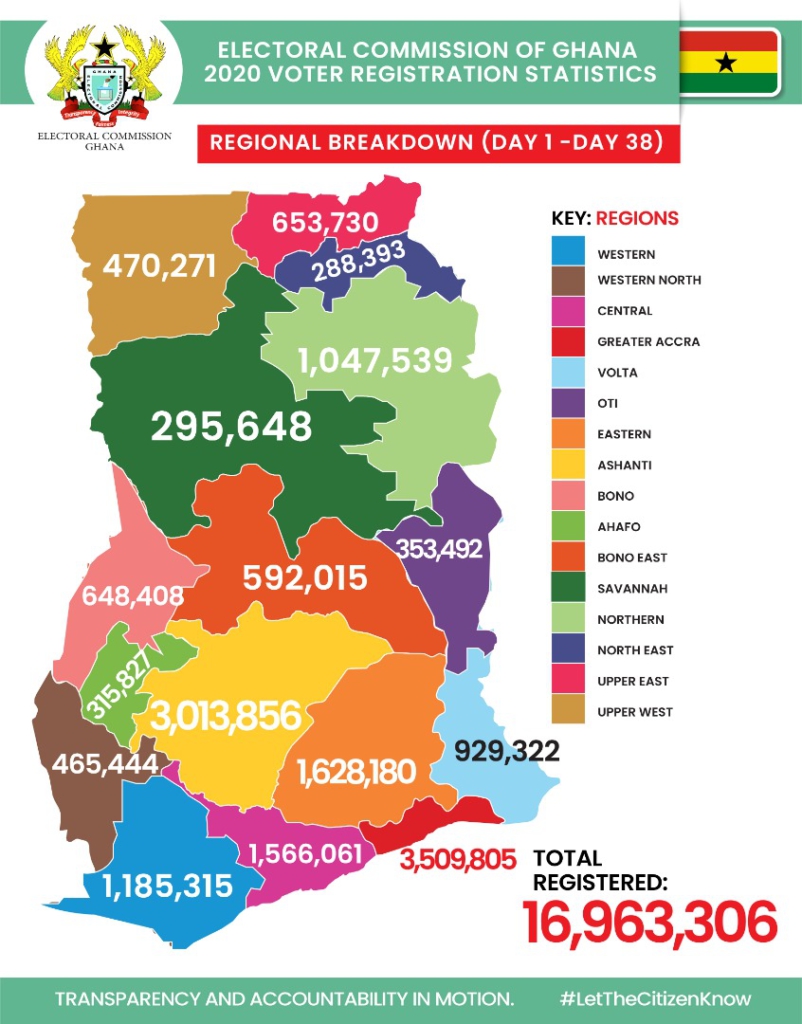
"If you look at this distribution, it is also very clear to us that the percentage changes that we have there is a true reflection over the years as the projection actually seeks," he said.
He told Samson Lardy Anyenini on JoyNews' Newsfile on Saturday that data from the new register indicates that some regions have witnessed significant voter depletion, thereby, giving others a fair advantage in terms of voter turnout.
"Now if you compare this to 2016, as the EC has already done, the voter share actually resulted Greater Accra actually having some 19.5% and then with Central Region having some 18.95% that gives us that these two regions actually had some form of increment.
"Even though Central Region is not high, you have a reason of putting it there because comparatively, we also did some analysis with the population share ratio and this population share ratio in 2016, was a projection by the Ghana statistical services
"It also shows that the Central region actually had some 8.6% and the Greater Accra having 16%.
He added, "in 2016 Greater Accra was having a voter share more than its population share in comparison with the national population data.
"If you look at the voter population ratio, still Greater Accra had 66.41% which means it has some 4.6 million people out of it about three million people qualify or are seen as adults to have registered so they had the highest number with the rest being around 50 plus %," he added.
Latest Stories
-
He entered at eight. He is now 16: Ghana’s children growing up in prayer camps
42 minutes -
‘Development must not always begin from Accra’ — Anwelle Foundation launched in Jirapa
44 minutes -
PKO trio eye victories at Odwira Festival
3 hours -
346 Ghana Navy recruits pass out after 26 weeks of intensive training
3 hours -
Newsfile to discuss EOCO-MP arrest, drug trafficking, speech arrests and $235m water debt
4 hours -
JoyNews gets results as listeners raise GH¢40,000 to help 17-year-old student with cerebral palsy attend SHS
4 hours -
Vice President calls for stronger local pharmaceutical production to reduce medicine imports
5 hours -
The brewing tension at KNUST; Beware the Ides of October….
5 hours -
Health Ministry moves to integrate traditional medicine into mainstream healthcare
5 hours -
550 pupils in Kintampo South get educational lifeline as ‘Seeds of Hope’ reaches farming communities
6 hours -
Opoku Mensah urges Christian Council, House of Chiefs to speak up on democratic freedoms
6 hours -
Teacher unions’ strike: Minority demands immediate payment of teacher arrears, 20% deprived area allowance
6 hours -
The Accra-Kumasi Expressway: Building it right
6 hours -
Beyond gold exports: Building value and economic resilience from Ghana’s gold
6 hours -
2027 AFCONQ: Ghana under pressure as Gambia beat Somalia 2-1
7 hours