


Audio By Carbonatix
It’s one of the nervous flier’s (numerous) nightmare scenarios. A potty fellow passenger makes a beeline for the emergency exit and yanks the door open, sending themselves, and any unsecured trolley dollies and holidaymakers, spinning into the stratosphere.
That nightmare almost became reality this week, when a female passenger attempted to open the cabin door on board a Jetstar service between Sydney and Avalon. The crew managed to restrain her and she was arrested once the plane touched down.
But are our fears founded? What would have happened had she been successful? Should someone actually manage to open the door of a large passenger aircraft at high altitude, the cabin would lose pressure – extremely rapidly – and chaos would ensue.
Even instances of slow decompression, of which there are an estimated 40 to 50 a year, can be fatal. In 2005 a Boeing 737 operated by Helios Airways crashed, killing all 121 passengers and crew (the deadliest air disaster in Greek history), after a gradual loss of cabin pressure. The lack of oxygen at 30,000 feet left the crew incapacitated, and the plane – on auto-pilot – slowly ran out of fuel, before plunging to the ground.
In such instances, oxygen masks (with enough oxygen to last several minutes) should drop from the ceiling to stave off hypoxia (a lack of oxygen, which leads to sluggish thinking, dimmed visions, unconsiousness and then death). In the cockpit, the flight crew will don their rubber masks and begin a rapid descent to a safe altitude – anything below 10,000ft (mountainous obstacles notwithstanding).
Sudden decompression, which would occur if a plane door was suddenly thrust open, is another matter. Anyone standing near the exit would be ejected into the sky; the cabin temperature would quickly plummet to frostbite-inducing levels, and the plane itself might even begin to break apart. In 1988, an Aloha Airlines flight (also a Boeing 737) with 90 people on board was en route to Honolulu, cruising at an altitude of 24,000 feet, when a small section of the roof ruptured.
The resulting “explosive” decompression tore off a larger section of the roof, and a 57-year-old flight attendant called Clarabelle Lansing was swept from her seat and out of the hole in the aircraft. Luckily, all other passengers were belted up, and the pilot managed to land 13 minutes later, avoiding further loss of life. Dozens of other examples of explosive decompression have been recorded, and it often doesn’t end well. And let’s not forget the vaguely hilarious demise of James Bond’s nemesis Goldfinger (see video below).
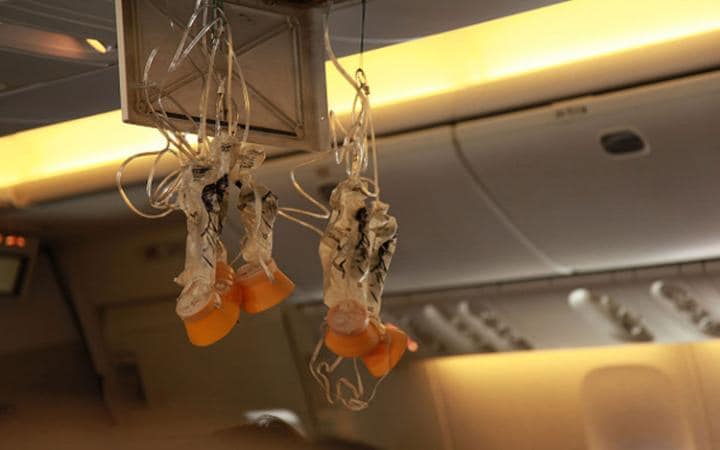
Fortunately, while decompression can be dangerous, it is not going to happen because a fellow flier fancied a bit of fresh air for one simple reason: it is simply impossible to open a plane door during a flight.
“Cabin pressure won’t allow it,” explains Patrick Smith, an airline pilot and author of Cockpit Confidential, a book about air travel. “Think of an aircraft door as a drain plug, fixed in place by the interior pressure. Almost all aircraft exits open inward. Some retract upward into the ceiling; others swing outward; but they open inward first.
“At a typical cruising altitude, up to eight pounds of pressure are pushing against every square inch of interior fuselage. That’s over 1,100 pounds against each square foot of door.”
So even Chuck Norris couldn’t open it. But what about at lower altitudes, when cabin pressure is reduced?
“A meager two pounds per square inch is still more than anyone can displace — even after six cups of coffee and the aggravation that comes with sitting behind a shrieking baby,” says Smith. “The doors are further secured by a series of electrical and/or mechanical latches. You would need a hydraulic jack, and airport security doesn’t allow those.”
But there has been at least one incident when a passenger did manage to open the door of an aircraft while it was in the sky. In 1971 “Dan Cooper” hijacked a Boeing 727, extorted a $200,000 ransom, and then leapt from the rear exit with a parachute, never to be seen again. However, he had the pilot depressurise the plane in order to do so, while a year later “Cooper vanes” were installed to completely disable aircraft doors while the landing gear is up.
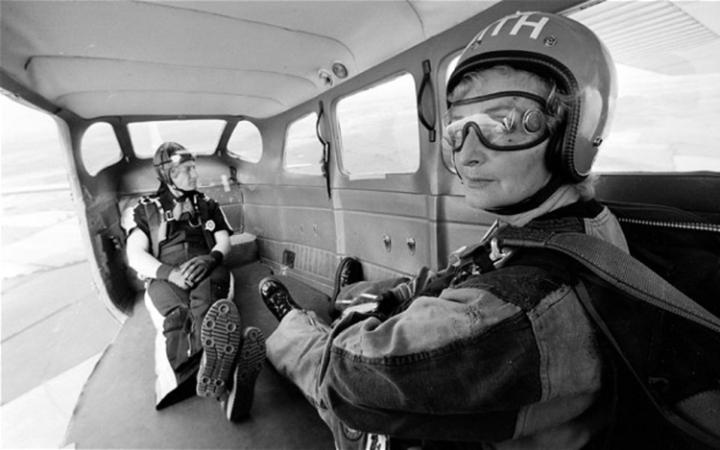
Incidentally, the reason skydivers or military personnel can regularly leap from aircraft doors is because those planes are not pressurised.
On the ground, however, the situation changes — as one would hope, with the possibility of an evacuation in mind.
Smith explains: “While the plane is taxiing, you will get the door to open. You will also activate the door’s emergency escape slide. As an aircraft approaches the gate, you will sometimes hear the cabin crew calling out ‘doors to manual’. This has to do with overriding the automatic deployment function of the slides. Those slides can unfurl with enough force to kill a person, and you don’t want them billowing onto the jet bridge or into a catering truck.”
Latest Stories
-
NDC threatens sanctions over oversized campaign posters, gives aspirants 5 days to comply
3 minutes -
Star Oil paid GH¢2.7bn in taxes, levies in nine months of 2026
17 minutes -
Samson’s Take: The rule of law is cheaper before the bulldozer
18 minutes -
GRA blames system failure for delay in issuing receipt over passenger’s customs duty
39 minutes -
Livestream: Newsfile discusses World Cup visa scandal, beach demolitions, education strikes, BRICS bid
43 minutes -
NC-PTAs welcomes end of teachers’ strike, urges parents to prepare children for Monday
53 minutes -
Government procures over 2,000 transformers as Ghana’s electricity access hits 89.13% – Energy Minister
1 hour -
UTAG-UG threatens strike on October 19 over unpaid allowance
1 hour -
Let The Constitution direct Chieftaincy to deliver “All Development Is Local”
3 hours -
John Jinapor outlines renewable energy, nuclear power priorities for 2027
3 hours -
Ghana explores centre of excellence for hearing, communication and cochlear implant care
4 hours -
Schizophrenia-related disorders lead mental health cases recorded in Ghana
4 hours -
Dutch authorities enlist Ghana in hunt for fugitive drug lord Bolle Jos
5 hours -
Ghana housing finance conference adopts communiqué to improve affordable housing access
9 hours -
Special Initiatives Minister urges Wa Technical Institute to enrol more girls as EU-backed solar training lab opens
10 hours