

Audio By Carbonatix
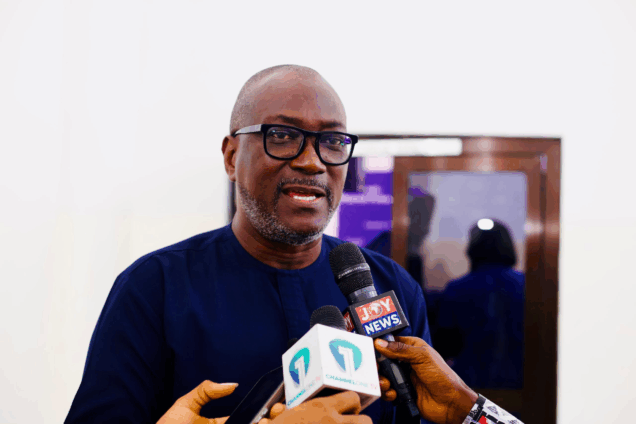
Chairman of the Constitution Review Committee, Prof Henry Kwasi Prempeh, says Ghana’s culture of nonstop political campaigning is not a democratic requirement but a choice the country continues to make.
Speaking on Joy News on December 25, he said the problem persists because Ghanaians allow it. “It’s because we allow it, we allow campaigning 24/7 over four years,” he said.
He rejected claims that constant campaigning is inevitable, arguing that other democracies have found ways to regulate election seasons without undermining political freedoms.
Drawing from regional experience, Prof Prempeh said Ghana is not unique. He recalled a recent visit to Senegal ahead of its last election. “We were in Senegal before their last election, with my team from CDD,” he said.
According to him, the difference was striking. “When we got there, one thing was clearly noticeable: no billboards. You will see no posters, nothing,” he said.
He explained that although elections were just weeks away, campaigning had not officially started. “The election season had not opened so that you couldn’t mount billboards,” he said.
Prof Prempeh said political parties were still active, but within precise limits. “As a party, you could always do your things in-house, things to prepare for an election,” he said.
However, he noted that public-facing activities were restricted. “Outdoor events like rallies, putting posters, doing all those things, jingles and those things, those can be easily regulated,” he said.
He stressed that regulating campaign seasons does not cripple political parties. “If we say that the season, it doesn’t mean that we are handicapping politicians,” he said.
According to him, the idea is often misunderstood in Ghana. “We’re not saying that you cannot be doing your things as a party to get yourself organised,” he said.
Prof Prempeh said a narrow mindset often drives resistance to reform. “The pushback against an idea should also look at it as we are part of a global community,” he said.
He warned against dismissing reforms simply because they challenge the status quo, asking, "How is it working in Sierra Leone?”
He cited the example of Freetown. “The mayor of Sierra Leone, for example, of Freetown, is elected on a party ticket, and she’s from one party and the president of another party; they are coexisting, it’s working,” he said.
Prof Prempeh said Ghana often exaggerates its uniqueness. “In Ghana, people would say, 'Oh, but it’s not going to work with NPP and NDC,” he said.
He questioned that assumption, saying, “You think that we are like from a different planet, right?” he said.
According to him, this inward-looking approach limits reform. “This insularity sometimes causes us to box ourselves into a situation, as if the status quo captures us,” he said.
He insisted that alternatives exist. “So it is not true that you cannot have an election calendar that says campaigning cannot go on until the day,” he said.
Prof Prempeh said such systems are already in practice elsewhere. “It happens in many countries,” he said.
Latest Stories
-
NPP had more permanent fuel relief measures than current GH¢2 diesel cut – Amin Adam
14 minutes -
Photos from the 3rd Republic Bank-JoyNews Habitat Fair Clinic
16 minutes -
Ethiopia’s army promises restraint amid fears of new civil war
26 minutes -
Amin Adam calls for review of fuel taxes as diesel prices remain above GH¢18
57 minutes -
World Vision Ghana, Ahafo districts sign MoU for universal WASH coverage
1 hour -
When the gold engine stutters: What Ghana’s Cedi and reserves are telling us about the new economic architecture
2 hours -
Two reportedly die after being trapped in mining pit at Juaboso
2 hours -
Petrosol cleans up Wa Municipal Hospital, to donate medical equipment
2 hours -
‘If NPP was ‘insensitive’ over fuel prices, NDC must accept same description now’ — Amin Adam
2 hours -
KiDi brings the hits to London in sold-out UK headline concert
2 hours -
The last goodbye of Ghanaian shot dead in the US
3 hours -
MCC opens door to Ghana again as MiDA revives development partnership
3 hours -
CSIR moves to turn scientific research into jobs, national growth
3 hours -
More patrons troop in as 3rd Republic Bank-JoyNews Habitat Fair clinic enters final day stretch
3 hours -
German, Russian foreign ministers hold rare talks amid rising tensions
3 hours