

Audio By Carbonatix
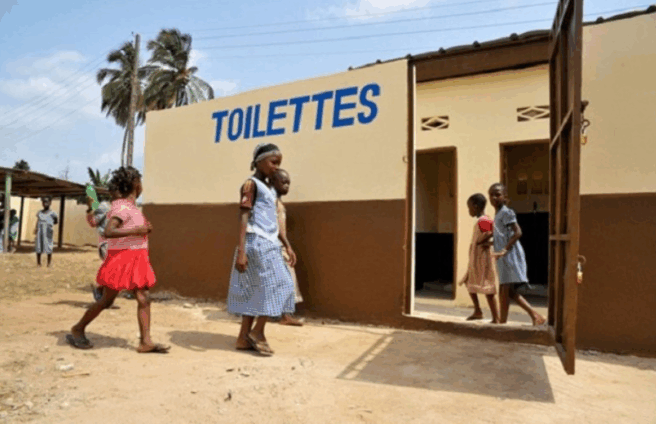
A new performance audit by the Auditor-General has revealed a disturbing truth: 6 out of 10 basic and secondary schools in Ghana lack access to toilet facilities and water.
Across the country, students are forced to learn in conditions that compromise both their health and dignity.
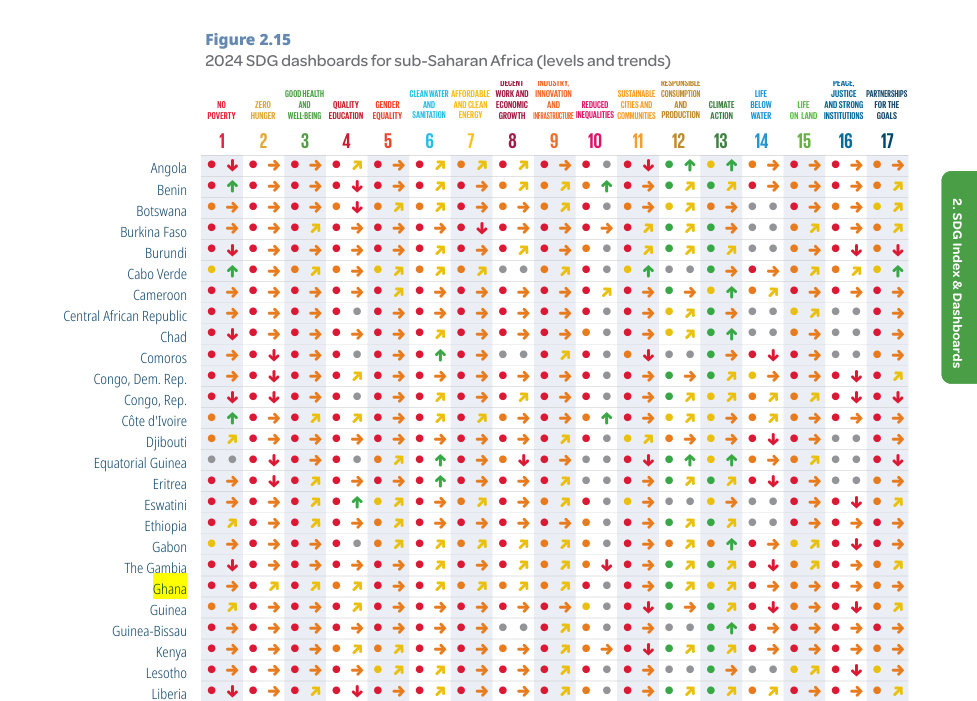
At the heart of this crisis is Ghana’s sluggish progress on Sustainable Development Goal 6 (SDG 6), which aims to “ensure availability and sustainable management of water and sanitation for all” by 2030. With just five years left on the clock, Ghana is alarmingly off track.
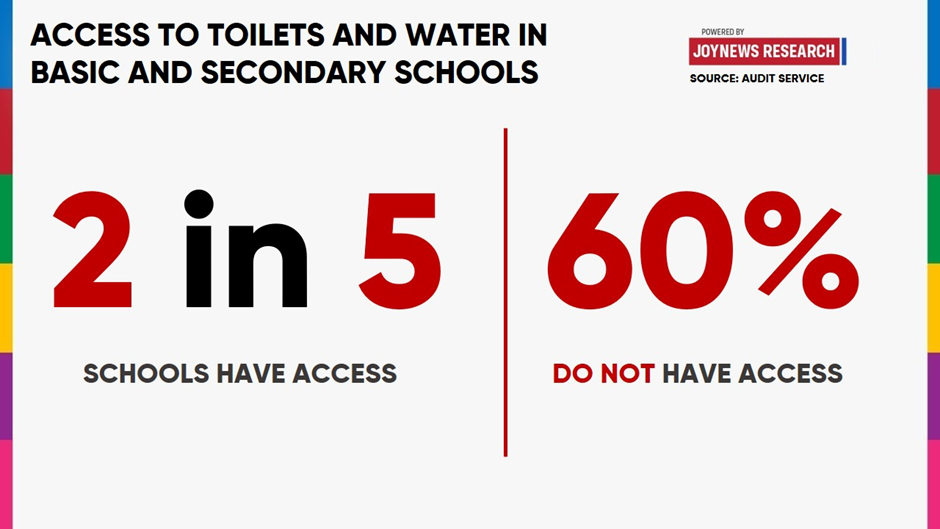
According to the 2025 performance audit, only 2 out of every 5 schools have access to toilet and urinal facilities with running water. That means 60% of public schools, thousands of them, fall short of even the most basic sanitation standards.
The situation is worse than it appears. The Pre-Tertiary Education Act (2020) mandates a maximum of one toilet cubicle per 50 students, but 87% of schools fail to meet this benchmark.
In Tamale Islamic Science SHS, a staggering 4,591 students share a single KVIP with two squat holes. At State Experimental 1 M/A Basic School in Kumasi, 169 pupils rely on one toilet.
This isn’t just an infrastructure problem but a public health emergency. Students, particularly girls, are exposed to infections, forced to miss school during menstruation, or driven to practice open defecation due to a lack of privacy and safe facilities. In Tamale, some students at girls' schools reported resorting to bushes or public toilets when school toilets were locked because of water shortages.
In 2010, the Ministry of Education launched a bold Water, Sanitation and Hygiene (WASH) initiative under its Education Strategic Plan (ESP 2010–2020), with a goal of providing sanitation infrastructure in 75% of basic schools by 2020. That deadline has come and gone and the audit confirms the target was missed by a wide margin.

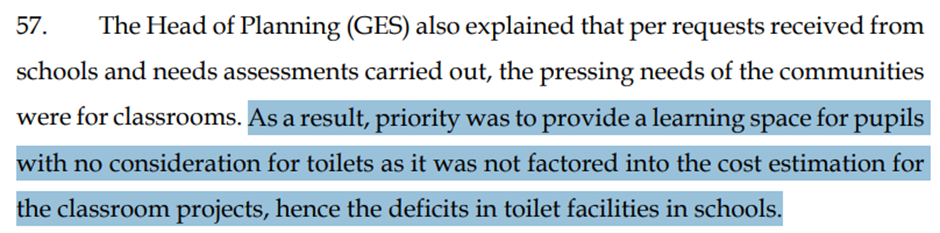
Part of the problem lies in misplaced priorities. The Ghana Education Service (GES) and various Metropolitan, Municipal, and District Assemblies (MMDAs) often prioritise building classrooms over toilets, leaving new school blocks without accompanying sanitation facilities. In some schools, water closet (WC) toilets sit locked and unused due to water shortages. Elsewhere, completed donor-funded toilets remain idle for months or even years, never officially handed over to the schools they were built for.
Even where toilets exist, maintenance is dismal. The audit documented shocking scenes: faeces smeared around squat holes, broken flushing systems, discarded sanitary pads on floors, and filthy urinals. Cleaning schedules are often neglected, and many schools report never receiving basic cleaning supplies.
No child should have to choose between going to school and preserving their dignity. Yet, in many Ghanaian schools today, that’s the impossible choice being forced on thousands of students.
How long will Ghana wait to fix this?
Latest Stories
-
Wealth Over Water: How Galamsey Is Threatening Ghana’s Water Security
15 minutes -
LA 2028: Black Queens pumped up for second leg of Mauritius tie
23 minutes -
LA 2028: Black Queens hold final training session ahead of second leg against Mauritius
57 minutes -
Standards are not Seasonal: What the EC appointments teach both sides
1 hour -
King Mohammed VI urges private sector to create youth jobs and spread benefits of growth
1 hour -
KGL U17 Colts 2026: Greater Accra win title after penalties win over Western Region
1 hour -
UK Investment Roadshow opens in London to advance UK-Ghana growth partnership
1 hour -
Assemblies of God requires pastors to resign before entering partisan politics – Rev. Wengam
2 hours -
Ghana targets 20% annual reduction in maternal deaths – Health Minister
2 hours -
Cyber attacks in Africa grow faster than global rate, report finds
2 hours -
Ghana signs UAE deal to create 5,000 overseas jobs
2 hours -
One Million Coders Programme targets 100,000 digital jobs in two years – Sam George
2 hours -
John Jinapor, Italian Ambassador explore opportunities for energy sector investment
2 hours -
NHIA seeks legal reforms to support Free Primary Healthcare
2 hours -
Beatrice Annan defends Afi Agbenyo’s EC appointment, cites record of gender advocacy
2 hours