

Audio By Carbonatix
Vision for Accelerated Sustainable Development Ghana (VAST Ghana) has called on the government to adopt stronger measures to hold tobacco companies financially accountable for the health, social, economic and environmental consequences of tobacco use, insisting that the industry must no longer be allowed to profit while society bears the burden of disease and pollution.
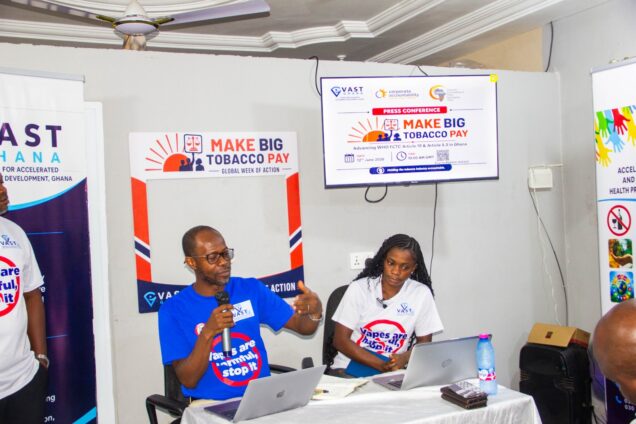
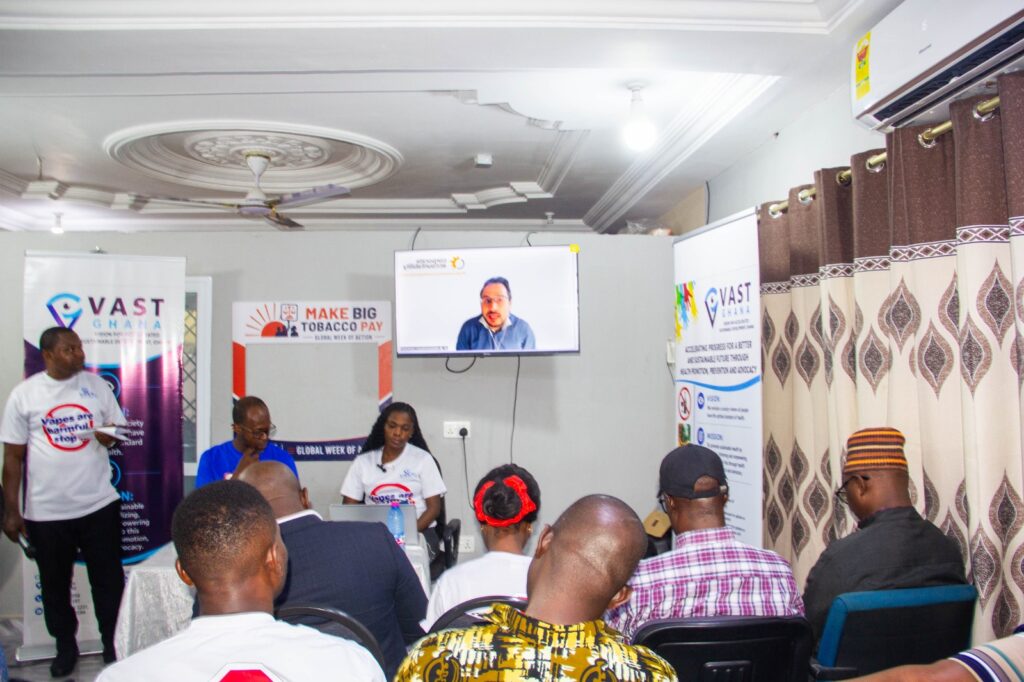
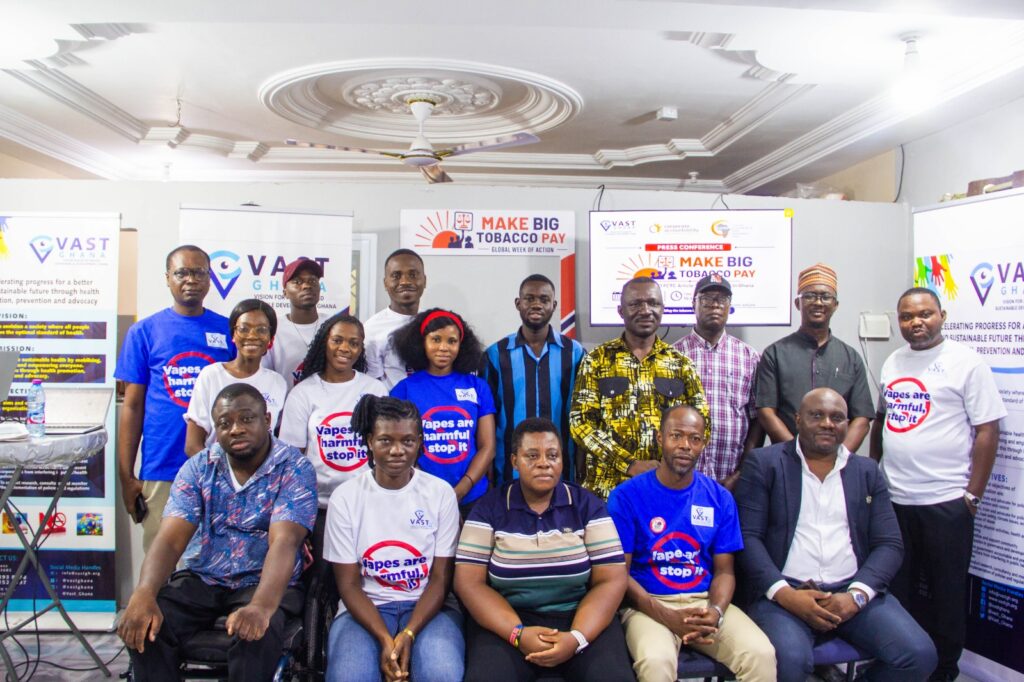
The appeal was made at a press conference in Accra as part of the Global Week of Action under the theme “Make Big Tobacco Pay: Advancing WHO FCTC Article 19 and Article 5.3 in Ghana".
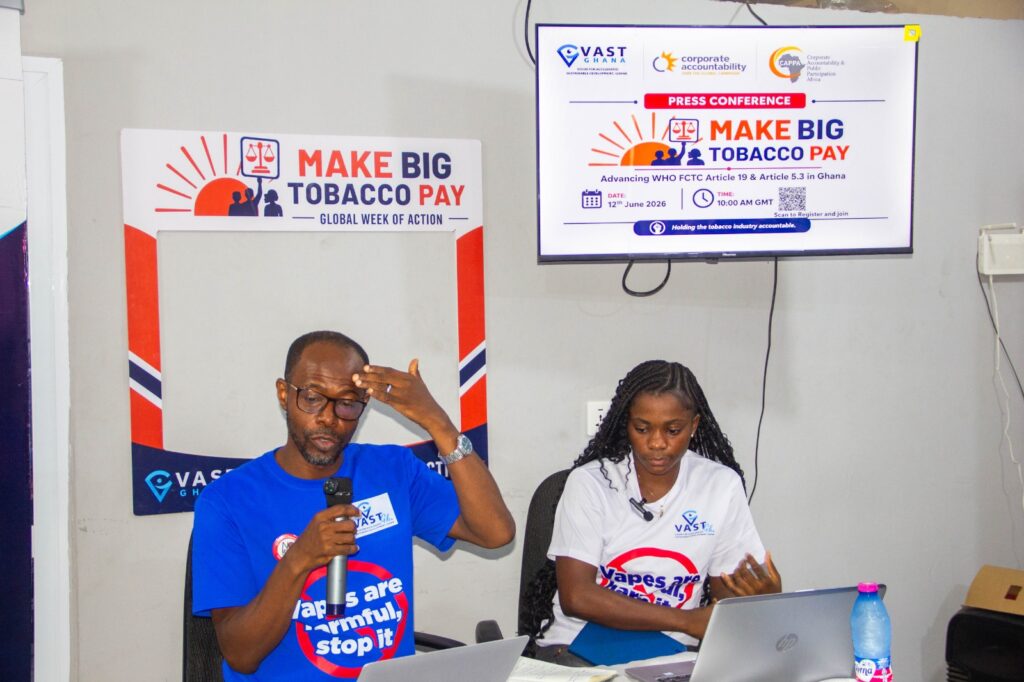
Addressing journalists, the Executive Director of VAST Ghana, Mr Labram M. Musah, described the campaign as a call for justice, accountability and responsibility from an industry whose products continue to inflict significant harm on individuals, families and national economies.
He said tobacco remains one of the world's deadliest consumer products, noting that it kills more than eight million people globally every year and is responsible for approximately 6,700 deaths annually in Ghana, representing about three per cent of all deaths in the country.
He added that tobacco-related illnesses cost Ghana an estimated GH¢668 million each year in healthcare expenditure and lost productivity.
Mr Musah said behind the statistics were devastating personal stories of families losing breadwinners, patients battling life-threatening diseases and households being driven into poverty by medical expenses.
“A father lost prematurely. A mother battling cancer. A family plunged into abject poverty because of medical expenses. A young person whose future is cut short,” he stated.
Despite these consequences, he argued, tobacco companies continue to earn billions of dollars while governments, taxpayers and families shoulder the costs of treatment and economic losses.
VAST Ghana is advocating the implementation of Article 19 of the World Health Organisation Framework Convention on Tobacco Control (WHO FCTC), which encourages countries to consider civil and criminal liability measures against tobacco companies.
Mr Musah said Ghana should adopt the internationally recognised “Polluter Pays” principle by requiring tobacco manufacturers to contribute directly to the costs associated with tobacco-related diseases, environmental clean-up and public health interventions.
“The government should not continue paying for the crisis created by the tobacco industry,” he said, stressing that Article 19 offers governments an opportunity to shift the financial burden from taxpayers to the companies responsible for the harm.
Beyond public health concerns, VAST Ghana highlighted the environmental damage caused by tobacco products, particularly cigarette filters.
Mr Musah noted that cigarette butts, many of which contain cellulose acetate, a form of plastic, are among the most littered items worldwide and release toxic substances such as arsenic, lead, cadmium and nicotine into the environment when discarded.
He said discarded cigarette filters are commonly found on streets, beaches, school compounds, markets and public spaces across Ghana, contributing to pollution and increasing waste management costs for local authorities.
According to him, tobacco companies rarely contribute towards the cost of collecting and disposing of such waste despite profiting from the products that generate it.
VAST Ghana urged the government to initiate a national process towards implementing Article 19 liability measures and to establish mechanisms for recovering healthcare and environmental costs associated with tobacco-related harm.
The organisation also called for stronger enforcement of Article 5.3 of the WHO FCTC, which seeks to protect public health policies from tobacco industry interference.
Other recommendations included integrating tobacco waste management into national sanitation strategies, requiring tobacco companies to finance the collection and disposal of cigarette waste, strengthening taxation policies to reduce tobacco affordability, and tightening regulations on emerging nicotine products such as e-cigarettes and vapes.
Mr Musah urged policymakers, development partners, civil society organisations and citizens to support efforts aimed at protecting public health and safeguarding the environment.
“The time has come to move beyond managing tobacco harm. The time has come to prevent it. The time has come to stop subsidising corporate irresponsibility. The time has come to hold the tobacco industry accountable,” he said.
He stressed that future generations would judge today's leaders not by what they knew about the dangers of tobacco, but by the actions they took to address them.
Latest Stories
-
Ballon d’Or Power Rankings: Lamine Yamal leads race for Golden Ball ahead of Rodri and Kane
2 hours -
‘Nothing worked for us’ – Gideon Mensah takes responsibility for Gambia defeat
2 hours -
Speaker’s decision to reject recall motion catches Dep Minority Chief Whip off guard
4 hours -
2026 Women’s Super Cup: FC Savannah beat Epiphany Warriors to win trophy for first time
4 hours -
Fifa accuses Uefa of ‘misinformation campaign’
4 hours -
Kane and Gordon give England victory over Czech Republic in Nations League
4 hours -
AFCON 2027Q: ‘The last time Ghana won was eight games ago’ – Carlos Queiroz
4 hours -
AFCON 2027Q: Gambia defeat doesn’t make me a loser – Carlos Queiroz
4 hours -
Yamal inspres Spain to homecoming victory over Croatia
4 hours -
2027 AFCONQ: Late goals seal 2-0 for Côte d’Ivoire against Somalia
5 hours -
I’d stick my Man City medals in bin – Keane
5 hours -
AFCON 2027Q: My resignation won’t solve Ghana football issues – Queiroz
5 hours -
Morocco call off Ghana friendly after Black Stars’ AFCON setback
5 hours -
It is time for Tuchel to offer Alexander-Arnold some trust
5 hours -
‘We have to say sorry’ – Queiroz apologises after Ghana’s humiliating defeat to Gambia
5 hours