

Audio By Carbonatix
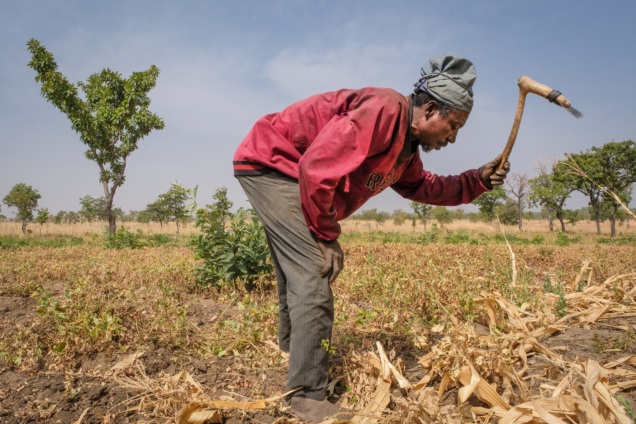
The Peasant Farmers Association of Ghana (PFAG) has revealed that about 80 percent of farmers have not been registered on the government’s Planting for Food and Jobs Programme Phase II (PFJ 2.0) as of June 2024.
The National President of the Association, Wepia Awal Addo, said the situation is worrying since the planting season is very close. He added that farmers are uncertain about their future, as they do not have an idea where and when to receive farm inputs such as fertilisers and seeds.
“As at June, around 80 percent of the farmers have not been registered and their farms have not been mapped. Which is a source of worry for us because the raining season has started. If you go to many places people are planting and they need the inputs to be able to grow food.” Mr. Addo said.
He made the revelation when the PFAG, in collaboration with the Ministry of Food and Agriculture (MoFA), and the Deutsche Gesellschaft für Internationale Zusammenarbeit (GIZ), hosted a national validation workshop for the assessment report on the implementation of the PFJ 2.0 on July 17, 2024 in Accra.
Mr. Addo said there appears to be a lack of interest in farmers’ welfare, particularly as farmers are not provided with any information to aid in planning.
Describing the PFJ Phase II as uninspiring, he stated that the agriculture sector has been neglected with no direct investment to farmers.

Mr. Addo pointed out for example that plans to expand irrigation projects and improve road networks have been left unattended to.
Purpose of the PFAG II
The Planting for Food and Jobs Phase II (PFJ 2.0) was launched by the Ministry of Food and Agriculture (MOFA) in response to the challenges encountered during the programme's initial phase.
The challenges included limited access to agricultural credit, insufficient adoption of the value chain approach, budgetary constraints on the government, and low prioritization of national food storage capacity.
Furthermore, issues such as smuggling, rent-seeking, and corruption were highlighted by PFAG’s annual assessment reports, leading to a significant call for a review of the programme.
The PFJ 2.0 aims to modernize the agricultural sector through the development of selected agricultural value chains for food crops, while promoting private sector participation.
This shift from direct input subsidy to a smart agriculture input credit system is designed to enhance food security, resilience, and export potential. The programme also seeks to create jobs among agriculture value chain actors.
The national validation workshop aims to validate the findings from these consultations and ensure that stakeholder feedback is incorporated into the final assessment report. The workshop featured presentations on the assessment findings, panel discussions, and interactive sessions to discuss and refine the recommendations.
The roll-out of PFJ 2.0 began in March 2024 with a registration process announced by the sector Minister. Despite the commencement, concerns have been raised about the timing, design, and implementation of the programme. The reliance on anchor farmers or aggregators for input and service provision, minimal central government involvement, and the late registration process have been points of contention among stakeholders.
In response, PFAG, with support from OXFAM, has undertaken an assessment of PFJ 2.0 to identify emerging issues, roll-out gaps, and propose solutions for maximizing programme output. Two stakeholder consultation workshops have been conducted in Tamale and Techiman, engaging farmers, input dealers, agricultural directors, and other relevant stakeholders from the Northern, Upper West, Upper East, North East, Ashanti, Ahafo, Bono, and Bono East regions. These consultations served to gather insights, sensitize farmers, and provide a platform for stakeholders to engage with the ministry on emerging issues.
About the Programme
"Sustainable Employment through Agribusiness (AgriBiz) in Ghana".
The programme "Sustainable Employment through Agribusiness (AgriBiz) in Ghana" was commissioned by the German Federal Ministry for Economic Cooperation and Development (BMZ). Running from April 2021 until December 2025, the programme operates nationwide with a strong focus on promoting dynamic micro, small, and medium enterprises (MSMEs), both formal and informal, along with their Member Based Business Organizations (MBBOs) and business development service (BDS) providers.
The programme aims to strengthen the capacities of MSMEs and their associations to enable the private sector to create productive employment in the agribusiness sector.
.
Latest Stories
-
Ghana’s BRICS move requires clear strategy to manage risks – Godfred Bokpin
56 minutes -
Pay teachers realistic income – Duncan Amoah to gov’t
1 hour -
Bechem to become chicken capital of Ghana – Mahama projects
1 hour -
Gov’t targets recruitment of 16,500 health professionals in 2026
2 hours -
Two-week strike will not derail academic calendar – GNAT President
2 hours -
Headmaster detained after BBC investigation into alleged sexual abuse of students
2 hours -
GNAT pushes for clear implementation procedures of teachers’ conditions of service
2 hours -
Recurrent strikes threaten quality of education and academic calendars – Prof Bokpin
2 hours -
‘Cockroach’ group leaders among hundreds detained in Delhi protest
2 hours -
Don’t let speed of information become your judgement – CJ tells new lawyers
3 hours -
World Cup visa scandal: People have leveraged public office to facilitate fraud – Senyo Hosi
3 hours -
Glut! Farmers count losses as prices crash, customers happy
4 hours -
GSA postpones auction of unserviceable vehicles
4 hours -
Man charged with attempted murder after stabbing
4 hours -
World Cup visa scandal: Senyo Hosi says issue goes beyond calls for Sports Minister’s resignation
4 hours