

Audio By Carbonatix
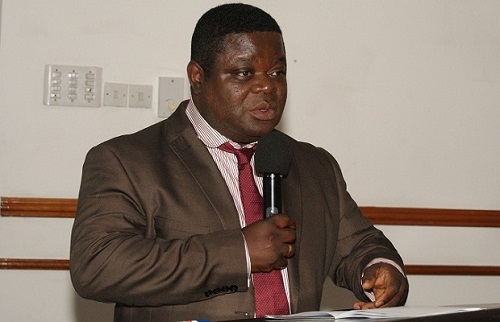
The Director of the Institute of Statistical, Social and Economic Research (ISSER) says traders cannot be blamed for increasing the price of goods since the outbreak of COVID-19, a disease caused by coronavirus.
In Peter Quartey’s view, the decision is a rational one to a development they do not understand and are uncertain of.
Speaking on Joy FM’s Super Morning Show, he said “For lack of information or understanding people behave rationally.
"If you think you’re going to be lockdown and they say there is going to be a shortage, as rational human beings you try to stock as much as you can.
“It is a demand and supply issue and so although the goods are there, the sudden increase in demand is what the traders are taking advantage of…So it is a rational decision in my view and I don’t think anyone should be blamed,” he added.
Prices of goods such as hand sanitizers, food items like gari and bread have shot up by more than 100 percent in some parts of the country since the outbreak of the novel coronavirus.
Fears of an impending lockdown – which is now in force partially - added fuel to the fire with traders increasing prices for staple foods and other everyday items.
Enraged by the development, consumers have called on government to regulate prices.
While Prof Quartey believes this can be done, he said the National Commission of Civic Education (NCCE) should intensify education in local languages for people to appreciate what is being done.
Citing Ghana’s coup history, he said the curfew and shortages that characterized those periods are still fresh on the minds of those who experienced it and are simply trying to avoid similar developments, a reason there has been a rush to stock up on food and other essential items.
He also believes “people are avoiding confrontation with the law enforcement agencies and so would rather stock and observe what will go on in the coming days.
“If our law enforcement agencies are professionals, people will realize that this is not a total lockdown and that food and other things will be available, gradually things will ease off and go back to normal.”
He called on the Ghana National Buffer Stock Company to release some of the goods if supply cannot meet demand.
“If we allow goods to flow freely, we will solve the supply problem,” he stressed.
Latest Stories
-
Ghana needs a law to sustain constitutional reforms – CDD-Ghana
2 hours -
COVID fumigation audit: Auditor-General has a lot of questions to answer – Akwatia MP
2 hours -
Stranded Ghanaian medical graduates in Cuba appeal to Mahama for immediate return
3 hours -
GNFS contains fire outbreak at Teshie Lekma Road near Lekma Hospital
9 hours -
Samia Nkrumah rejects the narrative that Ghanaians were happy after Nkrumah’s overthrow
10 hours -
A Mother’s pain: Tribute by Ivan Baidoo’s mother
10 hours -
‘Forgive us for staying away’ — Samia Nkrumah leads family back to Nkroful, pledges to preserve Nkrumah’s legacy
10 hours -
Ernest Nuamah scores twice as Lyon beat Rennes
10 hours -
‘My dear Ivan’ – A father’s tribute to a son tragically killed
10 hours -
GNPC Explorco advances Voltaian Basin drilling preparations with 13.5km access road
11 hours -
Cabinet approves facility manager for Borteyman Sports Complex – Kofi Adams
11 hours -
Sanitation is improving; critics may be ‘living in another world’ – Salaga South MP replies Bekwai MP
11 hours -
Government must do more to tackle sanitation crisis – Bekwai MP
12 hours -
World Cleanup Day: GFF begins sanitation education in local communities
12 hours -
EU Ambassador, IGP discuss stronger cooperation on policing and security
12 hours