

Audio By Carbonatix
- Low oxygen levels may indicate that a coronavirus patient has pneumonia and requires immediate medical attention even before they feel a shortness of breath.
- Normal oxygen levels could signal to patients that they don't need to visit a hospital.
A month ago, I found myself in a Manhattan emergency room with a searing pain in my rib cage, struggling to breathe.
Earlier that day, a doctor had informed me that I almost certainly had COVID-19. By the evening, I knew I needed to go to the hospital. My breathing was heavy and I was having trouble finishing a sentence without gasping for air.
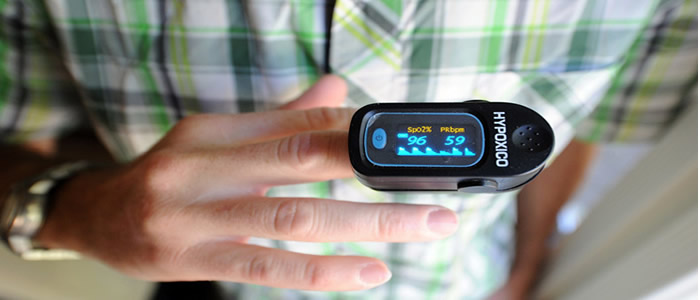
At the ER, the doctor measured the level of oxygen in my blood with a device called a pulse oximeter. I walked back and forth across the hospital floor with the tool clipped to my index finger.
"I wish everyone had one of these so they could monitor themselves," the doctor said. "Then maybe we'd have fewer people come in."
My reading turned out normal: 96%. Doctors typically look for a range of 95% to 100% for healthy patients. Oxygen levels below 90% signal a clinical emergency , according to the World Health Organization.
Since my symptoms weren't severe enough to require hospitalization, I wasn't tested for the virus, as per New York City policies.
That also meant my case wasn't flagged as COVID-19 on my medical claim, which left me saddled with a four-figure bill.
A pulse oximeter from the drug store costs around $30 to $50.
A few days after my ER visit, a friend got me one of the tiny machines and dropped it off outside my door.
From then on, whenever I woke up in the middle of the night struggling to breathe, I could roll over, clip the tool to my finger, press a button, and immediately check my oxygen levels. It gave me invaluable peace of mind.
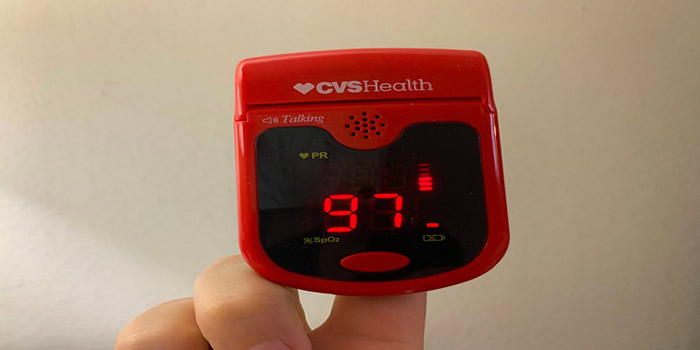
Oximeters are also crucial because COVID-19 patients can have pneumonia for days before they ever develop shortness of breath.
Low oxygen levels are a way to detect these cases earlier without a coronavirus test or doctor's visit. .
"We are just beginning to recognize that COVID pneumonia initially causes a form of oxygen deprivation we call 'silent hypoxia' 'silent' because of its insidious, hard-to-detect nature," Richard Levitan, an emergency physician, wrote in the New York Times .
Levitan said he has encountered COVID-19 patients at Bellevue Hospital in Manhattan who were breathing more heavily to acquire enough oxygen without realizing they were doing so. A pulse oximeter could encourage patients to seek treatment before they reach that point.
Oximeters can detect low oxygen levels before symptoms worsen
Pulse oximeter readings are sometimes fickle if you don't keep your hands still. But the machine itself is "extremely reliable," Levitan wrote in the Times , even if isn't "100% accurate."
"Pulse oximeters helped save the lives of two emergency physicians I know, alerting them early on to the need for treatment," he said.
"When they noticed their oxygen levels declining, both went to the hospital and recovered."
Though many coronavirus patients start out with mild symptoms such as a fever, dry cough, muscle soreness, or fatigue, severe cases tend to see symptoms worsen within five to 10 days.
"If somebody is recording shortness of breath, that's an important symptom," Megan Coffee, an infectious-disease clinician in New York City, told Business Insider.
"But that usually is what happens five, eight, 10 days into the course of the illness."
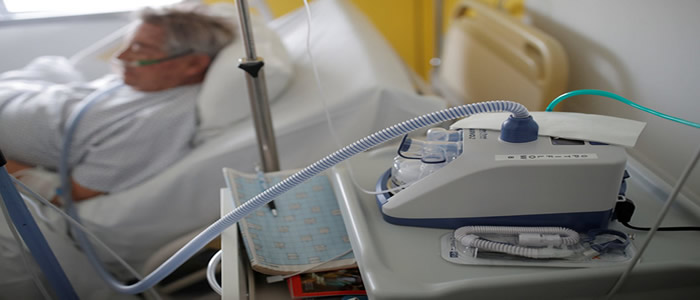
Pneumonia patients who show up to the hospital early have a better chance of receiving non-invasive treatments like an oxygen mask, as opposed to ventilators, which require a breathing tube to be inserted through the windpipe.
Patients on a ventilator have to be sedated, so they can't communicate or move around .
In some cases, the machine itself can damage a person's lung tissue .
Ventilators are also in short supply around the world and require multiple hospital staff to operate, so doctors have tried to use them as sparingly as possible.
Some patients, of course, can't avoid this fate particularly if they are older or have underlying health problems . But earlier information about a potential patient's oxygen levels could help prevent a turn for the worse.
"What you never want is to have to do everything as an emergency," Coffee said.
Healthy oxygen levels could also signal to people with mild or moderate cases that they're not at the point of requiring emergency care.
In my case, a doctor found my symptoms concerning enough to warrant an ER visit. But it would have been helpful to have my oximeter before I went in.
"It's really important to have a primary care doctor or someone you can talk to about your case so that you can decide whether you need to go to the emergency room or not," Coffee said.
"Hospitals are just so overstretched that if someone doesn't immediately need oxygen, they may not be able to find a place for them."
Latest Stories
-
Free Primary Healthcare reaches 135 districts
3 minutes -
Tunisian journalists protest over media crackdown after colleague’s arrest
14 minutes -
Equatorial Guinea police pull guns on migrants deported by Trump, witnesses say
23 minutes -
Singaporean man pleads guilty in US to massive crypto heist
32 minutes -
WHO says staff shortage, funding challenges hamper Congo Ebola response
42 minutes -
IMF is not Father Christmas; Ghana must take charge – PUWU
51 minutes -
More UK flight delays expected after hundreds cancelled by air traffic control glitch
1 hour -
Very hot drinks may damage the food pipe and increase cancer risk
1 hour -
Fix IPP pricing, not just ECG, PUWU tells IMF, World Bank
2 hours -
OpenAI says it cracked 90-year-old maths problem in 88 hours
2 hours -
Meta continues to run ads promoting child sexual abuse material in India – Report
2 hours -
‘The first game was weird’ – Sampson reflects on Black Princesses’ Ecuador defeat
2 hours -
Ghana can fix its energy sector without IMF, World Bank – PUWU
2 hours -
Charles Sampson demands more confidence in front of goal from Black Princesses
2 hours -
‘We have shaken it up’ – Sampson says Black Princesses ready to redeem themselves
3 hours