

Audio By Carbonatix
Pre-existing conditions such as poverty, insecurity, weak governance and fragile infrastructure in low-and middle-income countries threaten to exacerbate the impact of Covid-19 if not immediately addressed.
UNDP’s Rapid Response Facility aims to help expedite and facilitate this urgent support.
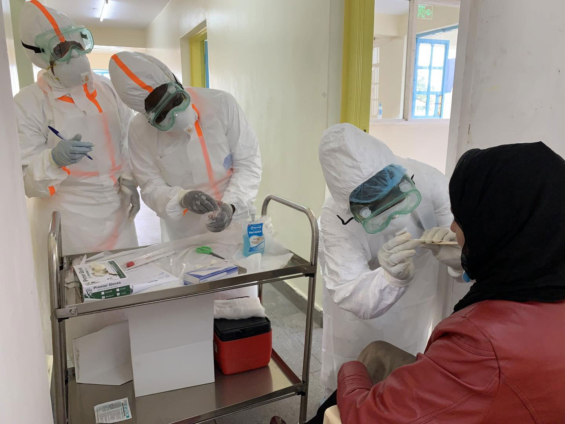
The support enabled by the Facility includes the purchase of essential medicines for patients, personal protective gear for healthcare workers, testing supplies, and local initiatives that aim to raise awareness and engage communities on the risk of Covid-19.
A month since the Facility’s launch, 83 countries have benefited, amounting to $23.3 million in committed resources.
Funding for support via the Facility comes from repurposed core resources, as well as funding provided by donors to UNDP’s crisis-response Funding Window.
In keeping with the One UN approach, all funding requests must align with the programmes and initiatives of the other UN agencies in the country under the leadership of the UN Resident Coordinator and, most critically, with the priorities of the government concerned.
“This Rapid Response Facility is fast-tracking life-saving efforts on the ground -- from the procurement of critical protective equipment and medical supplies to the promotion of digital solutions such as telemedicine,” said UNDP Administrator, Achim Steiner.
“UNDP anticipates a minimum $500 million need to support 100 countries to prepare, respond and recover from the devastating effect of COVID-19,” Steiner added.
UNDP’s overall support on COVID-19 includes three key elements: resources to help prepare for and help stop the spread of the virus, support to respond during the outbreak itself, and resources to cushion against the hardest economic losses and social disruption and help countries recover from the long-term impacts.
This seed money provided by the RRF is helping keep core functions in government operating, and funds are being used in 20 countries – including Bhutan, Cote d’Ivoire and Yemen – to provide digital and ICT solutions to allow governments to work remotely during the Covid-19 crisis.
Other innovations include using satellite imagery for response planning in Moldova, the systemic sanitisation of small business supply chains in Colombia and widespread support of informal enterprises in many countries switching their production to personal protective equipment (PPE).
UNDP’s work draws on its experience in delivering large-scale health programmes for the Global Fund and partners in more than 50 countries.
For example, from 2014 to 2017, UNDP provided health procurement and supply-chain strengthening services in more than 30 countries with US$1 billion in agreements, while generating savings of US$65 million in the procurement of HIV medicines alone.
Latest Stories
-
Gov’t invests GH¢443m in Free Primary Health Care – Dr Asare Bampoe
33 minutes -
ECG announces power outages in parts of Accra West and Central regions
52 minutes -
Otumfuo calls for urgent action to end maternal deaths in Ghana
55 minutes -
Prioritise Bawumia’s interest and vote on merit – NPP elder urges delegates
56 minutes -
Jason Arday death ‘tragedy on so many levels’ says PM
2 hours -
Rotary Club donates phototherapy machine to Ussher Hospital
2 hours -
Analysis: Jason Arday’s death will send shockwaves through a divided academia
2 hours -
CJ’s vacation warrants not limited to politically sensitive cases – Victoria Bright
3 hours -
Parts of Accra to experience power interruption on Sunday for emergency GRIDCo tower restoration
3 hours -
Dafeamekpor defends Ayine’s handling of Aksa case, faults past AGs
4 hours -
Luv FM High School Debate: Afigyaman, OKESS seal Round of 16 spots in style
4 hours -
Dafeamekpor urges Parliament to stay out of Aksa probe, backs expert-led inquiry
4 hours -
The rise and rise of Azigi
4 hours -
Is Angela List being targeted? Government must reconsider the Adamus revocation
4 hours -
Bezos-backed consortium buys a third of Liverpool
4 hours